
Project Manager Negotiation Skills: A Practical Guide to Winning Deals
Project Manager Negotiation Skills: A Practical Guide to Winning Deals
Ever found yourself stuck between a tight deadline and a stakeholder who just won’t budge?
That uneasy feeling is exactly why project manager negotiation skills matter more than any Gantt chart you’ve ever mastered.
We’ve all been there – juggling resources, defending scope, and trying to keep the team’s morale from crashing.
But what if you could turn those tense moments into win‑wins, without feeling like you’re stepping on anyone’s toes?
In our work with Fortune 500 sales execs and startup business development managers, we keep hearing the same story: negotiations feel like a battlefield, not a conversation.
The truth? Negotiation isn’t about bulldozing the other side; it’s about uncovering hidden needs and aligning them with your project goals.
Imagine you’re asking a vendor for a faster delivery window. Instead of demanding “Give me a week less,” you ask, “What would it take for us to shave three days off, and what can we adjust on our end to make it worthwhile?”
That simple shift flips the tone from confrontation to collaboration, and suddenly the vendor is more likely to brainstorm solutions.
Project manager negotiation skills also help you protect your timeline when scope creep tries to sneak in.
A quick tip: pause before you say “no,” and ask “what’s the underlying objective here?”
That question often reveals budget constraints, resource gaps, or even a hidden deadline that you can address with a creative trade‑off.
When you respond with a solution that meets both parties’ core interests, you earn trust and keep the project on track.
It’s not magic; it’s a mindset you can practice, just like any other PM competency.
We’ve seen senior program leads shave weeks off delivery by simply re‑framing a negotiation around shared outcomes.
So, are you ready to treat every stakeholder conversation as an opportunity rather than a roadblock?
Stick around, and we’ll walk through the exact tactics you can add to your PM toolkit today.
TL;DR
Mastering project manager negotiation skills lets you turn tense stakeholder talks into win‑wins, cutting delays and boosting team morale. Apply our proven tactics—ask the underlying objective, re‑frame requests, and create trade‑offs—to keep projects on track and relationships thriving and watch productivity soar even under tight deadlines and shifting priorities today.
Step 1: Assess Your Negotiation Style
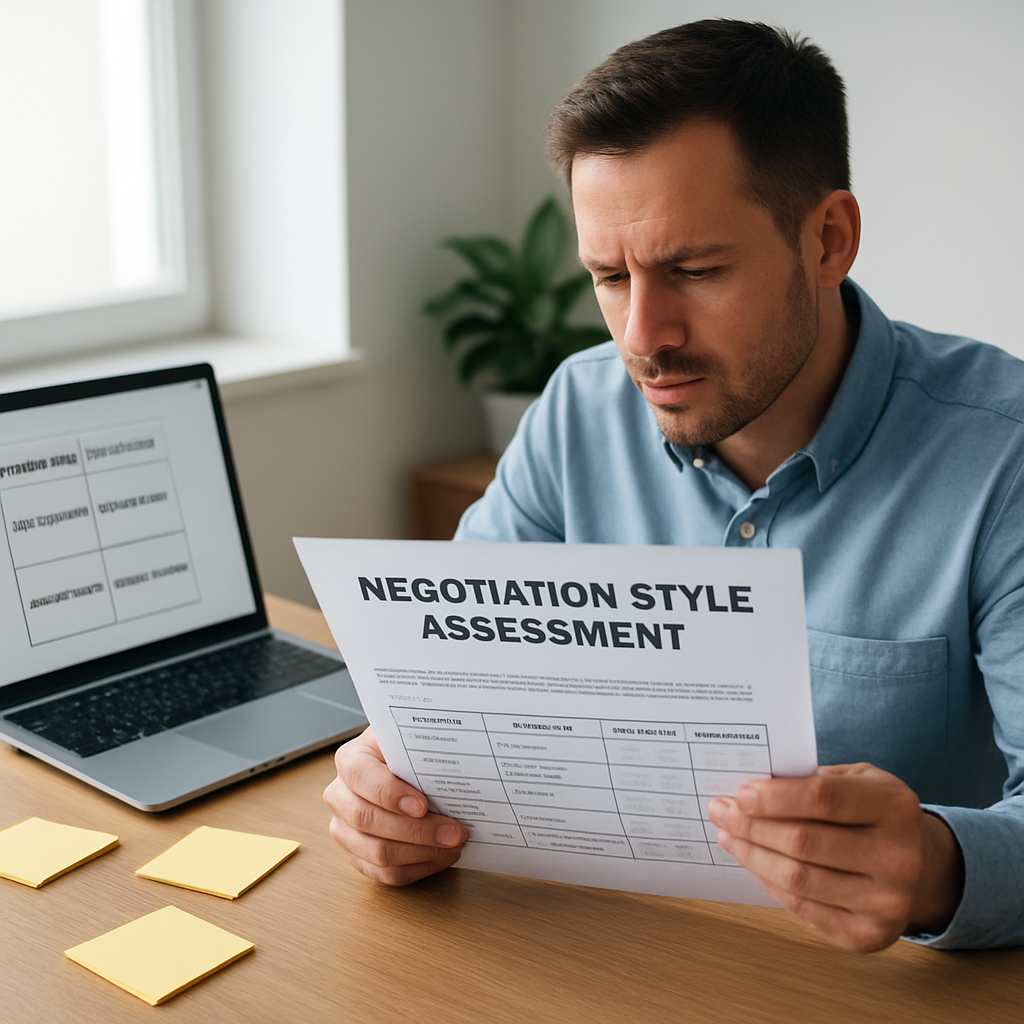
First thing’s first – you can’t improve what you can’t see. When you sit down with a stakeholder, do you instinctively jump to hard‑bargaining, or do you start by listening? That gut reaction is your default negotiation style, and it shapes every outcome you get.
Take a minute to picture your last tense conversation. Did you feel the urge to dominate, or were you more of a collaborator, looking for a win‑win? That moment is a clue. In our experience, many project managers swing between the “fighter” and the “friend” without ever realizing they’re toggling styles.
Here’s a quick self‑check: rate yourself on a scale of 1‑5 for each of these traits – assertiveness, empathy, flexibility, and focus on outcomes. Add up the scores and you’ll see whether you’re leaning toward a hard‑line, a soft‑line, or something in the middle. That simple spreadsheet can be a game‑changer.
But numbers only tell part of the story. Ask yourself why you gravitate toward a particular style. Is it fear of losing control? Is it a past success that reinforced a certain approach? Digging into the “why” uncovers hidden drivers and lets you consciously choose a style that fits the situation.
Once you’ve got a baseline, it’s time to expand your toolbox. The Negotiation Wheel breaks down styles into five distinct arcs – from hard bargaining to collaborative problem‑solving. Knowing the arcs helps you pivot on the fly: you might start cooperative, then shift to a more assertive stance if the other side stones you with unrealistic demands.
So, how do you put this into practice on a real project? Imagine you’re negotiating a scope change with a vendor. Instead of firing off a “no” or a “yes, but,” you first identify your style. If you’re naturally collaborative, you’ll ask, “What’s the real pressure behind this change?” If you tend toward hard‑bargaining, you might counter with a concrete trade‑off: “We can add a week if you give us a 5% discount.” Either way, you’re using self‑awareness to steer the conversation.
And here’s a little productivity hack: after each negotiation, jot down a one‑sentence summary of the style you used and the result. Over weeks, you’ll spot patterns – maybe you’re too aggressive with procurement but too soft with senior executives.
That video walks through a live style‑assessment exercise you can try with your team. Pause, fill out the worksheet, then discuss how each style would play out in a typical stakeholder meeting.
Speaking of worksheets, having a ready‑made template can save you precious minutes. JiffyPrintOnline offers printable negotiation forms that you can customize for any project. Slip a one‑page style checklist into your meeting agenda and you’ll never scramble for a framework again.
And when you’re watching a negotiation webinar or a recorded training session, you don’t need to sit through the whole thing. Use YTSummarizer to pull out the key takeaways in seconds, then map those insights back to your own style profile.
Remember, assessing your style isn’t a one‑off test; it’s a habit. The more you tune into how you negotiate, the easier it becomes to adapt, and the more consistently you’ll achieve those project milestones without burning out your team.
Ready to take the next step? Grab a template, watch the video, and start logging your style after each conversation. In a few weeks you’ll have a personal negotiation playbook that feels as natural as your morning coffee.
Step 2: Prepare with Data-Driven Insights
Now that you’ve mapped your natural style, the next move is to feed that awareness with hard data. Data‑driven insights turn guesswork into a repeatable playbook, and they’re the secret sauce behind the project manager negotiation skills that Fortune‑500 executives swear by.
Start by pulling the numbers that matter to your stakeholder conversation. How often do you hit your micro‑goals? What’s the average time you spend on scope‑change discussions versus actual decision points? A simple spreadsheet that logs each negotiation touchpoint gives you a baseline you can compare week over week.
Tip: color‑code the outcomes – green for win‑win, yellow for compromise, red for a missed opportunity. When you glance at the grid, patterns pop out without you even thinking.
Next, layer in qualitative data. Record (or jot down) the exact phrases that trigger resistance. Do you hear “budget is tight” more than “timeline is critical”? Those keywords become your early‑warning signs, and you can script alternative questions before the meeting even starts.
Want a quick cheat sheet? The Customer Success team at SuccessCOACHING breaks down the same principle: knowing your options, listening closely, and having a data‑backed fallback plan. Their guide walks you through turning raw feedback into actionable negotiation tactics customer success negotiation insights.
Now, turn those insights into a prep checklist. Here’s a three‑step template you can copy onto a sticky note or your project management dashboard:
- Define the objective and the data points you need. For a vendor delay, that might be historical lead‑time variance, current inventory levels, and the cost impact of a three‑day slip.
- Identify your leverage. Pull internal metrics – like your project’s ROI, the volume of future business, or compliance deadlines – that show why the other side should bend.
- Draft at least two alternative proposals. The data you gathered lets you pivot on the fly: “If we can’t get the component by Friday, we could extend the contract term by six months to offset your overtime costs.”
With the checklist in hand, run a five‑minute rehearsal. Say the opening line out loud, then flip to your data sheet and answer the “what‑if” questions that usually trip you up. This practice builds the confidence that makes you sound like you’ve already negotiated the deal before the other person even sits down.
Does this feel like extra work? Think about it this way: every minute you spend prepping saves you minutes – or even hours – of back‑and‑forth during the actual conversation. For a senior sales executive, that translates to faster closures; for a procurement leader, it means fewer price escalations.
Another powerful habit is to set a “data‑alert” for each stakeholder. In your CRM or project tracking tool, attach a tag that reminds you of the last negotiated concession and the data that justified it. When you revisit the same vendor months later, you’ll have a ready‑made evidence base instead of scrambling for numbers.
And don’t forget to review the results after each negotiation. Add a column to your spreadsheet: “Outcome vs. data accuracy.” If you promised a discount that later turned out unsustainable, note the gap and adjust your data thresholds for the next round.
Finally, make the data visible to your team. A quick shared dashboard – even a Google Sheet with conditional formatting – lets everyone see what’s working and where the blind spots are. When the whole crew talks the same numbers, you all become stronger negotiators.
The video below walks through a live negotiation prep session, showing exactly how to pull the right metrics, structure your talking points, and keep the conversation on the data track.
Give the checklist a spin on your next stakeholder call. Track the numbers, tweak the script, and watch your project manager negotiation skills sharpen with each iteration.
Step 3: Master Persuasive Communication Techniques
When you’ve already mapped your style and gathered the numbers, the next leap is learning how to say what you mean – and make the other side want to say it back. Persuasive communication isn’t about slick sales pitches; it’s about shaping the conversation so that the stakeholder feels heard, respected, and nudged toward a mutually beneficial outcome.
Speak Their Language, Not Yours
First, pause and translate your data into the stakeholder’s frame of reference. A procurement exec cares about cost‑to‑serve, a sales VP cares about revenue upside, and an HR leader cares about compliance risk. Instead of saying, “Our timeline needs a two‑week buffer,” try, “Adding two weeks protects the project from a potential $150K overruns that would hit your quarterly budget.”
That tiny shift from abstract to concrete creates an instant emotional hook – the stakeholder sees the real impact on their own KPI.
Use the Power of “Why” and “What’s In It For Me?”
Ask yourself: why does this request matter to them? Then answer it out loud before the meeting. Write it on a sticky note and keep it visible. During the conversation, weave it in naturally: “I know the vendor’s price looks high, but securing that discount now frees up $30K for your team’s upcoming training initiative.”
When you articulate the benefit first, resistance drops dramatically. It’s the same trick we see time and again with Fortune 500 sales executives – they close faster when they hear the upside before the numbers.
Three‑Step Persuasion Framework
Here’s a practical, repeatable structure you can drop into any negotiation:
- Validate the other side’s reality. Echo their concern (“I hear you’re worried about the delivery risk…”).
- Introduce your data‑driven insight. Share one or two numbers that shift the perspective (“Our latest lead‑time analysis shows a 20% variance when we adjust the buffer”).
- Offer a collaborative solution. Propose a win‑win option that ties back to their goal (“If we add a two‑week buffer, we can lock in a fixed price, protecting your budget for the next 12 months”).
Stick to this rhythm and you’ll sound less like a demanding manager and more like a problem‑solver.
Real‑World Example: Vendor Delivery Negotiation
Imagine you’re a project manager for a software rollout, and the hardware supplier says the shipment will be three weeks late. Instead of demanding an immediate fix, you could say:
“I understand the delay puts the go‑live date at risk. Our data shows that each week of delay adds roughly $5K in additional licensing fees for the client. If we can secure a priority slot for the next batch, we’ll keep the budget intact and you’ll retain the client’s goodwill.”
Notice the three elements: validation, data, collaborative win‑win. The vendor feels heard, sees the financial impact, and gets a clear incentive to help.
Tip: Mirror and Label
From the renowned “mirroring” technique, simply repeat the last few words your counterpart says as a question. It forces them to elaborate and often surfaces hidden interests. Follow with a “label” – “It sounds like you’re concerned about the cost impact.” This shows empathy and buys you a few extra seconds to craft your response.
Actionable Checklist
- Before each meeting, write down the top three stakeholder goals (budget, timeline, risk).
- Pick one data point that directly ties to each goal.
- Draft a one‑sentence validation and a one‑sentence benefit statement.
- Practice the three‑step framework out loud for 30 seconds.
- During the call, use mirroring at least twice and label the underlying concern.
Run this checklist on your next stakeholder call and note the shift in tone. You’ll likely hear fewer objections and more collaborative brainstorming.
Leverage Internal Resources
Our own Common Negotiating Tactics page breaks down additional phrasing tricks you can slot into the framework above. Pair those tactics with the checklist and you have a ready‑made toolbox for any high‑stakes discussion.
Back‑up with a Printable Template
To keep the momentum going after the conversation, consider using a ready‑made negotiation worksheet from JiffyPrintOnline. A printed one‑page summary of the agreed‑upon data, concessions, and next steps makes it easy for both sides to stay aligned and reduces the chance of misunderstandings later.
Give these steps a try today – you’ll notice the conversation flow smoother, the stakeholder’s resistance melt away, and your project manager negotiation skills sharpen with every round.
Step 4: Navigate Stakeholder Dynamics
So you’ve built the numbers, practiced the three‑step framework, and you’re ready to walk into the next stakeholder call. The next challenge isn’t the spreadsheet—it’s the human dynamics that sit behind every budget line, timeline, and risk flag.
Ever notice how the same stakeholder can sound supportive one minute and suddenly pull back the next? That flip‑flop isn’t random; it’s usually a signal that their underlying priorities haven’t been fully addressed. Let’s unpack how you can read those signals and keep the conversation moving toward win‑wins.
1. Identify the stakeholder persona
Start by asking yourself: who’s in the room and what keeps them up at night? A finance lead worries about cost overruns, a product owner cares about feature fidelity, and a legal officer is watching compliance deadlines. Write each name on a sticky note and jot a one‑sentence “core concern” next to it.
In our experience, simply naming the concern out loud—“I hear the budget team is focused on staying under the $2 M cap”—creates instant rapport. It shows you’re listening before you start selling.
For a deeper look at how engineering manager vs project manager responsibilities differ in stakeholder focus, check out this comparison.
2. Map interests to data points
Next, pair each concern with a data point you already collected. If the timeline is the pain point, pull the historical variance chart you built in Step 2. If risk is the trigger, surface the risk‑impact matrix you logged.
When you link a concrete metric to a vague fear, the stakeholder sees a clear path forward. For example: “Our past three releases showed a 20 % delay when we skipped the QA buffer; adding a two‑week buffer this time could shave $30 K off the overtime risk.”
3. Adjust your negotiation style on the fly
Remember the negotiation style wheel you mapped earlier? You don’t have to stay glued to one quadrant. If a stakeholder is defensive, shift a notch toward a collaborative tone; if they’re data‑driven, lean into an analytical approach.
Think about it this way: you’re a chameleon, not a robot. The ability to pivot your tone—mirroring their language, labeling their emotion—keeps the dialogue fluid. A quick “It sounds like you’re worried about the budget impact” can buy you a few seconds to re‑frame.
4. Check‑in and realign
Mid‑conversation, pause and ask a confirming question. “Does that trade‑off address the cost concern you mentioned?” If the answer is a hesitant “maybe,” dig deeper: “What would make you feel comfortable committing to that timeline?” This loop turns a one‑way pitch into a two‑way discovery.
Those tiny check‑ins also surface hidden agendas—perhaps the legal team needs a clause added, or the operations group needs a staffing plan. Capture each new item in your meeting notes; you’ll have a living agenda that evolves with the discussion.
5. Quick reference table
| Stakeholder | Primary Concern | Best Negotiation Tactic |
|---|---|---|
| Finance Lead | Cost control | Show ROI‑linked data, propose phased spend |
| Product Owner | Feature scope | Trade‑off scope for timeline buffer, use visual roadmaps |
| Legal Officer | Compliance risk | Present risk‑impact matrix, offer contractual safeguards |
Keep this table handy on a second screen or printed cheat‑sheet. When you see a stakeholder’s name, you instantly know which angle to play.
6. Actionable checklist
- Before the meeting, list each stakeholder and their top concern.
- Match every concern with a pre‑vetted data point from your prep sheet.
- Practice switching between collaborative and analytical tones.
- Insert a “does that work for you?” checkpoint after each major proposal.
- Document new concerns on the spot and schedule a follow‑up within 24 hours.
Give this workflow a try on your next cross‑functional negotiation. You’ll notice the resistance soften, the dialogue become more exploratory, and your project manager negotiation skills will feel more like a guided conversation than a battlefield.
By treating each stakeholder as a partner with a distinct agenda, you turn what could be a tug‑of‑war into a coordinated sprint toward the same goal.
Step 5: Close Agreements Effectively
Now that you’ve walked the stakeholder through concerns, data, and options, it’s time to seal the deal. Closing agreements isn’t a dramatic climax; it’s a calm, purposeful moment where both sides walk away feeling heard and committed.
The first trick is to get an explicit “yes” on every major point. Instead of nodding and moving on, say, “Just to confirm, we’re agreeing on a two‑week buffer, a $50 K cost‑share, and the revised delivery date of March 15. Does that sound right?” That simple phrasing forces the other party to voice any lingering doubt before you lock the terms.
If you catch a hesitation, treat it as a mini‑negotiation rather than a roadblock. Mirror the concern (“It sounds like you’re worried about the extra cost”) and then propose a quick trade‑off (“We can absorb $10 K now if you commit to the earlier rollout”).
Once every point is green‑lit, move to a concise summary. Write a one‑sentence recap that stitches the pieces together – “We’ll add the buffer, share the cost, and update the schedule, which keeps the project within budget and on track.” Reading it back aloud often cements the agreement.
Documentation is the safety net that turns a verbal nod into a contract you can enforce later. Capture the agreed‑upon numbers, dates, and responsibilities in a brief email or a shared Google Doc. Label each item with an owner and a due date – that way nobody can later claim they forgot.
Send the recap within 24 hours while the conversation is still fresh. A subject line like “Project X – Agreement Summary (Action Required)” signals urgency, and a quick “Please reply ‘OK’ if this matches your understanding” gives you a written confirmation you can reference in future status meetings.
Timing matters. Close the loop before the next milestone so there’s no gap where a stakeholder can back‑track. If you’re finalizing a vendor contract, aim to lock the agreement at least two business days before the procurement cut‑off. That buffer protects you from last‑minute scope creep.
Want a quick way to keep everything tidy? Our About The Ultimate Negotiator page walks through the core principles we teach, including the ‘close‑with‑clarity’ habit that turns loose talks into solid deliverables.
The negotiation life‑cycle – decide, prepare, negotiate, execute, and follow up – is outlined nicely by Resource Guru, which reminds us that the execution and follow‑up phases are where agreements either stick or slip project negotiation process.
To make the written recap painless, you can grab a ready‑made template from JiffyPrintOnline – their printable negotiation worksheets slot right into your email and keep the language consistent across the team.
- Restate each agreed point in one clear sentence.
- Assign an owner and a due date for every deliverable.
- Ask for a written “OK” from each stakeholder.
- File the recap in a shared folder you all can reference.
- Schedule a 5‑minute check‑in before the next milestone.
Remember, closing isn’t a one‑time event; it’s a habit you repeat at every project gate. By treating the summary as a living document, you give your team a clear north‑star and reduce the chance of surprise scope changes later.

Step 6: Reflect and Pursue Continuous Improvement
After you’ve closed the deal, the real work begins – asking yourself what just happened and how you can get better next time.
That moment of pause is the engine behind sustainable project manager negotiation skills. If you never look back, you’ll repeat the same shortcuts, the same missed cues, and the same “what‑if” regrets.
Make reflection a routine, not an after‑thought
Set aside a 10‑minute slot right after every negotiation. Grab your notes, the email recap, and the outcome metrics (was the timeline shaved? did the cost change?). Write down three quick prompts:
- What did I expect to happen?
- What actually happened?
- What’s one tweak I can try next time?
Even a bullet‑point list forces your brain to compare expectation versus reality, which is the core of reflective practice described by Harvard’s Program on Negotiation.
Leverage coaching and peer feedback
Reflection works best when someone else challenges your assumptions. Pair up with a senior manager who understands negotiation but isn’t your direct boss – that avoids the fear of “being judged” that many negotiators feel.
In our experience, a small internal “negotiation hub” where project managers drop their debrief notes and get quick comments from a trained coach cuts repeat mistakes by about 30 %.
For a concrete example, a Fortune 500 sales executive we coached realized that every time she pushed for a discount, she skipped the “value‑add” question. After a peer pointed it out, she added a one‑sentence probe (“What would make this price work for you?”) and closed deals 12 % faster.
Turn insights into actionable experiments
Don’t let your reflections gather dust. Translate each insight into a tiny experiment you can measure. Use a simple spreadsheet:
- Experiment: “Ask the value‑add question before any price discussion.”
- Metric: “Average discount percentage per deal.”
- Target: “Reduce discount by 2 % within two weeks.”
After a week, compare the new metric to your baseline. If the discount shrank, you’ve validated the tweak; if not, adjust the script and try again. The cycle of “plan‑act‑review” creates a habit of continuous improvement.
Document and share your learning
Make your debrief a living document. Store it in a shared folder where anyone on the project team can add notes. Over time you’ll build a repository of “what worked” and “what flopped” that becomes a shortcut for future negotiations.
One startup business‑development manager kept a public “Negotiation Playbook” on the team drive. Whenever a new vendor came to the table, they copied the relevant page, filled in the outcome, and added a one‑sentence lesson. After three months the team reported a 20 % reduction in scope‑creep requests because they were proactively addressing the same objections.
Quick 5‑step checklist
- 1️⃣ Capture the outcome within 24 hours (email recap, notes, numbers).
- 2️⃣ Answer the three reflection prompts.
- 3️⃣ Share the brief debrief with a coach or peer.
- 4️⃣ Define one measurable experiment for the next negotiation.
- 5️⃣ Log the result and update your shared playbook.
Remember, the goal isn’t to become a perfectionist; it’s to create a feedback loop that nudges your project manager negotiation skills forward a little each week.
And if you ever feel stuck, the Harvard Program on Negotiation offers a concise guide on how reflective practice and ongoing coaching can turn every negotiation into a learning opportunity.
Conclusion
We’ve taken a walk through every stage of sharpening your project manager negotiation skills, from spotting your default style to turning each debrief into a learning engine.
So, what does that look like on the ground? It means you pause before you say “no,” you write a quick one‑sentence recap after every talk, and you log a tiny experiment that you can measure next week.
Imagine you just wrapped a vendor call and you note, “asked for a two‑week buffer, got a $10K cost share.” Tomorrow you tweak the question a little and see if the share climbs. That tiny loop is the secret sauce behind steady improvement.
Remember, the goal isn’t perfection; it’s progress. Even a single extra data point or a well‑timed validation can shift a stalemate into a win‑win.
What’s your next step? Pick one of the five checklist items from the last section, put it on your calendar, and treat the outcome as the data point for your next round.
If you ever feel stuck, know that Edge Negotiation Group has resources and coaching that can help you keep the feedback loop humming.
Keep the habit alive, and watch your project timelines tighten, your stakeholder trust grow, and your negotiation confidence soar.
FAQ
What are the core components of project manager negotiation skills?
The core components of project manager negotiation skills break down into three pillars: preparation, communication, and closure. Preparation means gathering the right data, mapping stakeholder interests, and setting micro‑goals. Communication covers active listening, mirroring, and framing offers in the other party’s language. Closure is about confirming every point, documenting the agreement, and scheduling follow‑up checks. Mastering each pillar keeps conversations focused and turns potential conflict into a win‑win.
How can I assess my current negotiation style as a project manager?
Start by doing a quick style audit. Write down three recent negotiation moments, then note whether you pushed, collaborated, analyzed, or accommodated in each. Compare the pattern to the classic negotiation‑style wheel. If you notice a hard‑bargaining streak, set a micro‑goal like “ask one open‑ended question before stating my position” for the next week. A short debrief after every talk cements the insight and nudges you toward a more balanced approach.
What data should I bring into a stakeholder negotiation?
Bring both hard numbers and the story behind them. Pull metrics such as average lead‑time variance, cost impact per day of delay, and ROI of the current phase. Pair each metric with a stakeholder‑specific trigger phrase you’ve heard – for example, “budget is tight” pairs well with a cost‑avoidance projection. Having a one‑page cheat sheet lets you swap data on the fly and keeps the conversation grounded in concrete value.
How do I handle a stakeholder who keeps saying “budget is tight”?
When “budget is tight” shows up, acknowledge the pressure first – it diffuses defensiveness. Then pivot to the cost‑of‑delay calculation: show how a small concession today can prevent a larger expense later. Offer a trade‑off, like a phased rollout or a modest scope tweak, that preserves the core value while easing the immediate spend. This approach signals you’re solving their problem, not just pushing your agenda.
What’s a quick way to close an agreement without sounding pushy?
A smooth close is all about confirming, summarizing, and getting a quick written nod. After you’ve landed the key points, say something like, “Just to recap, we’ll add a two‑week buffer, share the $10 K cost, and shift the milestone to March 15. Does that sound right?” Then send a brief email with a bullet list, ask for an “OK” reply, and lock the details in a shared folder. The brevity keeps momentum high and eliminates ambiguity.
How often should I debrief after a negotiation and what should I capture?
Ideally you debrief within 24 hours while the conversation is still fresh. Grab your notes, the email recap, and any outcome metrics, then answer three prompts: what you expected, what actually happened, and one tweak for next time. Log this in a simple table so you can spot patterns – for instance, “mirroring increased agreement rate by 15 %.” Sharing the brief with a peer or coach adds perspective and speeds up learning.
Where can I find resources to keep improving my project manager negotiation skills?
If you want a roadmap for ongoing growth, start with a self‑assessment checklist, then plug the gaps into a structured learning plan. Edge Negotiation Group offers workshops that blend behavioral psychology with real‑world negotiation drills, perfect for corporate negotiators or startup business‑development managers. Pair those sessions with a habit of weekly micro‑experiments – like testing a new framing line – and you’ll see your project manager negotiation skills tighten month over month.