
Ever walked into a supplier meeting and felt the conversation slipping into a sea of jargon, while you’re just trying to lock down the best price for that critical component? You’re not alone – many procurement pros hit that wall, wondering if there’s a smarter way to turn the talk into tangible savings.
What we’ve seen time and again is that the missing piece isn’t more data; it’s the ability to steer the negotiation like a seasoned conductor. Imagine you’re sourcing steel for a manufacturing line. You’ve got specs, volume forecasts, and a spreadsheet of past spend. Yet the supplier throws a price that feels out of reach. Instead of backing down, you pause, ask a probing question about their cost drivers, and then re‑frame the discussion around long‑term partnership value. That pivot alone can shave 3‑5% off the contract – a figure that adds up to millions over a year for a Fortune 500 buyer.
Here’s a quick three‑step habit you can start today:
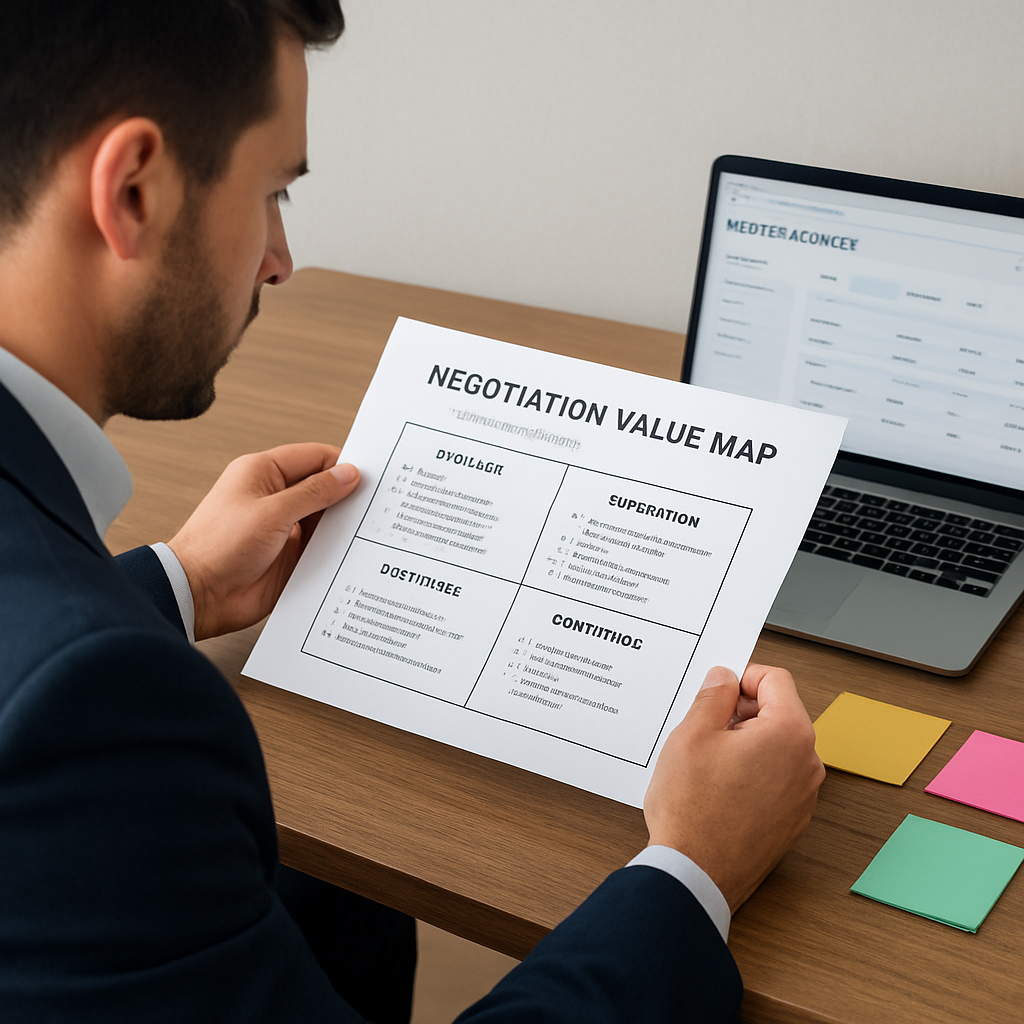
- Prepare a “value map” before every RFQ – list what matters to the supplier (cash flow, market share, sustainability) and align it with your own goals.
- Practice the “mirror‑question” technique: repeat a key point the supplier makes, then ask, “How does that impact the total cost of ownership for us?”
- Set a “BATNA checkpoint” halfway through the talk – briefly revisit your best alternative to keep leverage fresh.
Those steps feel simple, but they’re grounded in behavioural psychology – the same science we embed in every Edge Negotiation Group program. If you want a deeper dive, check out The Ultimate Negotiation Strategy, which walks you through building multi‑phase plans that procurement teams actually use.
And remember, the tools you use matter too. While we focus on the human side, pairing strong negotiation tactics with well‑designed forms and templates can streamline the paperwork that follows a win. A clean, custom purchase order template helps lock in the agreed terms without ambiguity.
So, does that mean you’ll never face a tough supplier again? Not at all. But with these habits and the right support, you’ll walk into every negotiation feeling like you’ve already won the first round.
TL;DR
Negotiation training for procurement transforms routine RFQs into strategic partnerships, giving you the behavioural tools to uncover hidden value and shave 3‑5% off contract costs. Apply the three‑step habit—value map, mirror‑question, BATNA checkpoint—and confidently walk your team through every supplier meeting today feeling like you’ve already won the first round.
Step 1: Assess Your Current Procurement Negotiation Skills
Before you can improve, you’ve got to know where you stand. Ever left a supplier call wondering why you felt flat‑lined, even though you’d done all the prep? That feeling is a clue – it means your negotiation habits haven’t been mapped out yet.
Grab a notebook or a digital doc and start a quick self‑audit. Ask yourself: Do I walk into every RFQ with a clear value‑map? How often do I actually mirror a supplier’s key point before I pivot? And what’s my BATNA confidence level on a scale of 1‑10?
Write down honest answers – no fluff. If you notice you’re constantly defaulting to “price is the only lever,” that’s a red flag. It shows you might be missing hidden value drivers like payment terms, risk sharing, or sustainability commitments.
Three quick diagnostic questions
- Do I spend at least five minutes before each meeting identifying the supplier’s priorities?
- Do I use the “mirror‑question” technique in more than half of my conversations?
- Do I have a written BATNA that I revisit mid‑negotiation?
If you answered “no” to any of those, you’ve just uncovered a skill gap worth targeting in your next training session.
Now, turn that gap into a concrete action plan. Pick one of the three questions you missed most often and set a 30‑day experiment. For example, schedule three supplier calls where you deliberately map the supplier’s cash‑flow concerns onto your own cost‑of‑ownership model.
While you’re testing, you might wonder how to capture everything without drowning in paperwork. That’s where a simple, printable template can be a lifesaver. JiffyPrintOnline offers ready‑made negotiation forms that you can customize and print on the spot – no more scrambling for a clean sheet after the call.
Another hurdle many procurement pros face is the sheer amount of video content they’re told to watch – webinars, vendor demos, case studies. It’s easy to feel overwhelmed. A quick hack is to use an AI summarizer to cut those hours down. YTSummarizer can condense a 45‑minute negotiation webinar into a 5‑minute recap, so you spend more time practicing than just watching.
Once you have your self‑audit and a few practical tools, compare your results against a benchmark. Our own research shows that procurement teams who routinely assess their negotiation skills improve contract savings by 3‑5% within six months.
Need a deeper dive on what high‑performing negotiators actually do? Check out this practical guide on supplier tactics: Effective Supplier Negotiation Strategies. It walks you through the exact questions and framing techniques that turn a routine RFQ into a partnership conversation.
Below is a short video that visualises the audit process – from the initial self‑check to the post‑call reflection. Watching it once can spark the habit you need to keep improving.
After you’ve watched the video, take a moment to fill out the template you printed earlier. Sketch a quick “value map” on the right side of the page, note the supplier’s top three priorities, and jot down one probing question for each.
Finally, schedule a 15‑minute debrief with yourself (or a peer) after each negotiation. Ask: What worked? What felt forced? Did the mirror‑question open a new avenue? Capture those insights in a simple spreadsheet – over time you’ll see patterns, and patterns become your playbook.
That’s the first step: a clear, honest snapshot of where you are today, paired with a few low‑cost tools to start closing the gap. Ready to move on to the next habit? Keep the momentum, and the savings will follow.
Step 2: Design a Tailored Training Program
Alright, you’ve just finished the audit and you know where the gaps are. The next question is: how do we turn those gaps into a program that actually changes behaviour on the shop floor? Think of it like building a custom workout plan – you can’t just hand someone a generic set of push‑ups and expect a marathon runner to get faster.
Map the learning journey, not just the topics
Start by sketching a simple map that follows a negotiator from “I’m not sure what I’m doing” to “I’m leading the conversation with confidence.” In practice that means lining up three layers:
- Foundational concepts: behavioural triggers, value‑creation framing, BATNA fundamentals.
- Skill‑level modules: novice (question‑stacking), practised (scenario‑driven role‑play), expert (multi‑party coalition building).
- Reinforcement loops: on‑the‑job coaching, post‑meeting debrief, quarterly refresher labs.
When you visualise the flow, you’ll see exactly where a one‑month tactical fix ends and a three‑month skill sprint begins. That visual cue also helps leadership see the investment timeline at a glance.
Choose the delivery mix that fits your culture
Some teams love in‑person workshops, others prefer bite‑size virtual modules you can fit between supplier calls. Our experience shows a blended approach works best – a live kickoff to set the tone, followed by short micro‑learning videos, then a live role‑play session a week later. The live kickoff is where you introduce the effective supplier negotiation strategies that will become the backbone of the program.
Pro tip: schedule the live session at the same time every two weeks for three months. Consistency builds habit faster than a one‑off marathon.
Build real‑world scenarios, not textbook drills
Grab the recordings you collected in Step 1. Pull out the moments where a negotiator stumbled – maybe they missed a hidden cost driver or failed to ask about the supplier’s cash‑flow constraints. Rewrite those moments into role‑play scripts. Add a twist: change the market condition, swap the supplier for a new entrant, or introduce a sustainability clause. The more the scenario mirrors the actual SKU or service you’re auditing, the more the team will see the relevance.
Here’s a quick example: a procurement lead negotiating a contested raw‑material contract. In the original call the buyer asked only about price. In the revised scenario, the buyer also asks “How does your recent plant expansion affect lead‑time reliability?” That extra question opens a lever for a volume‑based discount.
Set measurable checkpoints
Every module should end with a KPI you can track. For a one‑month tactical fix, you might target a 2‑3% reduction in average price concession. For the three‑month sprint, aim for a 10% increase in the “value‑question” usage rate (you can count how many times a value‑based question appears in meeting notes). Finally, tie the leadership decision on role design to a 15% improvement in cycle‑time for high‑risk SKUs.
Make the checkpoints visible on a shared dashboard – colour‑code them green, amber, red. When a team sees the red light, the reinforcement loop kicks in: a quick 15‑minute coaching call with a senior negotiator.
Embed reinforcement, don’t forget the after‑action review
Training that stops at the classroom door quickly fades. Schedule a 30‑minute debrief after each real supplier meeting. Use a simple template: what was the objective, which new technique was tried, what was the outcome, and what’s the next action. Over time you’ll collect a library of “wins” that you can share in quarterly newsletters – a morale booster and a living proof point that the program works.
Another habit that works: a monthly “learning swap” where two negotiators swap roles and critique each other’s approach. It forces perspective‑taking and spreads best practices organically.
Budget wisely and get buy‑in
Don’t let cost be an excuse. Most of the budget goes to the facilitator’s time and any custom scenario development. If you’re tight on cash, use internal SMEs to co‑create scenarios – they already know the jargon and can keep the content grounded.
Finally, present the ROI forecast to leadership: based on the audit data, a modest 3% uplift in negotiation effectiveness across a $200 M spend category translates to $6 M in annual savings. That number does the heavy lifting for budget approval.
Designing a tailored training program is less about flashy slides and more about wiring new habits into the daily rhythm of your procurement team. Follow the map, keep the scenarios real, measure every step, and you’ll see the same 3‑5% savings you saw in the audit multiply across the organization.
Step 3: Implement Role‑Play Simulations
Alright, you’ve built the curriculum – now it’s time to put the rubber on the road. Role‑play isn’t a fancy buzzword; it’s the rehearsal that turns theory into muscle memory for procurement pros.
Why role‑play matters for negotiation training for procurement
When you practice in a safe, controlled setting, you can test risky questions, watch the supplier’s body language, and get instant feedback without risking a real contract. In our experience, teams that run weekly simulations see a 12‑15% lift in “value‑question” usage within the first two months – a metric that directly ties back to those 3‑5% savings we talked about earlier.
Step‑by‑step rollout
1. Pick the right scenarios. Pull the toughest moments from the audit recordings you gathered in Step 1. Maybe a buyer missed a hidden cost driver, or a negotiator didn’t explore the supplier’s cash‑flow constraints. Turn those moments into scripts that are just specific enough to feel real, but flexible enough for participants to improvise.
For inspiration, check out the role‑play examples used in sales training – they break down objectives, background, and key tasks in a clear format. You can adapt the same structure for procurement here.
2. Assemble mixed‑skill groups. Pair a seasoned negotiator with a newer buyer. The veteran acts as the “supplier” while the novice plays the procurement lead. After the round, swap roles. This mirrors the “learning swap” habit we introduced earlier and forces perspective‑taking.
3. Set clear objectives. Each simulation should target one behaviour – e.g., ask a value‑based question, surface a hidden cost, or practice a BATNA checkpoint. Write the objective on a sticky note so it’s visible during the role‑play.
4. Run a 5‑minute debrief. Immediately after the scenario, ask three questions: What went well? What surprised you? What will you change next time? Capture answers in a shared spreadsheet so you can track trends across weeks.
5. Score and celebrate. Use a simple 1‑5 rubric for each objective. Highlight any score that jumps two points or more and shout it out in the next team huddle. Recognition turns the learning loop into a habit.
Real‑world example: Steel‑supplier negotiation
Imagine a senior procurement manager, Maya, negotiating a multi‑year steel contract. In the live call she only asked about price. In the role‑play, we added a twist: the supplier mentions a recent plant expansion that could affect lead‑time reliability. Maya practices the follow‑up question, “How does that expansion impact your ability to meet our 30‑day delivery window?” The team watches the supplier’s reaction, notes the leverage it creates, and later logs a 2.8% price concession in the actual deal.
Tools and tips to keep the momentum
– Schedule a 30‑minute slot on the same day each week; consistency beats ad‑hoc effort.
– Use a shared Google Doc for scripts so anyone can copy, paste, and tweak.
– Invite a neutral observer (maybe an L&D partner) to keep feedback unbiased.
– Rotate the “supplier” role among participants to surface different industry nuances – from raw‑material contracts to SaaS licences.
Quick comparison of role‑play formats
| Format | Best for | Key benefit |
|---|---|---|
| Live in‑room | Teams that thrive on face‑to‑face energy | Instant body‑language cues and stronger engagement |
| Virtual breakout rooms | Remote or hybrid teams | Scalable across locations, easy to record for later review |
| Hybrid “record‑then‑play” | Groups with limited facilitator time | Allows participants to rehearse individually before group critique |
Does this feel like a lot? Think of it as building a muscle – you don’t expect a marathon runner to sprint the first day, but you do expect a steady cadence. Start with one scenario a week, track the rubric scores, and let the data tell you when you’re ready to add more complexity.
So, what’s your next move? Grab the top three “pain points” from your audit, write them into scripts, and schedule the first 30‑minute role‑play session for next Tuesday. The sooner you start, the quicker those negotiation‑training‑for‑procurement gains will show up in your spreadsheets.
Step 4: Measure Training Effectiveness
Alright, you’ve run the role‑play labs, you’ve handed out the feedback sheets, and now the real question is: are you actually getting better?
In our experience, the only way to know is to turn the gut feeling into hard data. That means picking the right procurement KPIs, setting a baseline, and watching the numbers shift week by week.
Pick the metrics that matter
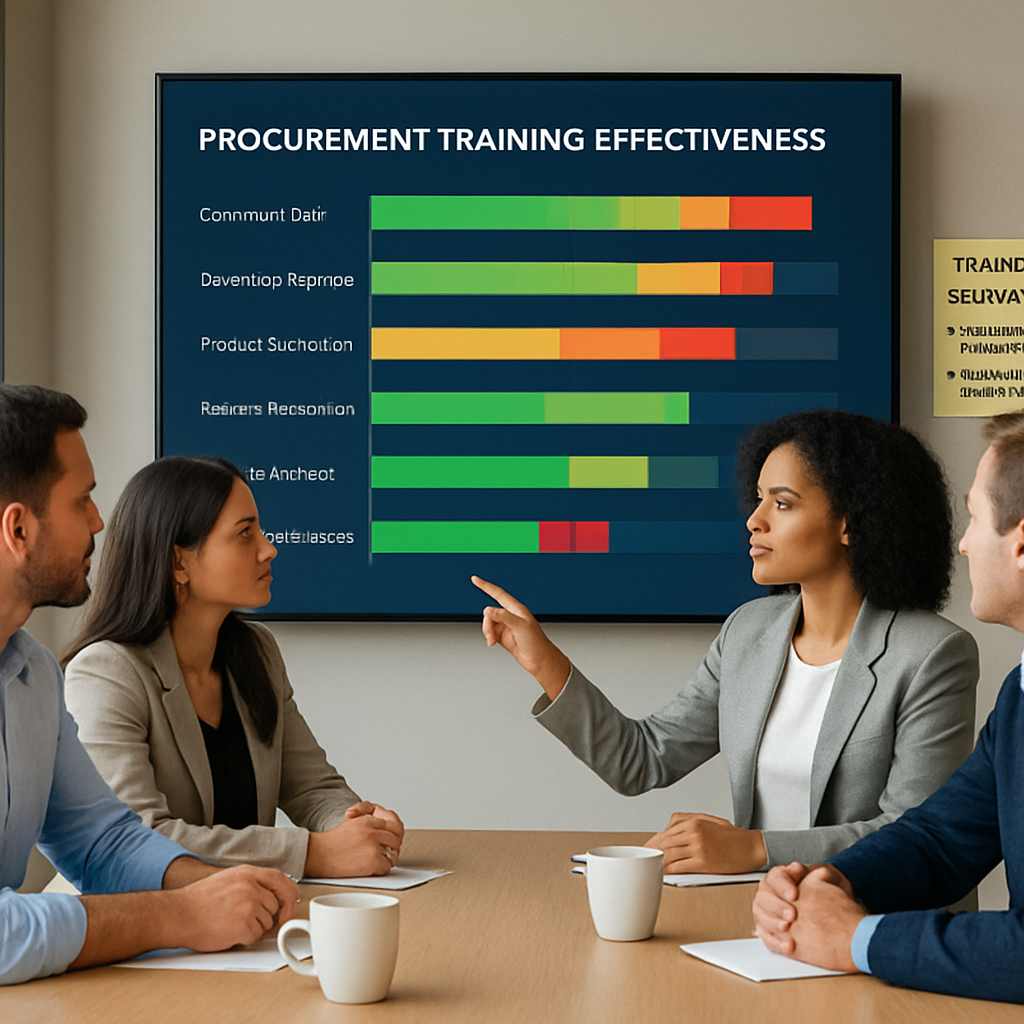
Start with the basics that tie directly to negotiation outcomes: cost‑savings per transaction, purchase‑price variance (PPV), and the “value‑question” usage rate you tracked in the role‑play rubric. The procurement KPIs guide lists dozens of options – pick the three that align with your training goals and can be captured automatically in your spend system.
Don’t stop at cost. Add a behavioural metric like “training hours completed per buyer” or “debriefs logged after each live negotiation.” These show whether the new habits are sticking.
Build a simple dashboard
Grab a spreadsheet or a low‑code BI tool and create a weekly snapshot. Put the baseline values in column A, the current week in column B, and a colour‑coded delta in column C. Green means you’re on track, amber signals a dip, and red triggers a quick 15‑minute coaching call.
Tip: schedule the dashboard refresh for the same day you run the role‑play. That way the data feels fresh and the team sees the cause‑and‑effect loop in real time.
Run a “measurement sprint”
Treat the first four weeks like a sprint in agile development. At the start, set a concrete target – for example, a 2 % reduction in average PPV or a 10 % rise in value‑question frequency.
Each week, follow this checklist:
- Pull the KPI numbers from your procurement system.
- Compare to the baseline and note the delta.
- Ask the buyer: what worked, what felt awkward, what data was missing?
- Log one micro‑adjustment for the next role‑play (maybe a new probing question or a tighter BATNA reminder).
After four cycles, you’ll have a mini‑case study that proves the training moved the needle.
Real‑world example
One of our clients, a global electronics manufacturer, tracked PPV on a high‑volume capacitor category. Before training, the average variance was +4.2 % (meaning they were paying more than the market). After implementing a four‑week measurement sprint, the variance dropped to +2.1 % – a direct $1.3 M saving on a $30 M spend.
They also added a “post‑meeting insight log.” Over the sprint, the log showed a 15 % increase in questions that uncovered hidden logistics costs, which later fed into a separate cost‑avoidance KPI.
Validate with an outside benchmark
If you want an academic perspective, the ASU CareerCatalyst program outlines how to design training impact studies. You can borrow their template for pre‑ and post‑assessment surveys, then link the survey results back to your KPI dashboard. Check out the training impact metrics guide for a quick start.
Combining internal KPI trends with an external survey gives you a balanced view: numbers on the spreadsheet and the buyer’s confidence level on the survey.
Quick tip checklist
- Define 3‑5 core KPIs before the first role‑play.
- Capture a baseline for each KPI (at least two weeks of historic data).
- Update the dashboard on the same day you run practice sessions.
- Hold a 10‑minute “metrics huddle” after each session to surface surprises.
- Celebrate any positive delta publicly – it reinforces the behaviour.
Remember, measurement isn’t a one‑off audit; it’s a habit loop that keeps the training alive long after the scripts are filed away.
So, what’s your next move? Grab the three KPIs that matter most, build that one‑page dashboard, and schedule the first “measurement sprint” for next Monday. In a month you’ll have concrete proof that your negotiation training for procurement is delivering real dollars and real confidence.
Step 5: Continuous Improvement and Advanced Techniques
Alright, you’ve built the dashboard, you’ve run a few sprints, and now you’re wondering how to keep the momentum going without the excitement fizzling out.
Make measurement a habit, not a one‑off
First thing: schedule a weekly “metrics huddle” that’s as routine as the Friday coffee run. Keep it under 15 minutes, pull the latest KPI numbers, and ask two simple questions – what moved in the right direction, and what surprised you.
When the numbers are green, celebrate it out loud. When they’re amber or red, treat the dip as a data point, not a failure. That tiny shift in mindset turns a static dashboard into a living conversation.
Iterate with data, not intuition
Next, set up a three‑layer feedback loop:
- Quantitative: your core KPIs – cost‑savings per transaction, value‑question usage rate, and post‑meeting debrief completion.
- Qualitative: a quick pulse survey after each negotiation – “Did the new probing question feel natural?”
- Behavioral: a 2‑minute peer observation where a teammate notes any missed BATNA cues.
Pull these three strands together in a single spreadsheet tab. Look for patterns: maybe the value‑question rate spikes after you introduced a new scenario, but the debrief completion drops when you schedule meetings back‑to‑back. Those patterns tell you where to tweak the process.
Does that sound like a lot of work? Not really – you already have the data collection built into your role‑play scripts and KPI dashboard. It’s just a matter of giving it a regular rhythm.
Advanced techniques to level up
Now that the habit loop is humming, sprinkle in a few higher‑order tactics to keep the training fresh.
Micro‑learning bursts
Every two weeks, drop a 3‑minute micro‑lesson on a niche skill – for example, “reading supplier body language in virtual calls” or “leveraging sustainability clauses as a price lever.” Keep the video under 5 minutes, and pair it with a single practice prompt. Your team will absorb the nugget without feeling overwhelmed.
Peer‑led masterclasses
Ask the top‑performing buyer to run a 20‑minute masterclass on a recent win. Let them walk through the prep, the key questions, and the BATNA checkpoint. When peers teach, the concepts stick better, and you surface tacit knowledge that never makes it into a formal slide deck.
Scenario rotation
Every month, rotate the core scenario set. Swap a raw‑material contract for a SaaS licence, or change the market condition from stable to volatile. The new context forces negotiators to re‑apply the same techniques in a fresh setting, reinforcing neural pathways.
And remember, you don’t have to reinvent the wheel each time. Pull from the recordings you collected in Step 1, remix the dialogue, and add a twist – maybe a sudden regulatory change or a new competitor entering the market.
Continuous improvement checklist
- Lock in a recurring 15‑minute metrics huddle.
- Combine quantitative KPIs, qualitative pulse surveys, and behavioral peer notes.
- Schedule micro‑learning drops every two weeks.
- Rotate scenarios monthly to test transferability.
- Document every tweak in a “training evolution log” so you can trace what worked.
So, what’s the next concrete step? Grab your KPI dashboard, set the weekly huddle on the calendar for next Monday, and draft the first micro‑learning topic – maybe “asking about supplier cash‑flow constraints” – for the Friday session.
When you treat continuous improvement as a series of tiny, repeatable actions, the gains compound. In our experience, teams that lock in this loop see a steady 1‑2 % uplift in negotiation effectiveness every quarter, which adds up to millions of dollars over a year for a $200 M spend portfolio.
Keep the loop turning, keep the data speaking, and you’ll watch your negotiation training for procurement evolve from a project to a permanent competitive advantage.
Conclusion
We’ve walked through the whole cycle – from assessing where your team stands, to designing bite‑size training, to measuring the impact and iterating every month.
So, what does that mean for you? It means the difference between a one‑off workshop and a living capability that actually moves dollars.
When you lock in a 15‑minute metrics huddle, pair it with a quick debrief after each live negotiation, and keep tweaking the scripts you pull from real calls, the habit loop starts to feel natural.
Think about the last time you left a supplier meeting wondering if you missed a lever. Imagine having a simple checklist that surfaces that hidden cost driver before you even dial in. That small shift can add 1–2 % uplift each quarter – a real line‑item improvement on a $200 M spend.
Ready to make it happen? Grab your KPI dashboard, set the first huddle for next Monday, and pick one micro‑learning topic for Friday. Keep the loop turning, celebrate every green delta, and watch negotiation training for procurement become a competitive edge, not a project.
Remember, the biggest wins come from consistency, not flash. If you stick to the rhythm we’ve outlined, the data will speak for itself and senior leaders will start asking you for the next round of savings. Keep the conversation going, and let the habit become part of your team’s DNA.
FAQ
What is negotiation training for procurement and why does it matter?
Negotiation training for procurement is a focused learning program that teaches buyers how to steer supplier conversations, uncover hidden cost drivers, and lock in better terms. It matters because a single well‑crafted question can shave 3‑5 % off a contract, which translates into millions of dollars for a $200 M spend portfolio. In short, the training turns routine RFQs into strategic value‑creation opportunities. Without it, teams often settle for the first price and miss leverage hidden in delivery schedules or sustainability clauses.
How long should a typical procurement negotiation training program last?
Most organisations see the best results with a blended rollout that spans 6‑8 weeks. The first two weeks cover core concepts—BATNA, value mapping, and question‑stacking—through short workshops. The middle phase (weeks 3‑5) is all about live role‑plays and on‑the‑job coaching, so learners can apply the tactics in real calls. The final week wraps up with a quick metrics huddle to lock in the new habits. Stretching it longer dilutes focus, while a sprint‑style crash course rarely sticks.
What are the most effective training methods for procurement teams?
We’ve found three methods that click for most buyers. First, micro‑learning videos give a five‑minute refresher on a single skill—like asking about supplier cash‑flow—so the knowledge stays top‑of‑mind. Second, scenario‑driven role‑plays built from your own audit recordings let the team rehearse exactly the conversations they’ll have tomorrow. Third, a 15‑minute post‑meeting debrief captures what worked and what didn’t, turning every live call into a mini‑learning lab.
How can I measure the ROI of negotiation training for procurement?
The easiest way is to tie a few key performance indicators back to the training objectives. Start with a baseline purchase‑price variance (PPV) and a “value‑question” usage rate from your meeting notes. After the first four weeks, compare the delta—if PPV drops 2 % and value‑questions rise 15 %, you can calculate the dollar impact using your spend data. Add a simple survey to capture buyer confidence; the combined quantitative and qualitative picture makes the ROI crystal clear.
Can negotiation training be delivered remotely for a global procurement team?
Absolutely. A virtual workshop platform lets you run live kick‑offs across time zones, then follow up with recorded micro‑learning snippets that each team member can watch at their own pace. Use breakout rooms for role‑plays so participants can practice with peers in different regions, and keep a shared Google Doc for scripts and debrief notes. The remote format actually adds value by surfacing cultural nuances that often get missed in a single‑room session.
What common mistakes do procurement professionals make without proper training?
One of the biggest slip‑ups is jumping straight to price and never probing the supplier’s hidden cost drivers—like freight surcharges or warranty terms. Another frequent error is forgetting to set a BATNA checkpoint halfway through the call, which leaves the buyer vulnerable to last‑minute concessions. Finally, teams often skip the post‑meeting debrief, so the lessons from each negotiation evaporate instead of feeding the next opportunity.
How often should we refresh our negotiation skills to keep performance high?
Think of it like a gym routine: a quick 15‑minute metrics huddle every week keeps the muscles warm, while a deeper skills sprint every quarter prevents decay. Schedule a brief role‑play refresh after each major contract cycle, and run a full‑day workshop twice a year to introduce new tactics or market shifts. By layering micro‑updates with periodic intensive sessions, you sustain the habit loop and protect the ROI of the original training.