
Practical examples of negotiation tactics for business professionals
Ever walked into a meeting and felt the tension crackle, like waiting for a traffic light to turn green?
You know that moment when both sides are holding their cards close, each wondering who will make the first move.
In the world of high‑stakes deals, that first move often comes down to a handful of tried‑and‑true examples of negotiation tactics.
One classic play is anchoring – dropping a bold opening number that sets the reference point, even if it feels a bit aggressive.
Another go‑to move is the ‘good cop, bad cop’ routine, where a teammate softens the tone while the other leans in with tougher language, nudging the counterpart toward a compromise.
We also see the ‘foot‑in‑the‑door’ technique in action: start with a small concession, then ask for a bigger one once the other party feels they’ve already given something.
For corporate negotiators juggling multi‑year contracts, the ‘silence’ tactic can be surprisingly powerful – after you make your offer, simply pause and let the silence do the heavy lifting.
Procurement pros often flip the script with ‘mirroring’, repeating key words the supplier just said, which subtly builds rapport and encourages them to elaborate.
What about startups? A quick ‘win‑win framing’ – positioning your ask as a shared victory rather than a win‑lose battle – can turn a skeptical investor into an eager partner.
All these tactics share a common thread: they’re less about bluffing and more about shaping perception, uncovering hidden needs, and guiding the conversation toward value.
So, as you prep for your next negotiation, ask yourself which of these examples feels most natural for your style, and experiment with one new move this week.
Ready to dive deeper? Let’s explore how to choose the right tactic for each scenario and avoid common pitfalls.
Remember, the best tactic is the one that feels authentic.
TL;DR
If you’re juggling a big contract, a pitch, or a startup funding round, mastering a handful of proven examples of negotiation tactics—like anchoring, mirroring, or strategic silence—can turn a tense standoff into a collaborative win. Try swapping one new tactic into your next conversation and watch the dialogue shift, giving you clearer insight and stronger outcomes without feeling pushy.
Step 1: Preparing Your Position
Ever walked into a meeting and felt that knot in your stomach, like you’re about to step onto a stage without knowing your lines? That uneasy feeling is usually the signal that you haven’t nailed down your position yet.
Before you even think about the first sentence you’ll say, you need a clear picture of where you want to end up. Think of it as drawing a map before you start hiking – the terrain might be rough, but you won’t get lost if you know the summit.
Define Your Core Objectives
Start by writing down the three outcomes that would make the deal a win for you. Are you after a higher price, a longer contract term, or maybe a faster payment schedule? Keep it specific – “increase annual revenue by $200k” beats “make more money.”
Once you have those objectives, rank them. Which one is non‑negotiable, and which can flex? This hierarchy will guide every tactic you pull later, from anchoring to strategic silence.
Gather Your Leverage
Leverage is the hidden currency in any negotiation. It can be market data, a competitor’s price list, or even the timing of your proposal. For corporate negotiators, a recent earnings report or a pending budget cut can be powerful ammunition.
Ask yourself: what does the other side need that you can provide? If you’re a sales executive chasing a Fortune 500 client, maybe your product’s ROI data is the sweet spot. Jot those bullets down – they’ll become your talking points.
Craft a Position Statement
Now blend your objectives and leverage into a concise position statement. Something like, “We’re looking to secure a three‑year partnership that delivers a 15% cost reduction while aligning with your sustainability goals.” Notice how it ties a concrete ask to a benefit for the counterpart.
Practice saying it out loud. If it feels clunky, rewrite. The smoother it sounds, the easier it will be to deliver under pressure.
Need a deeper dive into the kinds of tactics you can pair with a solid position? Check out our comprehensive negotiation content overview for a full toolbox.
Prepare Your Materials
Even the best‑crafted position can fall flat without the right visual aids. A one‑page proposal, a simple spreadsheet, or a printed contract outline can keep the conversation focused and professional.
That’s where a partner like JiffyPrintOnline comes in handy. Their custom printing services let you turn your negotiation worksheets into high‑quality handouts that look polished and reinforce credibility.
And if you want to embed the tactics you’ve practiced into a broader leadership development plan, consider a coaching program. Coach DPrep’s CORE GPT platform offers bite‑size modules that blend negotiation drills with executive coaching, so the skills stick long after the meeting ends.
Watch the short video above for a quick walkthrough of how to structure your position sheet – it walks you through a template you can copy, fill, and print.
Once your sheet is ready, rehearse with a colleague or a role‑play partner. Notice how the language flows, where you pause, and whether the hierarchy of your objectives feels natural. Small tweaks now save big friction later.
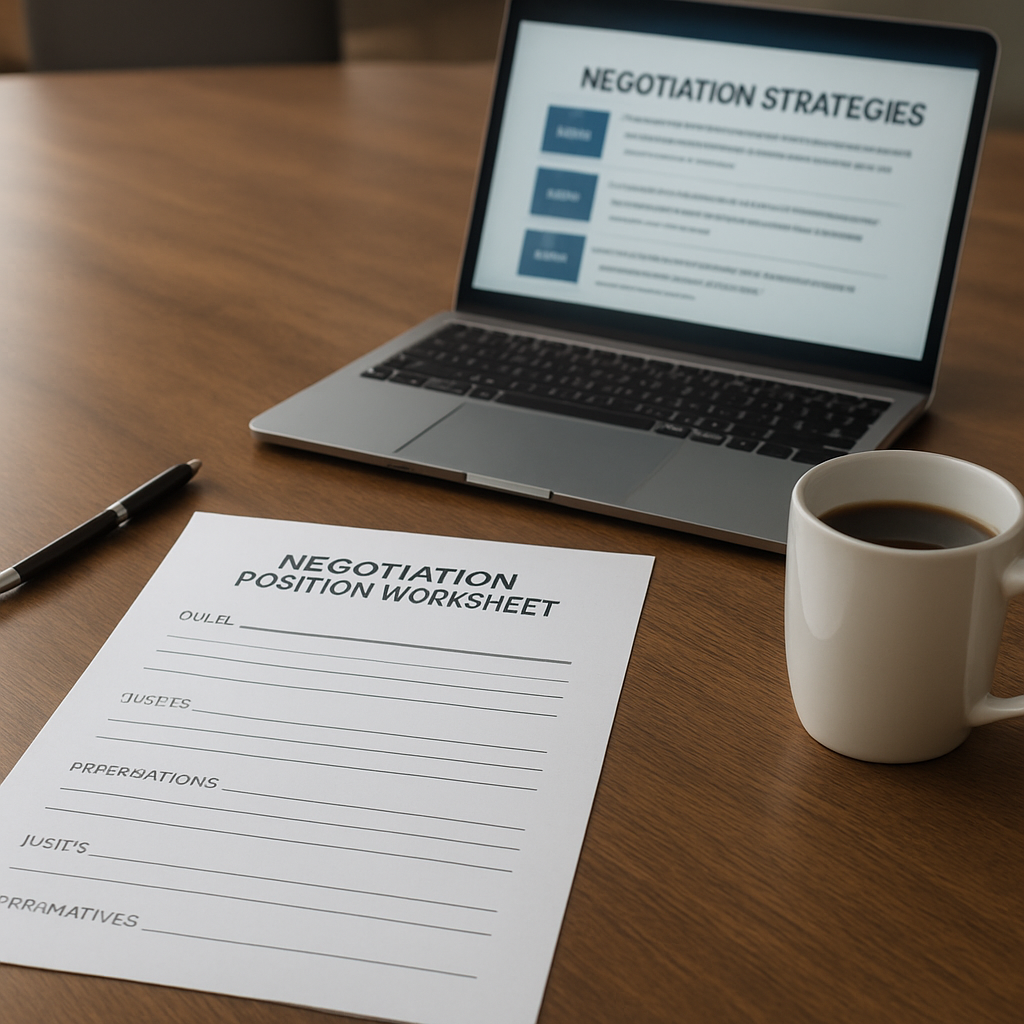
Finally, give yourself a mental check before the call: Do you know your top three objectives? Have you identified at least two pieces of leverage? Is your position statement tight enough to say in under 30 seconds? If you can answer “yes” to all three, you’ve set a sturdy foundation for the tactics that follow.
With your position prepared, the next step is to choose the tactic that aligns best with your audience – whether that’s anchoring a bold opening number or using mirroring to build rapport. Stay tuned for the next section, where we match tactics to the situation.
Step 2: Using Anchoring Tactics
Okay, you’ve done the homework, you’ve got your position sheet, and you’re walking into the room feeling like you own the place. The next move? Drop an anchor that pulls the whole conversation toward the outcome you want.
Anchoring feels a bit like setting the thermostat before anyone else gets a chance to complain about the temperature. The first number you put on the table becomes the reference point, and everything that follows is judged against it.
Why the first offer matters
Psychology research tells us that people rely heavily on the first piece of concrete information they receive – that’s the anchoring effect. In negotiations, that means your opening number can swing the eventual settlement by several percentage points.
One study of real‑estate transactions found that listings priced just 5% above market value sold for an average of 3% more than comparable homes that were priced at market level. The higher anchor nudged buyers to perceive the property as more valuable, even though the underlying fundamentals hadn’t changed.
Step‑by‑step anchoring playbook
1. Define your high‑anchor range. Before the meeting, decide on a bold, yet credible, opening figure. For a corporate software renewal, that might be a 12% price increase instead of the 5% you actually need.
2. Ground the anchor with data. Bring a one‑pager that shows market trends, cost‑of‑ownership analysis, or comparable contracts. Numbers make the anchor feel less like a guess.
3. Deliver the anchor confidently. Use a simple sentence: “Based on the growth we’ve seen and the added features we’ll be delivering, a 12% uplift aligns with industry standards.” Pause. Let the silence settle.
4. Expect a counter‑anchor. Your counterpart will likely push back with a lower number. That’s where you’ve already built room to negotiate down to your true target – say 8%.
5. Use concession wisely. Trade a small concession (e.g., extended support hours) for a higher price acceptance. The key is to make the concession feel like a gift, not a giveaway.
Real‑world examples
Corporate procurement: A senior buyer at a Fortune‑500 firm wanted a 7% discount on a multi‑year license. The vendor opened with a 15% increase, justified by upcoming AI features. By anchoring high, the vendor set the negotiation zone around 12‑15%, allowing the buyer to settle at a 5% discount – a win‑win compared to the buyer’s original 7% target.
Startup fundraising: A founder seeking Series A capital listed a $10 million pre‑money valuation. Investors counter‑offered $6 million. Because the anchor was high, the final agreed valuation landed at $8 million, still above the founder’s walk‑away point of $7 million.
Salary negotiation: A senior engineer aimed for a £95k package. He started the conversation with £110k, backed by market salary surveys. The hiring manager countered at £85k, and they converged at £95k – exactly the engineer’s goal.
Tips from the Edge Negotiation playbook
• Don’t over‑anchor. If your opening number is wildly out of range (think asking $400 for a $20 ice‑cream bowl), you’ll lose credibility.
• Use “counter‑anchoring” wisely. If the other side drops a low anchor, respond with a high, data‑rich anchor of your own – it resets the reference point.
• Practice the delivery. Role‑play the opening line until it feels natural. In our workshops we have teams rehearse anchors in three‑minute drills to build confidence.
Integrating anchoring with other tactics
Anchoring pairs nicely with strategic silence. After you plant your anchor, sit back and let the quiet do the work. It pressures the other side to fill the void, often with concessions.
It also works hand‑in‑hand with framing. Frame your anchor as a shared investment: “This 12% uplift funds the new analytics module that will cut your reporting time by 30%.” That turns a tough number into a value proposition.
Need a deeper dive into how to craft perfect anchors? Check out our detailed guide on the topic: Anchoring in Negotiation: A Practical Guide to Mastering First Offers.
And if you want a ready‑made template for your anchor sheet, JiffyPrintOnline offers high‑quality printable forms that make your numbers look sharp on the table. You can order custom templates that match your brand’s colors and layout.
For a more personalised boost, consider the COACH DPrep CORE GPT program. Their coaching platform helps you rehearse anchors in realistic scenarios, turning theory into muscle memory.
Bottom line: an anchor isn’t a trick – it’s a reference point you set deliberately, backed by data and delivered with confidence. Master it, and you’ll watch the negotiation curve bend in your favour.
Step 3: Leveraging Concessions and Trade‑offs
Now that you’ve set the stage with a solid anchor, the real art is figuring out what you’re willing to give up – and what you can ask for in return. Concessions feel uncomfortable, but when you treat them like a strategic currency, they become a win‑win lever.
Think about the last time you said “yes” to a small tweak just to keep the conversation moving. Did you walk away feeling you got something back? If not, you probably missed the chance to label the concession and request reciprocity – a classic misstep highlighted by Harvard’s Program on Negotiation.
Why labeling matters
Deepak Malhotra warns that a concession that isn’t highlighted can be ignored. When you say, “We’re reducing the price by 3 % – that’s a tough call for our finance team,” you make the cost visible. Then you can add, “In exchange, could we extend the contract term by two years?” The other side now feels an obligation to match the give‑and‑take.
That simple label‑and‑ask pattern is one of the four strategies the Harvard article outlines (source). It turns a one‑sided give into a negotiated trade.
Step‑by‑step concession playbook
1. Identify your “must‑haves” and “nice‑to‑haves.” Write them down. For a procurement leader, a must‑have might be a minimum service level; a nice‑to‑have could be a training package.
2. Choose a concession that feels costly to you. The more you’re willing to admit it hurts, the stronger the leverage. A senior sales exec might concede a slightly lower discount but frame it as “tight margin.”
3. Package the concession with a clear ask. Use the structure: “We can do X, if you can do Y.” Keep Y specific – extra support hours, longer payment terms, or a commitment to a future purchase.
4. Deliver it in installments. Research shows people prefer good news in chunks. Instead of a single $40 k jump, try $25 k now and $15 k later, watching the counterpart’s reaction each time.
5. Pause, then let silence work. After you state the trade‑off, sit back. The other side often fills the void with a reciprocal move.
Real‑world concession & trade‑off examples
Corporate procurement: A Fortune‑500 buyer needed a faster rollout of a cloud service. She offered a 2 % price increase (a concession) in exchange for a three‑month early‑access window, which gave her team a competitive edge.
Startup funding: A founder reduced the equity ask from 22 % to 18 % (a concession) but secured a clause that the lead investor would join the advisory board, adding strategic value beyond capital.
Supplier negotiation: A manufacturing manager accepted a longer lead time on a component (costly on schedule) but negotiated a 5 % price reduction and a guarantee of higher‑grade material – a classic trade‑off that protected product quality.
Notice the pattern: each concession is paired with a concrete, valuable ask. That’s the secret sauce.
Quick checklist you can print
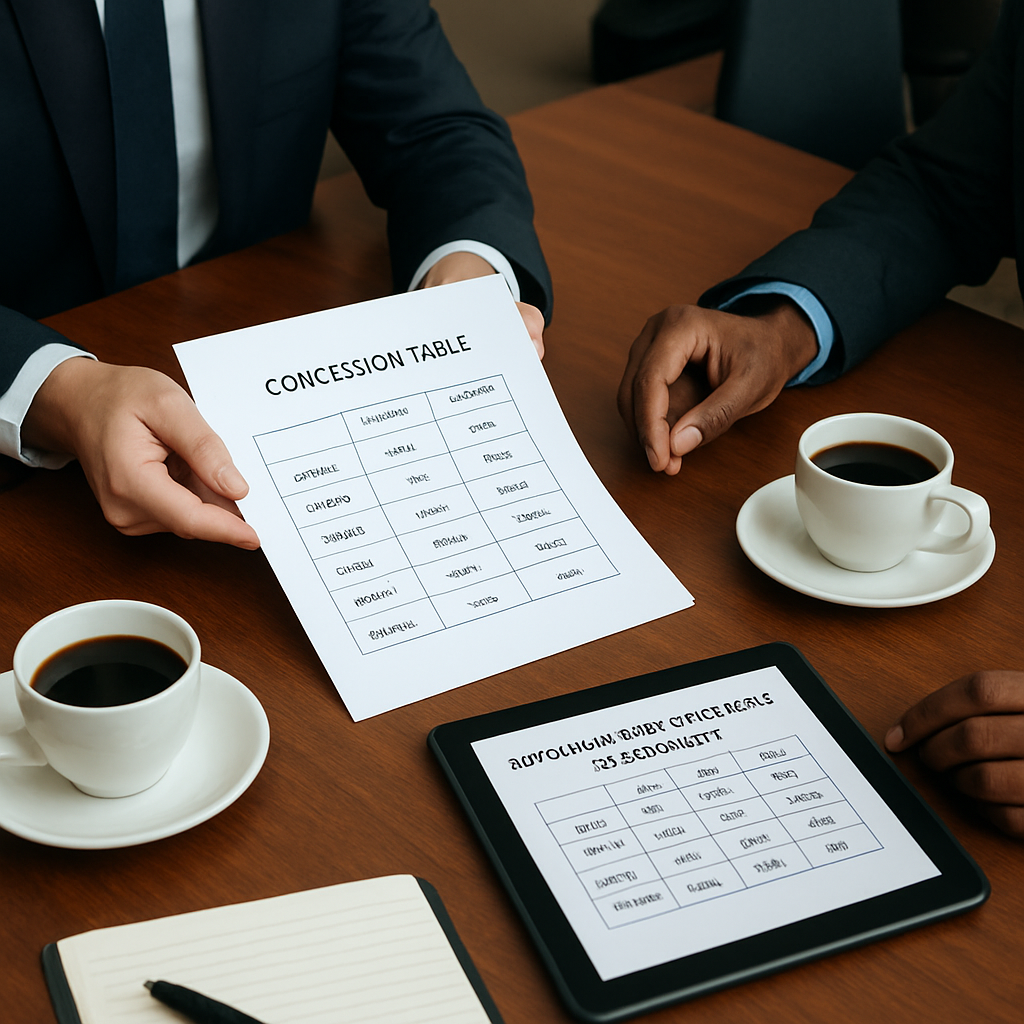
| Concession Type | What You Give Up | Reciprocal Ask |
|---|---|---|
| Price reduction | Lower margin per unit | Longer contract term or larger volume |
| Extended delivery | Slower time‑to‑market | Higher quality specs or exclusivity rights |
| Additional service hours | More staff time | Up‑front payment or referral commitment |
Print this table on a one‑page “trade‑off sheet” and bring it to the table. Seeing the options side‑by‑side helps you stay calm and deliberate.
Want a broader view of how these tactics fit into a full negotiation framework? Check out The Ultimate Negotiation Content Overview – it maps every move, from preparation to post‑deal review.
So, what’s the next move? Start by labeling your first concession out loud, then name the exact thing you need back. If the other party balks, break the concession into smaller bites and watch their willingness shift.
Remember, a well‑crafted trade‑off isn’t a surrender; it’s a signal that you’re focused on mutual gain. When you make the give‑and‑take visible, you invite the same transparency from the other side, and the negotiation curve bends in both directions.
Step 4: Closing with the Right Timing
When you’ve already set the anchor and mapped out concessions, the final push is all about when you ask for the signature. Timing can turn a tentative “maybe” into a firm “yes,” and the wrong moment can send the whole discussion back to square one.
Map the process before you even sit down
One of the easiest ways to control timing is to negotiate the process up front. As Harvard’s Program on Negotiation reminds us, agreeing on ground rules, who will facilitate, and a rough agenda eliminates surprise and gives both sides a clear runway for when the deal will be sealed.Harvard PON guide to closing deals.
For a corporate procurement leader, that might look like a three‑stage timeline: discovery, value‑add proposal, and final sign‑off deadline. A startup founder could set a 10‑day window to lock in a term sheet, giving investors just enough urgency without feeling rushed.
Benchmarks and deadlines – make them concrete
Short‑term benchmarks keep momentum alive. Say you’re negotiating a multi‑year software renewal; set a mid‑point check‑in after the first draft of the service‑level agreement. If the check‑in stalls, you already have a pre‑agreed trigger to either re‑align or walk away.
Deadlines also create a subtle pressure cooker. Research shows that when the clock ticks, both parties become more creative with concessions. A sales executive at a Fortune‑500 firm might say, “If we can finalize by Friday, I’ll throw in an extra training session for your team.” The deadline nudges the buyer to decide fast, and the added value sweetens the deal.
Try a shut‑down move when competition looms
If you suspect the other side is flirting with a rival offer, propose an exclusive negotiating period – maybe a week where they agree not to entertain other bids. In exchange, you can highlight non‑monetary perks like access to your industry network or a co‑branding opportunity. That “shut‑down” move cuts off the distraction and forces a decision within a known window.
Imagine a procurement manager who knows a competitor is courting the same vendor. By saying, “Let’s lock in a 7‑day exclusivity so we can finalize the pricing,” they remove the competitor’s lure and keep the conversation focused.
Take a strategic pause
Sometimes the fastest way to close is to step away. A brief break – even just a coffee‑break – lets emotions settle and gives both teams a chance to review the numbers. When you reconvene, you often find the missing piece is already on the table.
One of our clients, a senior HR director, paused a salary‑negotiation after hitting a stalemate. After a night’s sleep, she returned with a revised bonus structure that aligned with the candidate’s long‑term goals, and the deal closed that afternoon.
Bring in a trusted third party
A neutral adviser can surface the zone of possible agreement (ZOPA) faster than two parties stuck in their own narratives. If you’re stuck on price, a third‑party finance analyst can validate market rates, giving both sides confidence to sign.
In a recent B2B software deal, both sides invited a respected industry analyst. The analyst confirmed the proposed licensing model was fair, and the parties signed the contract minutes later.
Refresh the line‑up
If the same faces have been at the table for weeks, consider swapping a negotiator. Fresh eyes often spot a win‑win that tired ears miss. A sales manager once replaced a senior rep with a junior colleague who asked a different question, unlocking a discount tied to a future upsell.
Use contingent contracts as a safety net
When timing is uncertain, embed performance‑based clauses. For example, a construction firm might agree to a lower price if they hit an early‑completion bonus, or a penalty if they’re late. The contract “closes” on paper, but the real risk is managed later.
That approach works well for startups too: lock in an equity grant now, and tie a milestone‑based earn‑out to product launch dates.
So, what’s the sweet spot for you? Map the process, set clear checkpoints, and don’t be afraid to pause or bring in a fresh voice. Timing isn’t just about the clock; it’s about structuring the conversation so the final “yes” feels inevitable.
Remember, the right timing turns a negotiation from a tug‑of‑war into a coordinated dance. Align your milestones, respect the clock, and watch the deal close with confidence.
FAQ
What are some common examples of negotiation tactics that work in corporate deals?
In corporate negotiations you’ll often see anchoring, where the first price you put on the table sets the reference point for everything that follows. Mirroring – repeating key words the other side just said – builds rapport and nudges them to elaborate. Strategic silence after you make an offer lets the counterpart fill the void, often with a concession. Finally, good‑cop/bad‑cop can create a subtle contrast that pushes the other party toward a middle ground.
How can I use contingent contracts as a timing tactic?
A contingent contract ties part of the agreement to a future event, so you lock in the deal today while protecting yourself from risk. For example, a startup might secure an equity grant now but make the final vesting contingent on hitting a product‑launch milestone. In a construction project, you could agree on a lower fee if the builder meets an early‑completion bonus, with penalties if they run late. The clause creates urgency without sacrificing flexibility.
When is it better to bring in a third‑party advisor during negotiations?
A neutral third‑party can break deadlocks when both sides are stuck in their own narratives. If price talks stall, an industry analyst can validate market rates and give both parties confidence to move forward. Similarly, a finance consultant can model cash‑flow scenarios that reveal hidden value for a procurement deal. The key is to choose someone respected by both parties, so their input feels like a fact‑based bridge rather than a sales pitch.
What role does framing play in making negotiation tactics more effective?
Framing is the story you attach to a number or proposal, turning a raw figure into a shared benefit. If you present a 5 % price increase as the funding needed to roll out a new analytics module that cuts the client’s reporting time by 30 %, the ask feels like an investment, not a cost. This shift in perception makes anchoring, concessions, and timing moves stick together and resonate with the counterpart’s priorities.
Can I combine multiple negotiation tactics in a single conversation?
Absolutely – the most persuasive negotiators layer tactics like a well‑crafted playlist. Start with an anchor to set the price range, then use mirroring to keep the dialogue fluid. Drop a strategic pause after you propose a concession, letting the silence pressure the other side to respond. Finish with a timing cue, such as a deadline for a bonus add‑on, to convert the momentum into a signed agreement.
How do I know which negotiation tactic fits my industry?
Start by mapping the decision‑making process in your sector. In procurement, data‑driven anchoring and contingent contracts work because cost and timeline are quantifiable. In sales to Fortune‑500 executives, mirroring and strategic silence help you navigate hierarchical dynamics. For startup fundraising, framing the valuation as a growth catalyst and using a limited‑time exclusivity clause creates urgency. Test a tactic in a low‑risk scenario, measure the reaction, then double‑down on what moves the needle.
What are the biggest mistakes to avoid when using negotiation tactics?
The most common slip is over‑anchoring – throwing out a number that’s so far from market reality that you lose credibility instantly. Another pitfall is offering concessions without labeling them, which lets the other side take them for free. Forgetting to set a clear deadline turns urgency into vague pressure that fades. Finally, swapping tactics mid‑conversation without a clear transition can confuse the counterpart and erode trust.
Conclusion
We’ve walked through a handful of real‑world examples of negotiation tactics – anchoring, mirroring, strategic silence, concessions, timing cues, and a few industry twists.
So, what does that mean for you? It means you now have a toolbox you can pull from the moment you step into the room, whether you’re a corporate negotiator sealing a multi‑year contract or a startup founder chasing that next round.
Takeaway checklist
- Start with a clear anchor backed by data.
- Label every concession and ask for something in return.
- Use a timed deadline or exclusive window to create urgency.
- Pause deliberately – let silence do the heavy lifting.
- Match the tactic to your industry’s decision‑making rhythm.
Notice how each point is an action you can test this week. Pick one tactic you haven’t tried yet, run a low‑stakes pilot, and note the reaction. The insight you gain is worth more than any textbook theory.
Ready to turn these examples into results? Our Edge Negotiation workshops dive deeper, giving you live practice and feedback. Until then, keep the conversation human, stay curious, and let the tactics serve your genuine goals.
Remember, negotiation isn’t a one‑off event; it’s a habit you refine after every deal, win or lose, and grow continually.