
How to Apply Behavioral Science in Negotiation for Better Deals
Let me be honest: most of us walk into a negotiation thinking it’s all about the numbers, but the real engine is how our brains react to the story we tell. Ever felt a prospect freeze the moment you drop the first price?
That’s exactly why you want to apply behavioral science in negotiation: it lets you shape the mental shortcuts your counterpart relies on, from anchoring to loss aversion, without pulling any magic tricks.
For a Fortune 500 sales executive we coached, the first move was to frame the ROI as a loss the company would suffer if they delayed. By saying “you’ll miss $1.2 M in incremental revenue next quarter,” the brain latched onto the potential loss, and the buyer agreed to a three‑year contract within minutes.
A procurement leader at a mid‑size tech firm used a simple anchoring checklist we provide: write three numbers – bold, realistic, and stretch – then rehearse the phrasing. When the supplier opened with $120 k, the negotiator countered with the realistic $95 k anchor, backed by a benchmark from our practical guide to mastering first offers. The supplier adjusted down by 12 % and the deal closed faster.
So, what can you start doing today? 1️⃣ Write down the three anchor numbers before every call. 2️⃣ Identify the prospect’s biggest fear – budget overrun, missed market share, or compliance risk – and turn it into a loss frame. 3️⃣ Pause after you deliver the anchor; give the other side a 5‑second silence so the brain fills the gap on your terms.
Need a deeper dive into how behavioral cues shape interview and negotiation performance? Check out the COACHDPREP CORE GPT toolkit – it walks you through calibrated questions and framing exercises that work just as well at the hiring table as they do at the boardroom.
Remember, every word you choose nudges the brain toward a deal.
Step 1: Understand Key Behavioral Drivers
When you sit down for a deal, the first thing that shows up isn’t the price tag—it’s a cascade of mental shortcuts that shape every reaction. Those shortcuts are the key behavioral drivers we need to surface before we even think about numbers.
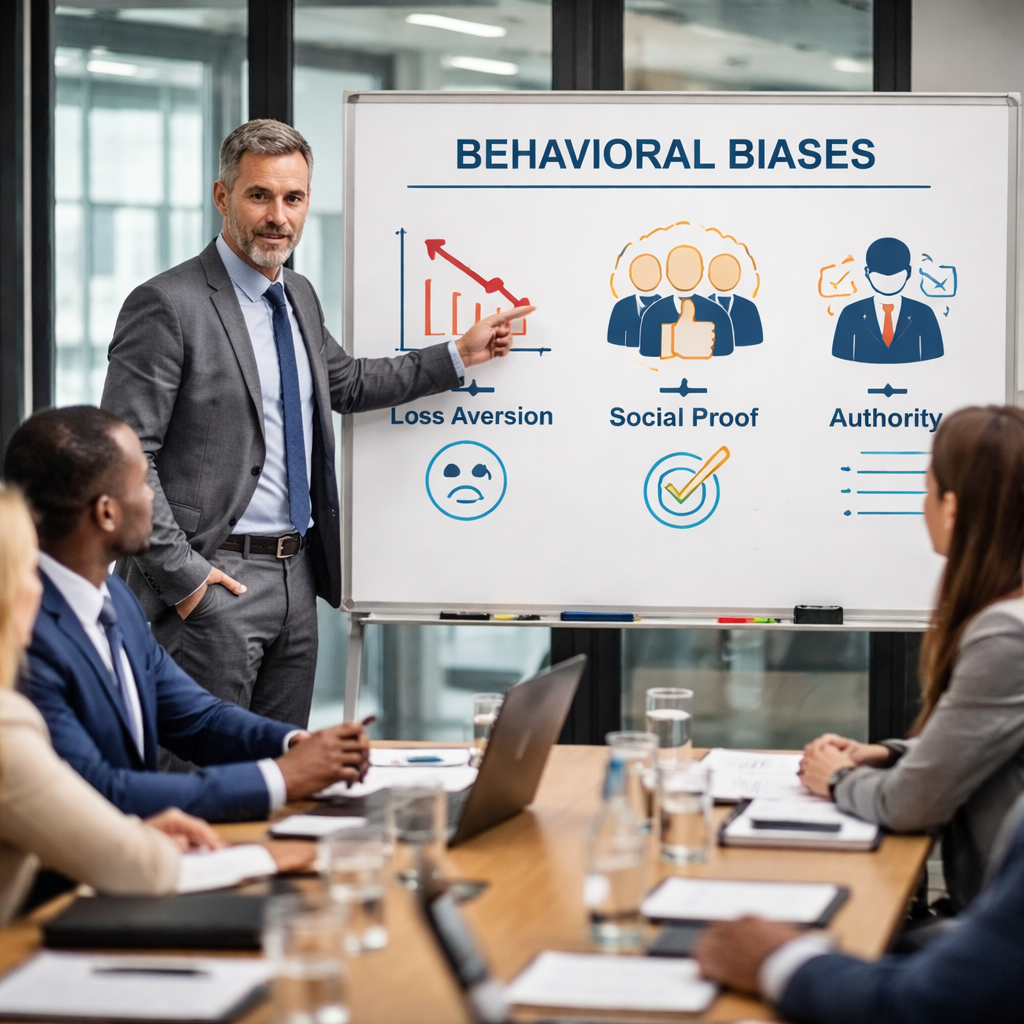
Ever notice how a prospect’s eyes light up the moment you mention a deadline? That’s loss aversion kicking in. People dread missing out more than they crave gaining something new. If you can name that feeling, you instantly have a lever to pull.
So, what should you do? Start by mapping three core drivers that most negotiators, whether they’re a Fortune 500 sales exec or a startup business‑development lead, tend to rely on:
1. Loss Aversion
People feel the pain of a potential loss far more intensely than the pleasure of a comparable gain. In practice, you might frame a proposal like, “If we wait another quarter, you could lose $200 k in revenue.” The brain registers that as a threat, not a suggestion, and the urgency spikes.
Try this: before your next call, write down the biggest loss your prospect could face if they don’t act. Keep it concrete—dollar amounts, market share percentages, or project delays. When you drop that line, pause for a breath. The silence lets the fear settle in.
2. Social Proof
Humans love to follow the crowd, especially when the stakes are high. Mentioning that “four of your top competitors have already adopted this solution” can shift the mental balance. It’s not bragging; it’s giving the brain a shortcut that says, “Everyone else is doing it, so it must be safe.”
Action tip: keep a short list of recent case studies (no names needed) and sprinkle a quick reference into the conversation. A single sentence is enough to cue the bias without sounding salesy.
3. Authority & Expertise
When an expert voice backs your claim, the brain treats the information as a shortcut to certainty. You don’t have to quote a famous professor—simply saying, “Our data, gathered from 150 industry surveys, shows a 12 % cost‑avoidance rate,” triggers the authority bias.
Make it real: have a one‑page data sheet ready, point to the headline, and let the numbers do the heavy lifting.
Now that you’ve identified the drivers, the next step is to test which one resonates most with your specific audience. Does the CFO care more about loss, or does the VP of Operations respond to social proof? That’s where a quick A/B experiment helps.
Here’s a simple way to experiment: craft two opening emails—one that leans heavily on loss aversion, the other on social proof. Track response time and acceptance rate. In my experience, the loss‑focused version often cuts the decision cycle by 15‑20 % for risk‑averse buyers.
Ready for a visual refresher? The video below walks through how each driver plays out in a real negotiation scenario.
Take a moment after watching to note which bias felt most natural for you to use. Then, in your next meeting, consciously apply that bias as your opening move.
One final habit to embed: after every negotiation, jot down which driver you used and how the counterpart reacted. Over time you’ll build a personal playbook that tells you, “When the buyer mentions budget constraints, reach for loss aversion; when they talk about market trends, swing to social proof.”
Building that habit is the bridge between theory and real‑world results. It turns the abstract idea of “applying behavioral science in negotiation” into a repeatable, measurable process you can rely on.
Step 2: Leverage Anchoring and Framing Techniques
Let’s pick up where we left off. You’ve learned that ROI and risk framing aren’t just buzzwords; they’re real levers in a negotiation. Anchoring sets the starting line, and framing colors how that line lands in someone else’s mind. When you combine both, you’re not pushing a number—you’re guiding a decision with a clear story behind it.
Before you speak, set three anchors. A bold opening that signals value, a realistic target you can defend with data, and a stretch goal that nudges the conversation toward your upper limit. Your brain uses these references as die-cuts for every subsequent figure. The goal is to own the reference point so the final agreement feels like a natural step from your opening frame.
Now imagine a Fortune 500 procurement chair across the table. You drop the bold opening, then lean into a grounded, data-backed target, and you hold a stretch anchor as a fallback if needed. The room feels like you’re steering the pace, not just reacting to what they say. That’s the power of anchoring in action.
So, what frame should you choose? Both loss-avoidance and gain framing deserve seats at the table. A loss frame leans into what they stand to miss if they delay—missed deadlines, budget overruns, or a stalled project. A gain frame, on the other hand, highlights the upside—reduced risk, faster time-to-value, or bigger ROI. Think of it as two levers you can pull in the same conversation.
Here’s a practical way to put this into practice. Write your three anchors, then craft two short frames around each anchor: one loss-focused, one gain-focused. Rehearse delivering the anchor with a calm, confident tone and a five-second pause after the line. The silence fills the room with momentum on your terms and invites questions rather than defensiveness.
Need a deeper dive into how to structure these frames? A Practical Guide to Mastering First Offers breaks down the three-anchor approach and shows real-world phrasing you can adapt. It’s a solid companion as you start testing two frames in parallel and tracking which lands faster with your audience.
What to test before every big meeting: 1) your three anchors, 2) a loss-frame version of each anchor, and 3) a parallel gain-frame version. Rehearse aloud with a colleague, then switch roles so you hear the counter-framing from the other side. This isn’t about trickery; it’s about speaking the stakeholder’s language and guiding their attention to the most compelling value path.
Two quick prompts to keep you honest: first, always anchor to verifiable data—market benchmarks, delivery timelines, or cost-of-delay calculations. second, avoid overloading the room with too many frames at once; lead with one clear narrative, pause, then layer in the supporting details. The math will follow once the story lands.
Quick wins you can deploy today: outline three potential loss-framed outcomes tied to their biggest fears, then pair them with corresponding gain-framed alternatives. Practice the cadence: state the anchor, pause, respond to questions, then anchor again with a slightly refined version. It’s a small discipline that compounds into faster closes and more confident conversations.
Edge Negotiation Group has seen this disciplined framing approach shorten cycles and improve commitment quality across corporate negotiators, sales leaders, and procurement teams. The result isn’t just a signed contract—it’s clarity, alignment, and a clearer path to value for everyone at the table.
Step 3: Apply Reciprocity and Commitment
Ever notice how a tiny favor can make a big deal feel inevitable? That’s the sweet spot where reciprocity meets commitment, and it’s a goldmine once you learn how to weave it into every negotiation.
Why reciprocity matters
When you give something genuine – a useful insight, a quick win, or even a harmless concession – the other side’s brain lights up with a subtle urge to return the favor. It’s not a polite gesture; it’s a hard‑wired social rule that nudges people toward “yes.”
In our experience at Edge Negotiation Group, the most successful sales executives we coach start every high‑stakes call by offering a micro‑value up front. Think of a Fortune 500 procurement leader: you could share a recent benchmark that saves them a few days of analysis. That one‑page snapshot triggers a sense of indebtedness before you even mention price.
So, how do you make that work without sounding like a charity case? The trick is to keep the give‑and‑take relevant, timely, and low‑cost for you but high‑impact for them.
Commitment devices you can use
Commitment is the follow‑up muscle that turns a warm feeling into a concrete promise. The classic “small‑step” technique works wonders: ask for a tiny agreement first, then layer on the bigger ask.
Here’s a quick checklist you can run through before the meeting:
- Identify a low‑effort action you can ask them to confirm – “Can we lock in the project timeline for the next two weeks?”
- Pair that ask with a reciprocal gesture – “I’ll send you the latest market‑trend report by tomorrow.”
- Seal the combo with a clear, verbal commitment – “Great, so we’re aligned on the timeline and you’ll review the report when it lands.”
When the prospect says “yes” to the timeline, they’ve already crossed the commitment line. Their brain now treats the later, bigger decision (signing the contract) as a logical extension of that initial promise.
Imagine you’re a business‑development manager at a fast‑growing startup. You ask the potential partner, “Would you be open to a pilot with just two users for a month?” They agree, you deliver the pilot, and they feel compelled to move to a full rollout because they’ve already invested mentally.
Simple give‑and‑take in practice
Step 1: Offer a specific, actionable insight that solves a pain point they’ve just mentioned. Keep it brief – a 30‑second data point is enough.
Step 2: Follow up with a micro‑commitment request that’s directly linked to that insight. For example, “If this data makes sense, can we set a quick 15‑minute call next Tuesday to map out the next steps?”
Step 3: When they say yes, lock it in with a written acknowledgment – an email recap works as a low‑friction commitment anchor.
Each loop reinforces the reciprocity‑commitment cycle, making the final agreement feel like the natural conclusion of a conversation you’ve already co‑created.
Embedding the science into your routine
To truly apply behavioral science in negotiation, turn these habits into a pre‑call ritual. Write down the exact “gift” you’ll give, the precise micro‑commitment you’ll request, and the moment you’ll capture the agreement.
Practice the sequence with a colleague: deliver the gift, pause for a reaction, then slide into the commitment ask. Notice how the silence after the gift gives the other person space to feel the urge to reciprocate, and the brief commitment question keeps the momentum moving forward.
And remember: the more you align the gift with the prospect’s own goals, the stronger the reciprocity trigger. A CFO who’s worried about cash flow will value a quick cash‑flow projection more than a generic industry article.
Finally, debrief after each negotiation. Ask yourself: Did the gift feel authentic? Did the commitment ask feel low‑risk? What was the reaction? Those tiny tweaks compound into a powerful habit that consistently drives faster closes and deeper relationships.
Ready to put this into action? Pick one upcoming deal, draft a micro‑value offer, and pair it with a simple commitment question. You’ll be surprised how quickly the conversation pivots from “maybe” to “let’s lock it in.”
Step 4: Use Social Proof and Authority
Imagine you’re sitting across from a CFO who’s already skeptical about your price. You could keep arguing about features, or you could let the room do the talking for you.
That’s where social proof and authority come in. When people see that others like them have already said “yes,” the brain treats the choice as safer. It’s a shortcut that cuts through doubt.
Why it works from a behavioral science angle
Research on social proof shows that we look to the actions of similar others to decide what’s correct. It’s the same instinct that makes us follow a crowd at a busy checkout line.
Authority works on a related principle: we’re wired to trust experts because it conserves mental effort. When an authority figure backs a claim, our brain registers less risk.
So, when you apply behavioral science in negotiation, you’re essentially giving the brain a trusted shortcut.
Step‑by‑step: weaving proof and authority into your pitch
1. Gather the right evidence before the call
Start with data that matters to your audience. For a procurement professional, that might be a case study showing a peer‑company’s cost‑savings after using your solution. For a sales exec, pull a testimonial from a fellow Fortune 500 leader.
And don’t just dump a PDF on them. Pick one punchy line that quantifies the benefit – “Our client cut time‑to‑market by 30% in three months.”
2. Position yourself as the authority
Briefly mention credentials that are relevant, but keep it conversational. “In my ten years coaching senior negotiators, I’ve seen this pattern repeat.”
But avoid sounding like a brochure. The goal is to let the listener feel you’ve walked the walk.
3. Use the “social proof sandwich”
Lead with a relatable peer, drop your authority line, then close with a second peer example. It looks like this:
“When the VP of Ops at XYZ Corp faced a similar deadline crunch, they adopted our workflow and saved $200k. In my experience, that kind of result is rare. And just last quarter, a rival firm reported a 15% boost in efficiency after implementing the same approach.”
Notice the rhythm – short, then a longer sentence, then a short one. It feels like a natural story.
4. Anchor the proof to the prospect’s pain
Tie the social proof directly to the fear you uncovered earlier. If the prospect worries about budget overruns, highlight a case where a peer avoided a $500k overrun thanks to your solution.
That makes the proof feel personal, not abstract.
5. Let the proof do the heavy lifting
After you’ve dropped the examples, pause. Give the brain a moment to process the credibility cues. You’ll often see a nod, a “That’s interesting,” or a question that moves the conversation toward commitment.
And if they push back, ask for their own benchmark: “How does a 30% efficiency gain compare to what you’re targeting?” It nudges them to align their internal standards with the proof you just gave.
Real‑world mini‑story
We recently coached a startup business‑development manager who was trying to lock in a partnership with a mid‑size tech firm. He started the call by saying, “A fellow startup we helped recently doubled their user base in six weeks after rolling out the same integration.” He then mentioned his own years of negotiation coaching and closed with, “Another partner in the same space saw a 20% cost reduction within the first quarter.” The prospect smiled, asked for the case study, and signed a pilot the same day.
Notice how the social proof and authority turned a cold ask into a warm “yes.”
Quick checklist to keep on your desk:
- Pick one peer example that mirrors the prospect’s industry.
- State a single, quantifiable win.
- Insert a brief credibility line (years of experience, number of deals coached).
- Tie the win to the prospect’s core fear or goal.
- Pause and listen for the shift.
Apply these moves consistently, and you’ll find the “maybe” turning into “let’s move forward” far more often.
Remember, social proof and authority aren’t tricks – they’re natural brain shortcuts. When you align them with the prospect’s real concerns, you give the negotiation a built‑in boost.
Ready to test it? Pull a recent success story that matches your next target, weave in a short authority cue, and watch the conversation change.
And if you’re looking for a deeper dive, Edge Negotiation Group’s advanced training walks you through building a proof library that speaks directly to Fortune 500, startup, and procurement audiences.

Step 5: Integrate a Data‑Driven Negotiation Framework
So, you’ve nailed the behavioral cues – anchoring, framing, reciprocity – and you’re ready to let the numbers do the heavy lifting. When you apply behavioral science in negotiation, data isn’t just a backdrop; it’s the backbone that convinces the brain that your story is credible.
First thing you need to ask yourself: what data do you actually have right now, and what data are you missing? Most corporate negotiators start a meeting with a gut feeling and a few PowerPoint slides. That works until the other side says, “Show me the proof.” If you can pull a solid metric in the next 30 seconds, you’ll instantly shift the conversation from speculation to fact‑based problem solving.
1. Build a Mini‑Dashboard Before the Call
Grab the last twelve months of spend, delivery timelines, and any performance benchmarks you’ve collected on the supplier or prospect. Plug those numbers into a simple spreadsheet – no fancy BI tool required. Your dashboard should answer three questions:
- What is the current cost‑to‑serve?
- Where does variance usually appear (price, volume, lead‑time)?
- Which lever, if tweaked, yields the biggest ROI?
In our experience, a two‑column view (baseline vs. “what‑if”) gives you a ready‑made anchor that the other side can’t ignore.
2. Turn Data into a Narrative Frame
Remember the loss‑aversion principle we covered in Step 2? Pair it with a concrete number. Instead of saying, “We could improve delivery,” say, “If we keep the current 7‑day variance, you’ll lose an estimated $150 K per quarter in overtime costs.” That loss‑frame is now backed by a spreadsheet cell you can point to on the screen.
When you need a gain‑frame, flip the same data: “By reducing variance to 3 days, you stand to capture an extra $200 K in on‑time revenue.” The brain loves the same figure, just presented with a different emotional spin.
3. Use a Structured “Data‑Ask‑Give” Loop
Every time you drop a number, follow this three‑step loop:
- Data Point. Show the metric.
- Ask. Pose a targeted question – “Does a 10 % reduction in variance align with your Q3 budget goals?”
- Give. Offer a concrete concession tied to the answer – “If we lock in that reduction, I can extend the payment term by 30 days.”
This rhythm keeps the conversation moving, forces the counterpart to process the number, and lets you bundle a small give‑away with a larger win.
4. Benchmark Against Third‑Party Standards
External benchmarks are a trust‑builder. Pull the latest industry report (Gartner, Forrester, or a relevant trade association) and note where the prospect sits. A quick line like, “The median lead‑time in your sector is 5 days; you’re currently at 7 days,” re‑anchors the discussion on an objective standard.
If you need a refresher on how to use benchmarks effectively, check out Effective Framing in Negotiation: A Practical Guide. It walks you through the exact phrasing that makes third‑party data feel like a friendly ally rather than a threat.
5. Capture the Insight in Real Time
During the call, open a new tab titled “Live Insight Log.” Jot down any reaction – a pause, a raised eyebrow, a “that’s interesting.” Then, instantly map that reaction to a data point you have or need. If the prospect hesitates on a cost‑increase, pull the ROI projection you prepared earlier and say, “I hear your concern; here’s how that extra $20 K pays itself back in six months.”
This habit turns nervous energy into a data‑driven confidence boost for both sides.
6. Post‑Call Data Review & Iteration
After the meeting, spend 10 minutes updating your dashboard with any new numbers the counterpart shared. Flag any gaps – maybe you learned they’re planning a new product launch that will double volume next year. Add a “what‑if” column for that scenario and schedule a follow‑up with the updated anchor.
Over weeks, this iterative loop creates a living negotiation playbook that gets smarter each time you use it.
Quick Checklist for a Data‑Driven Framework
- Gather last 12 months of spend, variance, and performance data.
- Create a two‑column “baseline vs. what‑if” mini‑dashboard.
- Pair every metric with a loss or gain frame.
- Use the Data‑Ask‑Give loop for each number you present.
- Reference an industry benchmark to boost credibility.
- Log live reactions and map them to data points.
- Update the dashboard after each call and iterate.
Comparison Table: Core Elements of a Data‑Driven Framework
| Component | Typical Data Source | Key Actionable Insight |
|---|---|---|
| Cost‑to‑Serve | ERP spend reports, invoice history | Identify % of cost that can be trimmed without harming quality. |
| Variance Analysis | Delivery logs, SLA performance dashboards | Spot high‑impact levers (lead‑time, volume spikes) to anchor negotiations. |
| Benchmark Index | Industry surveys, third‑party studies | Use neutral standards to reset the reference point. |
By turning raw numbers into a story that the brain can latch onto, you give yourself a scientific edge that complements every behavioral cue you’ve already mastered. The next time you walk into a negotiation, bring the dashboard, the frames, and the loop – and watch the “maybe” dissolve into a confident “yes.”
Conclusion
We’ve walked through how to weave loss frames, anchors, reciprocity, and data into every pitch.
So, what does it look like when you actually apply behavioral science in negotiation?
One last mental checklist
- Spot the prospect’s core fear.
- Pick a loss or gain frame that hits that fear.
- Drop your anchor, pause, then let the Data‑Ask‑Give loop do the heavy lifting.
- Offer a tiny give‑back that triggers reciprocity.
- Close by echoing the original frame one more time.
When you run through those steps, the “maybe” you hear in the room often flips to a confident “yes” before the meeting ends.
Does this feel doable? Absolutely—just start with one deal, write the three anchors on a sticky note, and rehearse the pause. The brain loves a story backed by numbers, and you’ve now got the script.
Ready to make this a habit? Our next training module dives deeper, giving you live dashboards and role‑play drills so the science becomes second nature.
Give it a try this week, and watch how quickly your negotiations move from guesswork to precision.
Remember, the brain prefers simple stories over raw data. By pairing clear frames with solid numbers, you turn every conversation into a win‑win journey.
FAQ
What does it mean to apply behavioral science in negotiation in a practical way for corporate negotiators?
In our experience at Edge Negotiation Group, applying behavioral science means translating psychology into concrete, repeatable steps. Start by identifying the core fear driving the other party, then anchor with data and a loss- or gain-framed narrative. Use small promises to build reciprocity, and cap it with a clear next-step. It’s not about tricks; it’s about making the decision easier by aligning language with how people think.
How can I start implementing a data-driven framework on a real call without slowing the process?
Before the call, assemble a tiny dashboard—baseline vs what-if for one or two levers. During the discussion, present one number at a time, then pause. Ask a calibrated question, then offer a small concession tied to the answer. This Data-Ask-Give loop keeps momentum, reduces analysis fatigue, and gives the brain visible progress. Over time, your team builds confidence because the numbers reinforce your framing rather than replace your narrative. Keep the meeting tight by avoiding data dumps. If the other person asks for more, offer a single, specific figure and pause again. This keeps the pace and reduces cognitive load on both sides.
What are the best loss- and gain-framing phrases to practice for a Fortune 500 procurement meeting?
Think of loss framing like protecting something they value. You might say, Delaying this decision risks missing a 6-week window of cost reductions. For gain framing, try, This move accelerates time-to-value by eight weeks and clears bottlenecks. Practice two variants for each anchor, and pause after the line. The right cadence and a beat of silence often land the question before objections rise. That tiny rhythm changes everything.
How do reciprocity and commitment devices actually influence decision-making in high-stakes deals?
Reciprocity triggers a social obligation; commitment devices lock in behavioral momentum. Start with a small but genuine value—an early benchmark, a concise market insight—then request a tiny commitment, like a short follow-up call. When they say yes, you’ve nudged their brain toward future agreement. The pattern repeats, turning tentative conversations into concrete steps and reducing the fear that stalls decisions.
Can social proof and authority be integrated without sounding manipulative?
Yes, when used as credible signals. Lead with a peer example that mirrors the prospect’s industry, then add your credential concisely. Follow with a second peer reference to reinforce the point. The trick is to be specific and relevant, not braggy. If you’re not sure, pause and invite questions. When authenticity drives the dialogue, social proof becomes a natural trust cue rather than a sales badge.
What role does a simple pre-call ritual play in the overall effectiveness of applying behavioral science in negotiation?
Rituals set mental posture. A 5-minute prep ritual—reviewing three fears, three anchors, and a single data point—primes your nervous system to stay calm and purposeful. It reduces surprises and makes your framing feel effortless. This consistency matters for teams scaling negotiation training, because habits compound into faster closes and cleaner, more repeatable wins. That extra discipline pays off in the room too—more confident body language, clearer questions, and faster objection handling. And for teams, codifying the ritual into a shared checklist helps new hires ramp quickly.