
The Ultimate Negotiation Strategy
Design a negotiation strategy for your entire customer or supplier base—not just the next deal.
The Ultimate Negotiation Strategy workshop blends consulting and training to help teams build a multi‑phase strategy they can implement immediately. Attendees learn our tools, then use them live to architect strategies for their own deals.
Start With Power, People, and Process
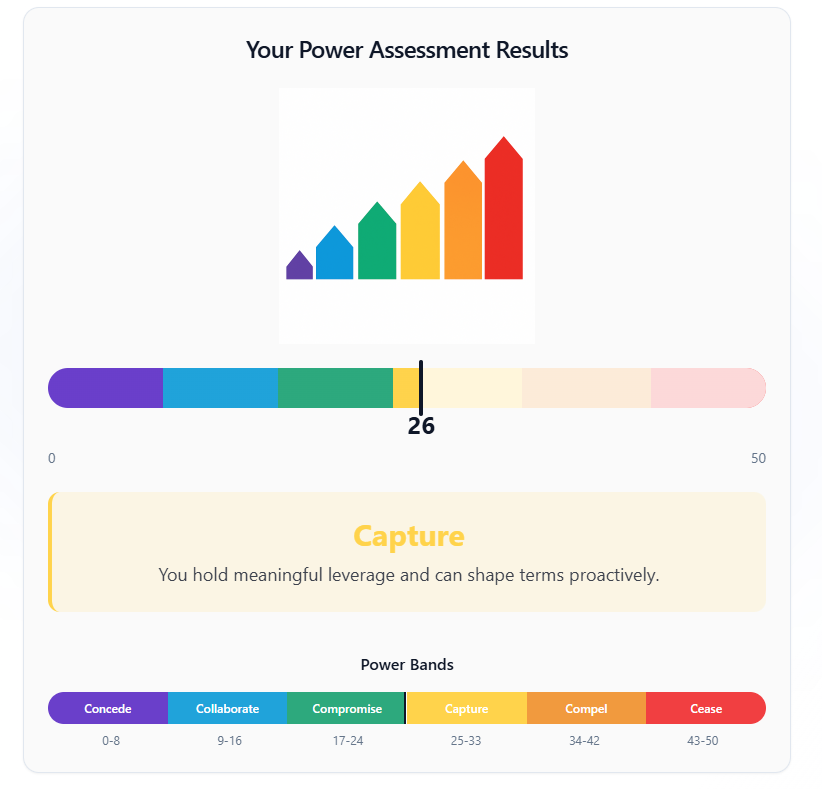
Effective strategy starts with understanding where you sit on the power curve and how pressure affects decision‑making. Our power assessment surfaces your leverage band and highlights where you should Collaborate, Capture, Compromise, Concede, or Cease to protect value.
Pressure shrinks thinking and increases simple calculation errors. The workshop gives leaders a repeatable way to manage pressure, minimize mistakes, and turn preparation into a competitive advantage.
From Training to Live Strategy Design
Half of the workshop focuses on understanding the model; the other half is spent building actual strategies for your pipeline. Teams leave with concrete, time‑bound plans—not theoretical notes.
Typical strategy projects include:
- Price increases and commercial terms
- Payment terms and working‑capital improvements
- Large, mission‑critical customer or supplier deals
- Acquisitions, divestitures, and joint ventures
- Multi‑party and cross‑cultural negotiations
- Strategic alliances and complex partnerships
Strategic planning is an exercise in critical thinking around power, people, and process. Our team stays engaged from initial design through execution checkpoints so your strategy survives first contact with the other side.
Multi‑Phase Strategy at a Glance
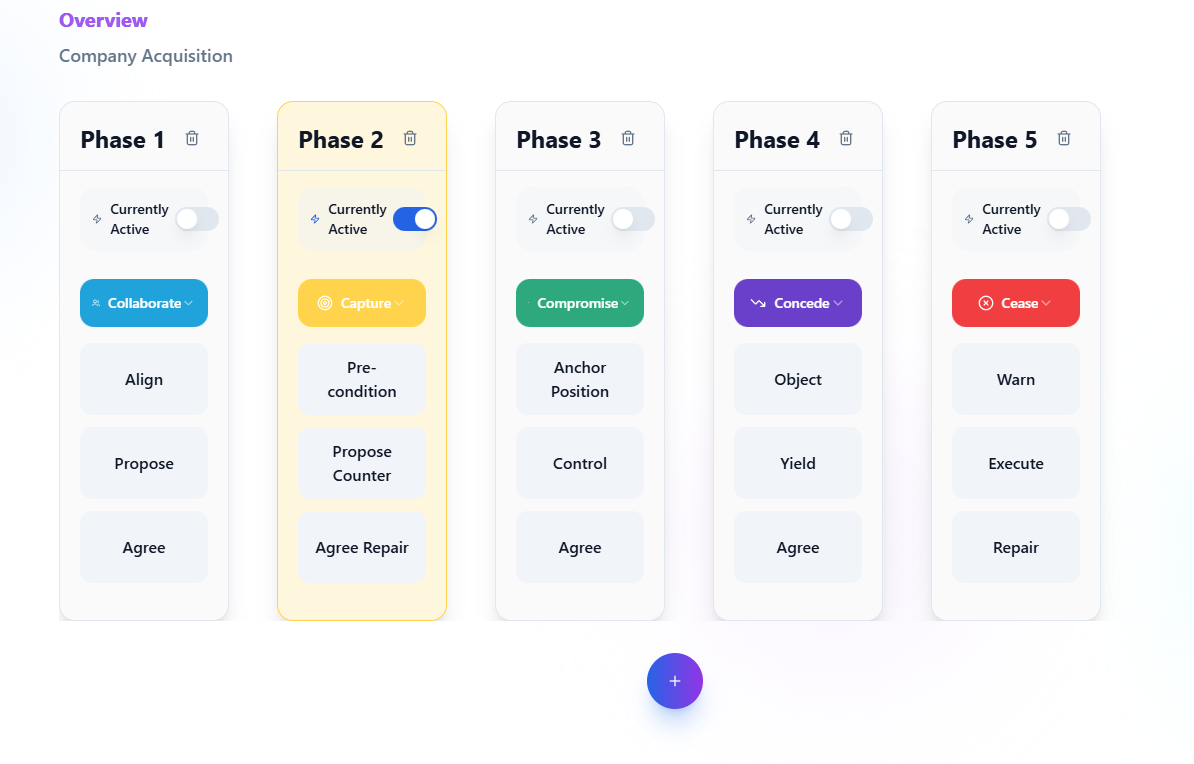
Your strategy is structured into phases—such as Collaborate, Capture, Compromise, Concede, and Cease—with explicit actions, timelines, and escalation rules for each stage.
Triggers, Timeline, and Phase Planner
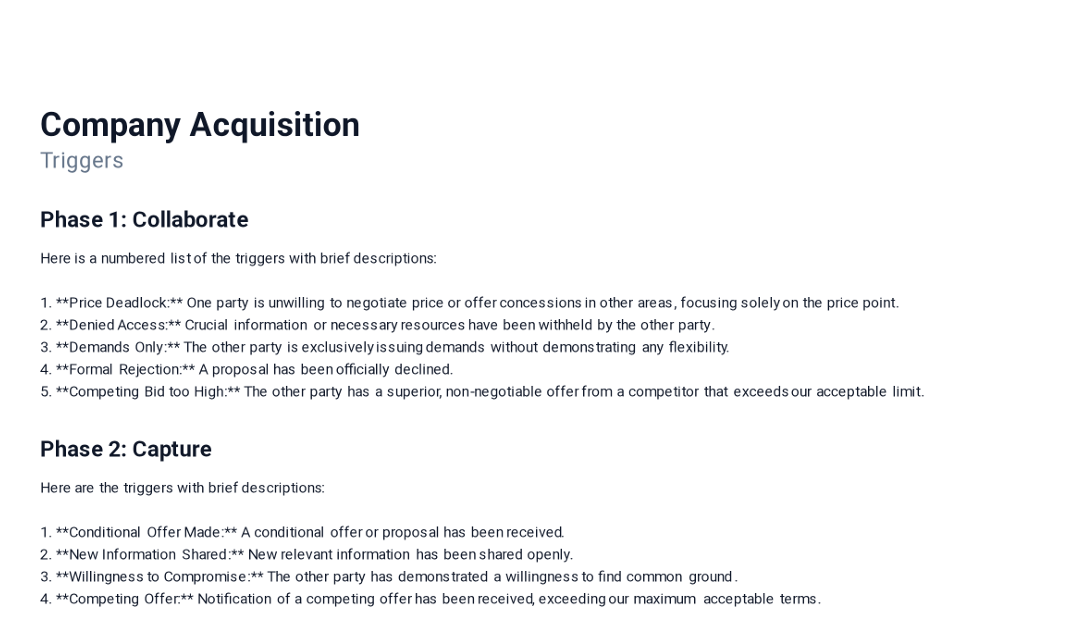
For every phase, we define specific triggers that signal when to escalate or de‑escalate pressure, adjust offers, or move to an alternative path.
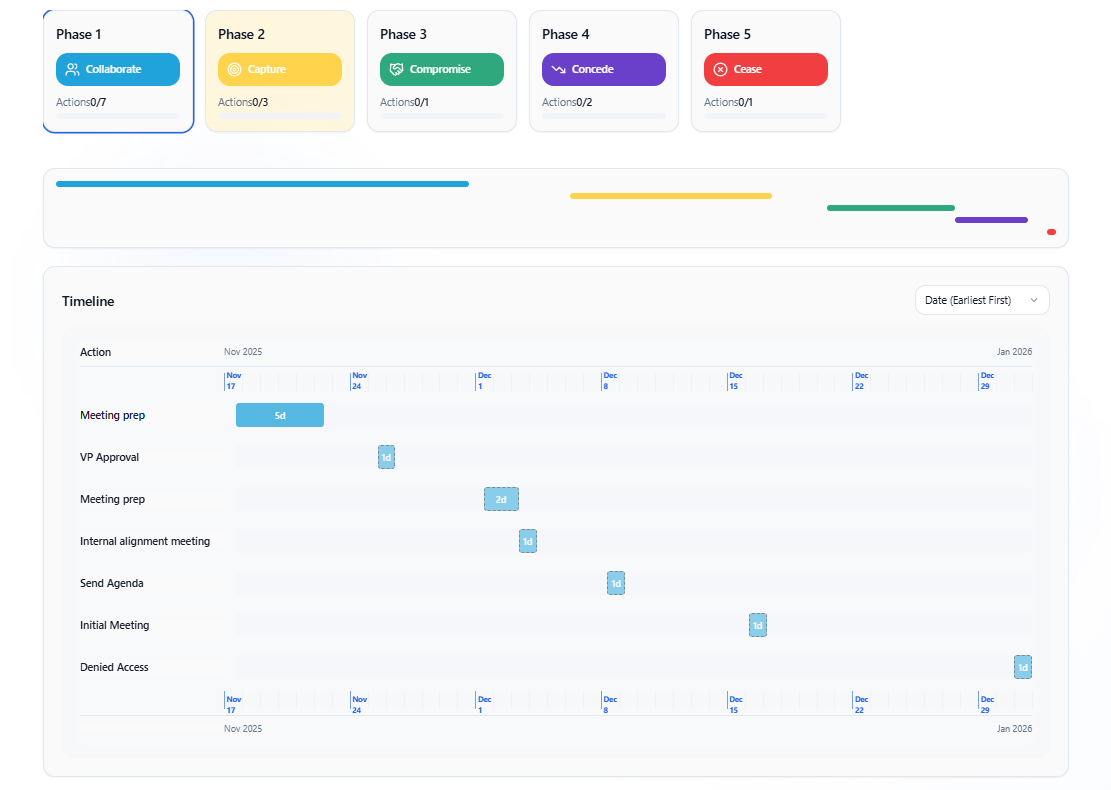
A shared visual timeline and phase planner keep leadership aligned on what happens next, who owns each action, and when key decisions are due.
Align Your Team Around the Table
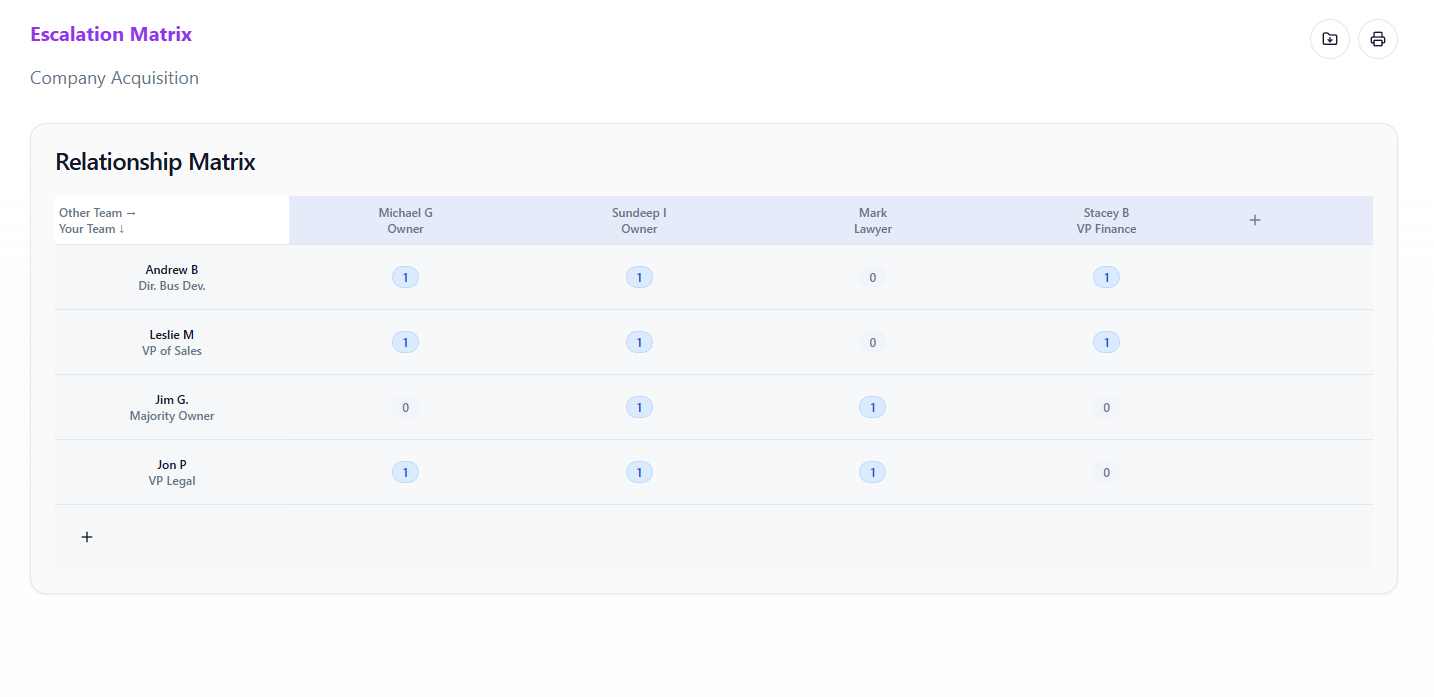
Complex deals fail when internal alignment breaks down. The workshop uses a relationship and escalation matrix to clarify who owns which relationship, how strong each connection is, and who makes which decisions.
This ensures there is no ambiguity around authority, approvals, or communication paths—especially when negotiations intensify.
What You Leave With
Every team leaves with a detailed, deal‑ready strategy playbook that covers the full lifecycle of the negotiation.
Core strategy outputs
- Segmentation: Group customers or suppliers (e.g., grow, maintain, rationalize) and build a tailored strategy for each segment.
- Communication sequencing: Decide who to approach first, how to stagger offers, and how to conserve and grow your power across multiple counterparties.
- Phase Overview: At a glance quickly see the the overall strategy visually
- Tactical Plans for Each Phase: Each phase will have individual actions, meetings, proposals, and triggers, associated with the changing dynamics of the negotiation. All actions will need to be time bound and have assigned responsibility
- Issue identification: Map potential problems in advance and design preventive actions and contingency plans—for both circumstantial risks and personality‑driven friction.
- Information management: Audit what you know, identify critical gaps, and define what to share now, what not to share, and what you’ll advise them of later.
- Question Strategy: Unlock crucial pieces of missing information and test assumptions. Create an agenda to prepare the other side and signal proper intent.
- Identify Critical Triggers: During each phase of the strategy it is absolutely critical to identify the “triggers” that escalate your strategy into the next phase, triggering either an increase or a decrease in applied pressure.
- Identify Anticipated Reactions: A robust strategy plans for as many eventualities as possible. Predicting the reactions of the other party helps to identify gaps in the strategy and allows for robust contingency planning.