
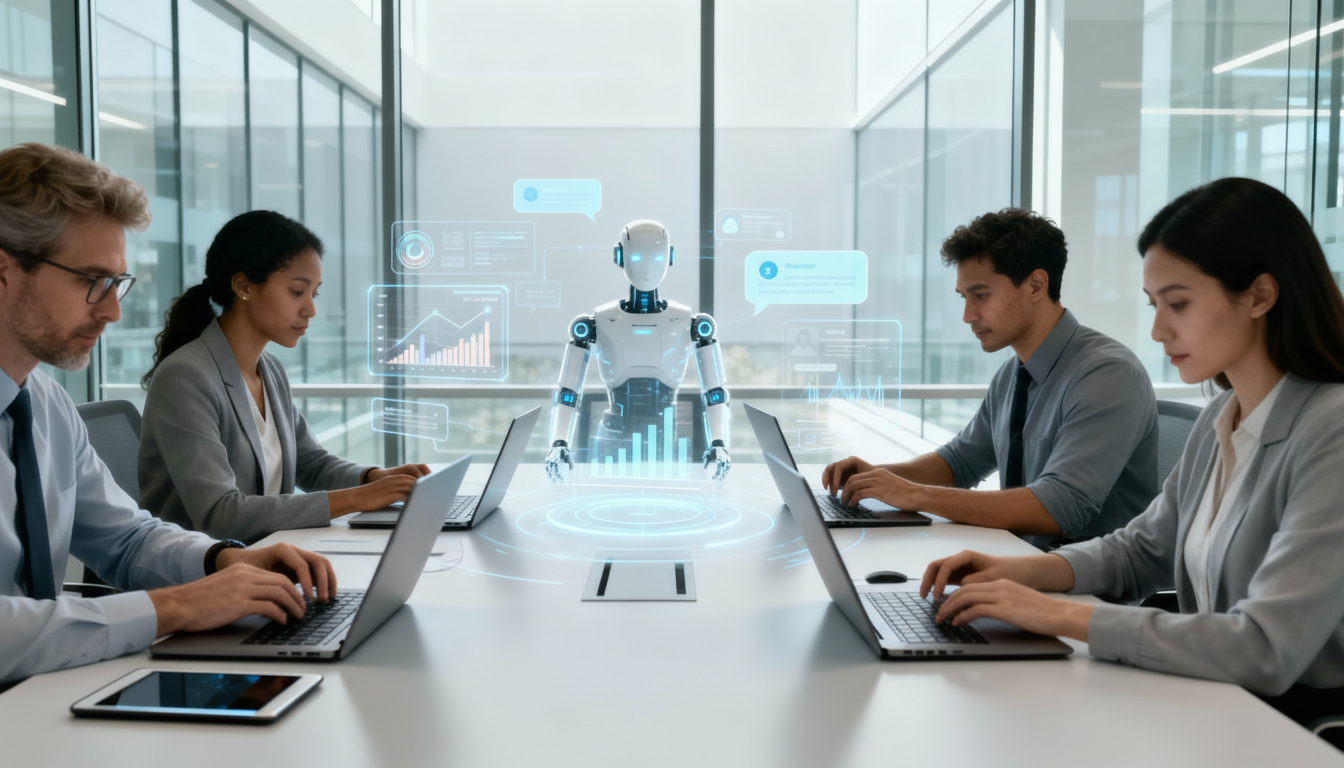
Boost Your Deal Outcomes with AI-Enabled Negotiation Coaching
AI-enabled negotiation coaching uses machine intelligence to analyze scenarios, simulate counterpart responses, and deliver targeted, data-driven feedback that enhances win rates and protects value. For corporate teams, AI-powered negotiation tools are now practical accelerants: they shorten cycle times, standardize playbooks, and capture tactical nuances that human teams might overlook. The most effective programs blend AI negotiation coaching with behavioral psychology, allowing individuals to develop sharper strategies and steadier execution under pressure. Below, we explain how AI is reshaping coaching, where humans remain essential, and how to deploy AI negotiation best practices to improve deal quality at scale.
The Transformative Role of AI in Negotiation Coaching
AI’s role in coaching has progressed from helpful assistant to semi-automated copilot, with selective full automation in low-risk contexts. Think of three operational forms:
- Assistant: AI as a support system—drafting option packages, highlighting leverage, or summarizing counterpart concerns.
- Semi-automation: AI consults with recommendations; humans set strategy and make final decisions.
- Full automation: AI agents execute discrete, repetitive negotiations end-to-end.
Research indicates that AI agents already manage small-value, repeatable, low-risk agreements with minimal error, while human oversight remains dominant in complex, ambiguous negotiations—an arrangement likely to persist and expand with capability gains, according to analysis from INSEAD on AI shaping negotiations. As organizations adopt large language models (LLMs) in negotiations, negotiation support systems, and negotiation automation, the coaching focus shifts from “What should I say?” to “How do we systematize better deals and decisions?”
Related terms you’ll see throughout: AI negotiation coaching, AI negotiation tools, negotiation automation, LLMs in negotiations, negotiation support systems.
Integrating Behavioral Psychology with AI for Superior Negotiation Outcomes
Behavioral psychology in negotiation studies how cognition, emotions, and biases shape choices at the table—factors like emotional intelligence, self-efficacy, and anxiety regulation are predictive of performance, especially under pressure. AI enhances, rather than replaces, this important human layer. Simulations allow sellers to rehearse objections, receive feedback on warmth and dominance signals, and calibrate style to context. The Edge Negotiation Group’s approach fuses behavioral science with advanced sales negotiation tactics, ensuring teams don’t just “know the play”—they execute with consistency when stakes and stress rise.
Comparison: Three coaching approaches
| Approach | Strengths | Gaps | Best Use Cases |
|---|---|---|---|
| Traditional behavioral coaching | Deep human insight; mindset and relationship skills | Limited scale and data feedback | High-stakes or sensitive negotiations where nuance is paramount |
| Pure-AI coaching | Scale, fast feedback, scenario coverage | Limited emotional coaching; risks decontextualized advice | High-volume skills practice; low-risk, repeatable deals |
| Integrated (behavior + AI) | Combines mindset, tactics, and analytics; measurable gains | Requires thoughtful design and governance | Enterprise rollouts seeking durable, scalable performance improvements |
Key Benefits of AI-Enabled Negotiation Coaching for Sales Professionals
When applied to sales negotiation AI and contract negotiation AI, teams see faster cycles, stronger compliance with playbooks, and improved outcome quality. Legal and procurement environments report accelerated redlining, standardized clause handling, and fewer handoffs overall—leading to cycle time reduction and more consistent terms. Beyond efficiency, AI provides personalized coaching that highlights missed cues, offers data-backed concession plans, and flags pricing or trade structures aligned with deal analytics and AI-powered sales training.
Benefits summary
| Benefit | How AI Delivers | Supporting Evidence |
|---|---|---|
| Shorter negotiation cycles | Automates summaries, issue tracking, and fallback terms | ContractPodAI; Monetizely |
| Higher outcome quality | Recommends trades, anchors, and counters based on past wins | INSEAD; Monetizely |
| Consistent execution | Standardizes playbooks and approvals; monitors deviations | ContractPodAI |
| Personalized skill growth | Real-time feedback on style, objections, and message framing | Harvard PON; Behavioral Insights (arXiv) |
| Better risk control | Flags bias, data gaps, or misaligned terms; prompts human review | INSEAD |
Overcoming Challenges and Psychological Barriers with AI Support
Psychological readiness in negotiation—the capacity to manage emotions, confidence, and mindset—often determines whether a sound strategy gets executed. Yet AI adoption can raise valid concerns: algorithmic bias, privacy and ethics questions, trust erosion, and shifting power dynamics. The right coaching design addresses both the technology and the human element.
Common barriers and AI-enabled solutions:
- Anxiety under pressure → Guided rehearsals with escalating difficulty build self-efficacy and calm under stress.
- Overconfidence or rigidity → Scenario variance and post-mortem analytics expose blind spots and encourage adaptive planning.
- Cognitive overload → Smart prompts, checklists, and prioritized issue lists reduce decision fatigue.
- Distrust of AI recommendations → Transparent rationales, confidence scores, and human-in-the-loop approvals rebuild trust.
- Ethical ambiguity → Policy guardrails and bias checks keep proposals within organizational and legal norms.
Personalizing AI Coaching to Your Negotiation Context and Style
Contextual AI negotiation tools incorporate deal type, industry norms, and a negotiator’s style to tailor guidance. Effectiveness rises when AI adapts to specific use cases—such as complex B2B sales or humanitarian contexts—rather than delivering generic scripts. Personality data, including Big Five traits, can help forecast decision preferences and stress responses, enabling the system to suggest pacing, framing, and tone aligned with the negotiator’s tendencies.
Key customization variables
| Variable | Why It Matters | Examples of Tailoring |
|---|---|---|
| Deal size and risk | Higher stakes require tighter oversight | Shift from automated play to human-led strategy with AI support |
| Negotiation style | Style-tone fit affects trust and outcomes | Calibrate warmth/dominance, timing of questions, and empathy cues |
| Industry and regulatory context | Terms and compliance vary by sector | Pre-approved clause libraries and domain-specific playbooks |
| Company standards | Align to strategy, margin, and risk appetite | Embedded target lists, approval routes, and reporting |
| Counterpart profile | Different motives and BATNAs demand different tactics | Adjust anchors, concession ladders, and reciprocity triggers |
Best Practices to Maximize AI’s Impact on Deal Success
A practical rollout sequence helps organizations capture value quickly while managing risk—core AI negotiation best practices:
- Assess negotiation context: Map deal types, risks, volumes, and existing processes.
- Pilot AI tools: Start with one or two use cases; validate fit, data needs, and user experience.
- Integrate psychological support: Combine scenario drills with mindset, emotion regulation, and bias training.
- Monitor results and adapt: Instrument pipelines and assess AI impact on negotiations.
Always maintain human oversight in any high-stakes, sensitive, or novel negotiation; AI should augment these deals, not automate them. Example KPIs:
- Cycle time (from first offer to signature)
- Negotiated value (price, term improvements, risk reductions)
- Concession efficiency (value given per value gained)
- Compliance with playbooks and approvals
- Counterpart and seller satisfaction
For tailored implementation, The Edge Negotiation Group offers negotiation workshop services that integrate behavioral science with AI-enabled practice.
The Future of AI and Human Partnership in Complex Negotiations
As capabilities advance, expect more semi-automation in routine negotiations and more potent assistive tools for complex deals. As one summary puts it: “Negotiation AI agents show shortcomings, but improvements over time will likely favor automated and semi-automated processes.” Still, strategic, high-risk, or ambiguous situations will rely on human judgment, trust-building, and context reading—areas where AI serves as a powerful ally, not a substitute. The winning model is clear: AI to analyze, simulate, and standardize; humans to interpret, decide, and connect.
Frequently Asked Questions
What is AI-enabled negotiation coaching and how does it improve deal outcomes?
AI-enabled negotiation coaching employs artificial intelligence to analyze deal conversations and provide real-time feedback, helping negotiators adapt strategies and improve win rates.
How can AI support emotional intelligence and psychological readiness in negotiations?
AI tools assist professionals in rehearsing negotiation scenarios and managing emotional states, thereby enhancing confidence, self-efficacy, and overall negotiation performance.
Can AI coaching simulate real negotiation scenarios for effective practice?
Yes, AI-powered coaching platforms can replicate realistic negotiation scenarios, enabling participants to practice responses and tactics in a safe, adaptive environment.
What are the key limitations and ethical considerations when using AI in negotiation?
Limitations include the risk of algorithmic bias, data privacy concerns, and potential overreliance on AI, which can impact trust and ethical standards in negotiations.
How soon can practitioners expect measurable improvements from AI-enabled coaching?
Many organizations observe positive changes—such as shorter deal cycles and improved negotiation outcomes—within a few weeks of implementing AI-enabled coaching.