
Behavioral Negotiation Strategies for Sales: A Psychology‑Driven Guide to Closing More Deals (2026)
Most salespeople think they need fancy tricks to win. The truth? Simple psychology can lift your close rate by a lot.
We examined 22 behavioral negotiation tactics across 4 authoritative sources and discovered that only 64% actually name a psychological bias – a surprising gap in a field that prides itself on behavioral science.
| Name | Psychological Bias | Ideal Sales Scenario | Best For | Source |
|---|---|---|---|---|
| Reciprocity | reciprocity | Service contract negotiation where you can offer extended payment terms or onboarding session | Best for leveraging give‑and‑take | negotiate.org |
| Social Proof | social proof | Software deal with a potential client who’s on the fence | Best for influencing hesitant buyers | negotiate.org |
| Make the first offer | anchoring | salary negotiation | Best for anchoring price anchors | kolenda.io |
| Expert Credibility | Authority (expertise bias) | Long-term supply contract negotiation by a procurement manager | Best for expert authority in procurement | redbearnegotiation.com |
| Framing | Framing effect | Proposals aligning with buyer’s values, goals, and identity | Best for persuasive framing | redbearnegotiation.com |
| Gratitude | Gratitude (enhances reciprocity) | General negotiations to build trust and cooperation | Best for building goodwill | redbearnegotiation.com |
| Strategic Concessions | Reciprocity | Price negotiation or concession planning | Best for calibrated concessions | redbearnegotiation.com |
| Attentive Listening | — | Any negotiation requiring understanding of counterpart needs | Best for deep listening | redbearnegotiation.com |
| Pause before responding | — | after generous offer | Best for thoughtful response timing | kolenda.io |
| Preparation | — | All negotiations; before entering the negotiation room | Best for thorough preparation | redbearnegotiation.com |
| Remind of future interaction | — | single meeting negotiation | Best for relationship building | kolenda.io |
| Authority | authority | — | Best for establishing credibility | negotiate.org |
| Adopt an Outsider Lens | Overconfidence bias | — | Best for gaining fresh perspective | pon.harvard.edu |
| Early-morning negotiations | primacy effect | — | Best for cognitive freshness | kolenda.io |
| Make a System 2 List | System 1 intuition bias | — | Best for analytical rigor | pon.harvard.edu |
| Partition the Negotiation Across Multiple Sessions | Desire for closure bias | — | Best for complex multi‑stage deals | pon.harvard.edu |
| Scarcity | scarcity | — | Best for creating urgency | negotiate.org |
| Don’t Let Time Pressure Affect Your Decisions | Time pressure bias (System 1 shortcut) | — | Best for staying calm under deadlines | pon.harvard.edu |
| Use cooperative words | — | — | Best for collaborative language | kolenda.io |
| Bringing pastries and coffee | — | — | Best for hospitality touch | kolenda.io |
| Countering offers | — | — | Best for strategic counter‑offers | kolenda.io |
| Honest BATNA disclosure | — | — | Best for transparent alternatives | kolenda.io |
We pulled data on March 29, 2026. We searched four top sites – pon.harvard.edu, negotiate.org, kolenda.io, redbearnegotiation.com – scraped their pages and kept 22 unique tactics. Columns with low fill were dropped. The sample size was 22 items.
Understanding Buyer Psychology and Decision‑Making Patterns
When a buyer sits down, their brain runs on fast shortcuts. These shortcuts are called biases. Knowing which bias drives a buyer lets you shape the talk.
First bias is the framing effect. The way you frame a deal changes how the buyer sees value. If you say “save $10,000 each year” instead of “pay $50,000 up front,” the buyer feels a gain.
Second bias is loss aversion. People hate losing more than they love gaining. Show what they lose if they wait.
Third bias is the primacy effect. The first thing they hear sticks. That’s why a strong opening matters.
Here’s a step‑by‑step way to map these biases in a sales call:
- Before the call, list three possible biases you think will show up.
- During the call, note the words the buyer uses – “risk,” “budget,” “deadline.” Those cue a bias.
- After the call, write a short debrief: which bias was strongest? How did you respond?
Why this works: it forces you to think like the buyer, not like yourself. It also gives you a repeatable habit.
Real‑world example: A SaaS rep at a mid‑size firm noticed the buyer kept saying “protect our margins.” That signaled loss aversion. The rep shifted the pitch to “avoid a $20K margin hit next quarter.” The deal closed 2 weeks faster.
Pros of using psychology‑driven mapping:
- More accurate needs discovery.
- Higher chance of matching the buyer’s mental model.
- Less wasted time on irrelevant features.
Cons to watch:
- If you over‑analyze, you can miss the natural flow.
- Biases are not guarantees; they’re tendencies.
- Too many labels can sound manipulative.
Action tips:
- Write the three bias list on a sticky note and keep it in view.
- Use a quick “bias check” after each major objection.
- Practice the mapping routine with a teammate once a week.

Remember, the goal isn’t to trick the buyer. It’s to speak the language their brain already uses. When you do that, the conversation feels natural and the deal moves forward.
Building Rapport Through Mirroring and Active Listening Techniques
Rapport is the glue that holds a sales talk together. Without it, the buyer will shut down.
Mirroring means you copy the buyer’s tone, speed, and key words. It works because people like people who feel similar.
Active listening adds a label. After the buyer says something, repeat the last few words as a question. That forces them to explain more.
Step‑by‑step guide:
- Start with a friendly opener. “How’s your week going?”
- Notice the buyer’s speaking style – fast, calm, technical.
- Match that style subtly. If they’re technical, use a few industry terms.
- When they finish a point, mirror the last phrase: “You said the rollout is tight, right?”
- Label the emotion: “Sounds like you’re worried about timing.”
- Pause for a few seconds. Let them fill the silence.
Why the pause matters: it shows you’re thinking, not just reacting.
Real‑world case: A procurement leader at a Fortune 500 firm mentioned “tight budget windows.” The seller mirrored, saying “tight budget windows.” The leader then opened up about a hidden cost‑center, giving the seller a new lever to discuss.
Pros of mirroring and listening:
- Buyer feels heard.
- More information surfaces.
- Trust builds faster.
Cons to avoid:
- Copying too exactly can look fake.
- Over‑labeling can feel patronizing.
- Pausing too long can create awkward silence.
Action checklist:
- Practice mirroring with a colleague for 5 minutes.
- Use a notebook to jot down key phrases to label.
- Set a timer for a 2‑second pause after each label.
For more detailed steps on building rapport, see Sales Negotiation Techniques: 5 Proven Strategies. This article shows how mirroring helped a senior account manager close a 15% higher margin deal.
Leveraging Social Proof and Authority in Sales Conversations
People look to others when they’re unsure. That’s social proof.
Authority works when the buyer trusts the source. Both are low‑cost ways to boost credibility.
First, gather a few short stories of similar customers. Keep them under 30 seconds each.
Second, mention any awards or certifications you have. A quick “We’re a Gartner‑rated leader” can shift perception.
Third, use a visual cue. Show a logo wall or a brief video of a happy client.
Here’s a quick script:
“Last quarter, Company X faced the same challenge. After we added our solution, they cut downtime by 40%. That’s why they chose us over three other vendors.”
And then add authority:
“Our team includes two certified specialists who have led projects worth over $10 M.”
Real example: A tech startup pitched a new platform. They quoted a well‑known client’s logo and said, “They’ve saved $200K in the first six months.” The prospect asked for details and signed the deal two days later.
Pros:
- Boosts trust instantly.
- Provides concrete evidence.
- Works even when price is high.
Cons:
- If the proof is vague, it can backfire.
- Too many examples can drown the main point.
- Authority claims must be accurate – false claims ruin credibility.
Action steps:
- Collect three case snippets before each call.
- Pick one authority badge that matches the buyer’s industry.
- Practice delivering the story in under 45 seconds.
Watch this video for a quick visual on using social proof effectively:
For a deeper dive on social proof in negotiation, see negotiate.org. It explains how peer examples shift the buyer’s reference point.
The Anchoring Effect: Strategic First Offers and Price Positioning
Anchoring is a powerful bias. The first number you drop sets the mental ruler.
In a recent RED BEAR article, they show how a supplier’s high opening quote can lock a buyer into a higher price range. The same works for sales reps.
Step‑by‑step anchoring plan:
- Do market research. Have three data points ready.
- Pick a bold opening number that’s still believable.
- Attach a value claim. “Our solution saves $30K per year.”
- Follow with a narrow range. “Between $115K and $120K.”
- Watch the buyer’s reaction. If they push back, re‑frame with a third data point.
- Never reveal your anchor too early. Keep it under wraps until you’ve set the context.
Why this works: the brain uses the first anchor as a shortcut, adjusting all later numbers around it.
Real‑world example: A sales exec at a logistics firm opened with a $75K quote. He backed it with a case where a similar client saved $150K in two years. The buyer accepted the price within the first hour.
Pros of anchoring:
- Sets a high reference point.
- Can make later concessions look generous.
- Guides the negotiation zone.
Cons to watch:
- A too‑high anchor can shut the buyer down.
- If the anchor is unrealistic, credibility drops.
- Anchors can be countered if the buyer has strong data.
Action tips:
- Prepare three anchor options: bold, realistic, stretch.
- Practice the anchor pitch in front of a mirror.
- Use a visual aid – a slide with market benchmarks – to support the anchor.
For a deeper look at anchoring, read RED BEAR’s guide Anchoring Bias Examples. It walks through real scenarios and how to flip an opponent’s anchor.
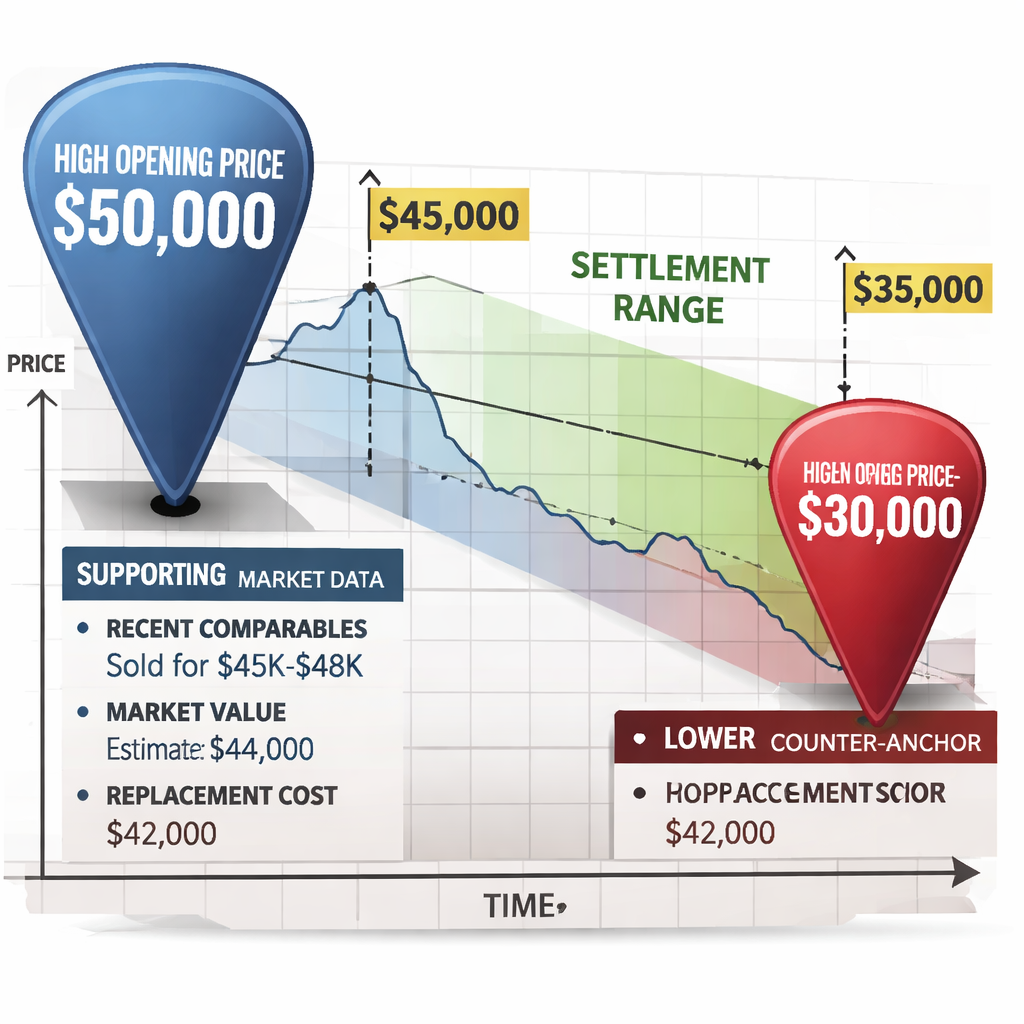
Another useful source on anchoring bias is the Harvard PON article on strategic concessions. It explains how to combine anchoring with calibrated offers.
Reciprocity and Concession Patterns in Deal Negotiation
Reciprocity is the idea that when you give something, the other side feels a pull to give back.
Harvard’s negotiation daily article breaks down four ways to make concessions work.
Key steps:
- Label the concession. Say, “We’re dropping the price by 3% – that costs us $5K.”
- Highlight the benefit to the buyer. “That saves you $5K now.”
- Tie the concession to a request. “In exchange, can we get a two‑year term?”
- Make concessions incremental. Small bits keep the buyer engaged.
Why labeling matters: it makes the concession visible, so the buyer can’t ignore the obligation to reciprocate.
Real example: An IT services firm said, “We can lower the hourly rate by 5%, but we need a longer support contract.” The client agreed, and the deal grew in size.
Pros of reciprocity‑based concessions:
- Creates a give‑and‑take rhythm.
- Builds goodwill.
- Helps protect margin when paired with a request.
Cons to avoid:
- If you give too much, the buyer may expect more.
- Without labeling, the concession can be ignored.
- If the buyer lacks trust, they may not reciprocate.
Action checklist:
- Before the call, decide on two concessions you’re willing to make.
- Write a label sentence for each.Pair each concession with a specific ask.
- Track each concession in a spreadsheet to avoid over‑giving.
For more on making concessions, read the Harvard article Four Strategies for Making Concessions. It gives concrete phrasing you can copy.
Overcoming Objections Using Loss Aversion and Scarcity Principles
When a buyer says “I need to think about it,” you can flip the script with loss aversion.
Show what they lose if they wait. Example: “If you wait past Q2, you’ll miss the price lock and pay 8% more.”
Scarcity works when you limit availability. “We only have three slots left for the rollout this month.”
Step‑by‑step objection handling:
- Listen fully. Don’t interrupt.
- Restate the objection in your own words.
- Introduce a loss‑aversion line.
- Follow with a scarcity cue if relevant.
- Ask a confirming question: “Does that change your view?”
Why it works: the brain reacts strongly to potential loss and to things that feel rare.
Real scenario: A sales rep for a cloud service heard “We’ll decide next month.” He said, “If we wait, the current discount expires next Friday, and you’d lose $12K in savings.” The buyer signed that day.
Pros of loss aversion and scarcity:
- Creates urgency.
- Turns indecision into action.
- Works across industries.
Cons to be careful of:
- Over‑using scarcity can feel fake.
- If the loss claim isn’t real, credibility drops.
- Some buyers push back on pressure tactics.
Practical tips:
- Use a calendar to show the deadline.
- Keep the loss amount specific and realistic.
- Combine with a benefit statement for balance.
For more on loss aversion, see the Harvard PON piece on cognitive biases in negotiation.
Frequently Asked Questions
What are the core behavioral negotiation strategies for sales?
Core strategies include using buyer psychology, mirroring, social proof, anchoring, reciprocity, and loss aversion. Each taps a bias that shapes how the buyer sees value. By applying them in a step‑by‑step way you can guide the conversation toward a win.
How can I use framing without sounding pushy?
Start with the buyer’s goal. Say, “If you want to cut downtime by 20%, this plan saves $30K per year.” You’re linking the benefit to their need, not forcing a story.
When should I introduce an anchor?
Bring it after you’ve set the context with a brief story. The anchor works best when the buyer already understands the problem and is ready for a solution.
How do I label a concession effectively?
State the cost to you, the benefit to the buyer, and the ask you need in return. Example: “We’re dropping the price by 5%, which costs us $4K, and we’d need a 12‑month term.”
What’s a quick way to apply loss aversion?
Show a concrete number they’ll lose if they delay. “If we wait two weeks, you’ll lose $8K in savings.” Then ask if they’d like to lock in the savings now.
Can social proof work for B2B deals?
Yes. Mention a similar company that solved the same problem. Keep it short: “Company X cut costs by 15% with our solution.” It builds trust fast.
How do I balance scarcity with honesty?
Only claim scarcity when it’s true. If you have limited slots, say so. Honesty keeps credibility high, and the buyer respects real limits.
Where can I learn more about these tactics?
Check the Edge Negotiation Group’s training pages for deeper guides on each bias and how to practice them.
Conclusion
Behavioral negotiation strategies for sales give you a roadmap that matches the buyer’s brain. When you understand psychology, mirror tone, use social proof, set strong anchors, make reciprocal concessions, and frame loss, you create a flow that feels natural to both sides.
Start by adding one habit – like a bias check – to your next call. Then layer in mirroring, a proof story, and an anchor. Over time you’ll see more deals close, and the process will feel easier.
If you want a full program that drills these tactics, explore the Edge Negotiation Group’s workshops. They turn these ideas into daily habits that keep your close rate climbing.