
The Negotiation Planning Process: From Preparation to Execution
Negotiation is where preparation becomes performance. It’s not about charisma or luck—it’s about structured strategy. Whether you’re finalizing a multi-year procurement deal or closing a strategic sales agreement, outcomes are decided long before you enter the room.
At The Ultimate Negotiator™, we teach that planning is the deal. Preparation is not a precursor to negotiation; it is the negotiation. The more structure you build before the conversation, the more control you hold within it.
This article unpacks the Negotiation Planning Process in full—anchored in negotiation fundamentals, drawn from The Wheel of Negotiation, and supported by proven methods from sales negotiation training and procurement negotiation training programs across industries.
1. Why Planning Defines Success
Planning drives leverage, composure, and clarity. It allows negotiators to:
- Define measurable outcomes
- Anticipate the other side’s objectives
- Control the flow of information
- Avoid reactive, emotional decision-making
When planning is thorough, negotiation becomes execution.
As Andrew Boughton explains in Agenda, defining purpose and order before engagement prevents confusion and enables consistent, deliberate messaging.
2. Negotiation Fundamentals: The Wheel as a Compass
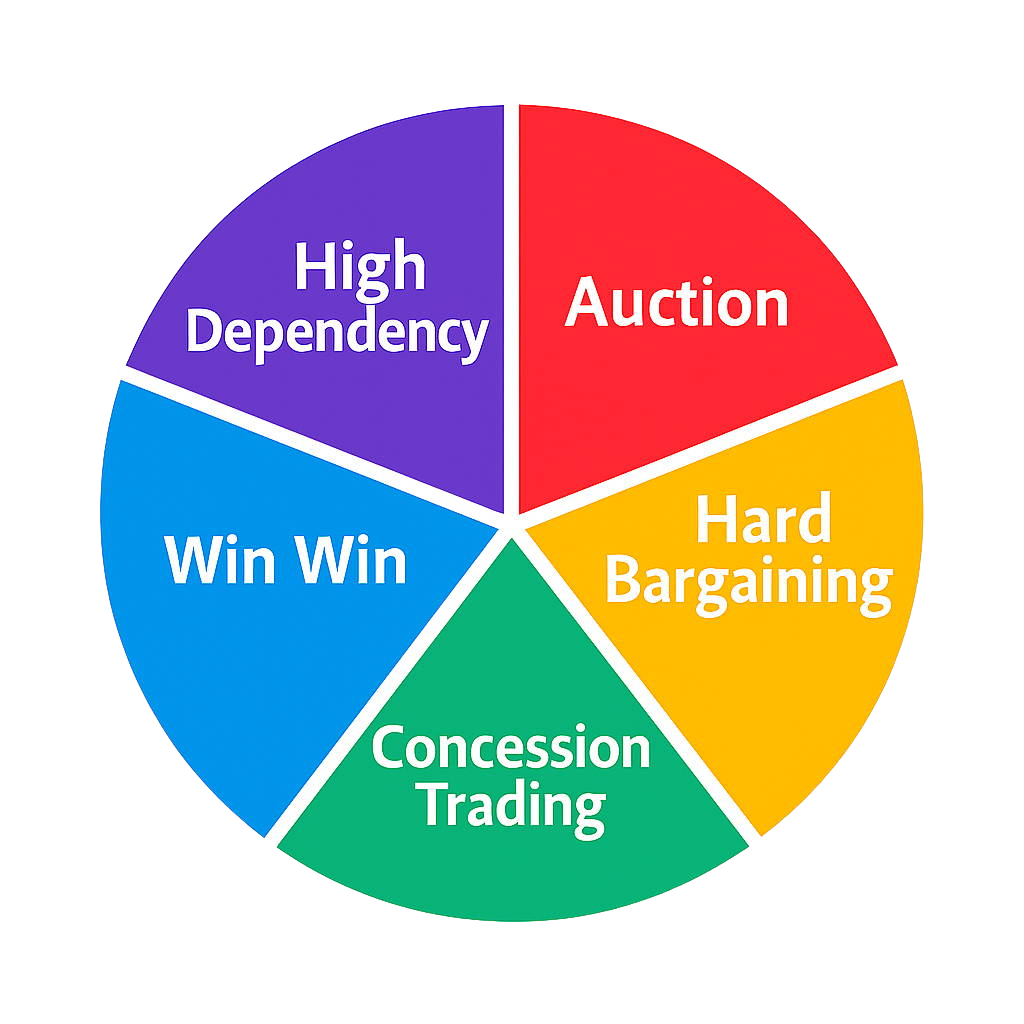
Every negotiation aligns to one of five core styles on The Wheel of Negotiation framework. Understanding which you’re in determines how you should plan.
- Auctions – Competitive, price-based, short-term. (See Price is a Take for managing movement control.)
- Hard Bargaining – Transactional and power-oriented.
- Concession Trading – Incremental, relationship-protecting. (See Give and Takes for insight on balance.)
- Win Win – Collaborative and creative. (See Brainstorming for joint value creation.)
- High Dependency – Long-term partnerships with mutual reliance.
3. The Planning Process: Step by Step
Step 1: Define the Negotiation
Clarity drives confidence. Define what decision must be made and what value is at stake. See Prioritize Issues for a practical example of structuring goals and stakes.
Step 2: Identify and Prioritize Issues
List every possible issue—price, terms, delivery, exclusivity, risk allocation—and then prioritize. (Watch Price is a Take and Give and Takes to understand sequencing and value exchange.)
Step 3: Map the Trades
Link priorities across both sides using Creating a Trade Map. This structured approach transforms negotiation from positional to conditional.
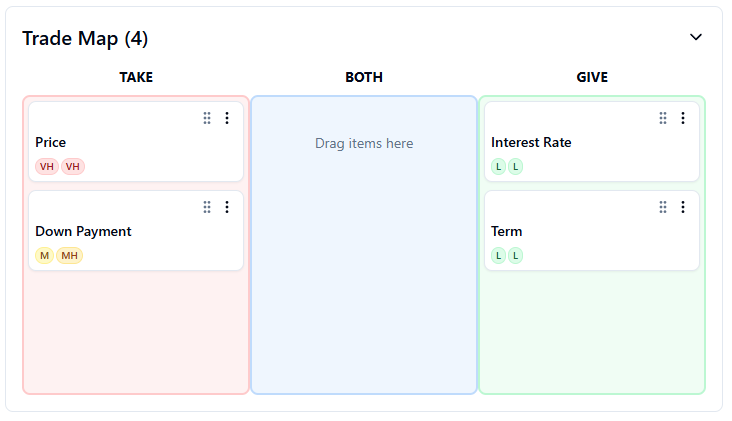
The Trade Map visually organizes give, take, and shared variables to help negotiators plan and execute stronger trade strategies.
Step 4: Manage Your Movements
Don’t Empty Your Gun demonstrates why incremental concessions maintain authority and signal strength through controlled pace and precision.
Step 5: Formulate Proposals
Watch Creating Proposals for a full walkthrough on structuring conditional trades and presenting them in a balanced, reciprocal way.
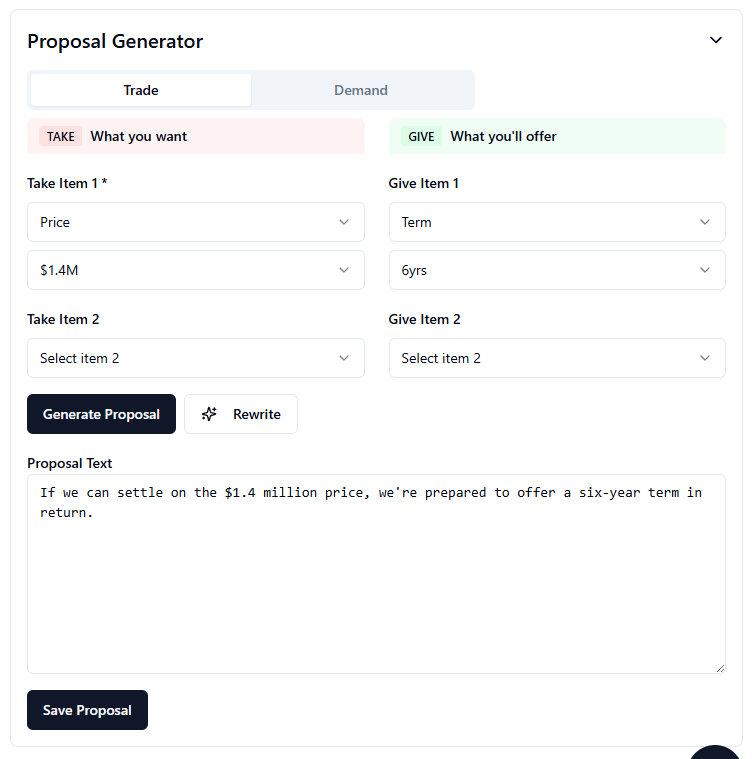
A proposal generator used in negotiation planning to structure offers, demands, and trade language before conversations begin.
Step 6: Anticipate Obstacles
Common traps are outlined in Pitfalls of Planning, which shows how rushed assumptions and lack of structure can undermine even skilled negotiators.
Step 7: Use Your Tools
See Planning Tools Old School for a perspective on traditional preparation methods that still build discipline in digital-era negotiators.
Step 8: Conduct the Information Meeting
In Information Meeting, Andrew explains how to structure an exploratory session to gather data, clarify needs, and precondition the counterpart’s expectations.
4. Planning Across Sales and Procurement
Sales Negotiation Training
Sales professionals who plan outperform those who improvise. Structured planning ensures:
- Value-based conversations over price-based defense
- Pre-defined proposal tiers and concessions
- Clarity on walk-away points and escalation limits
Procurement Negotiation Training
For procurement professionals, planning creates power. Using frameworks from Price is a Take and Give and Takes, sourcing teams can quantify trades, protect value, and lead the conversation rather than react to it.
5. Behavioral Control and Information Flow
Negotiation is both rational and emotional. Lessons in Information Meeting emphasize managing tone, timing, and transparency. Control the story; never let it control you.
6. Common Planning Pitfalls
Watch Pitfalls of Planning to reinforce awareness of traps like overconfidence and rigid structures.
7. Spotlight: The Deal Maker App
The Deal Master App—a core component of The Ultimate Negotiator system—digitizes every stage of the planning process. It brings structure, visibility, and accountability to negotiations, helping professionals plan their agenda, trade map, and moves with precision.
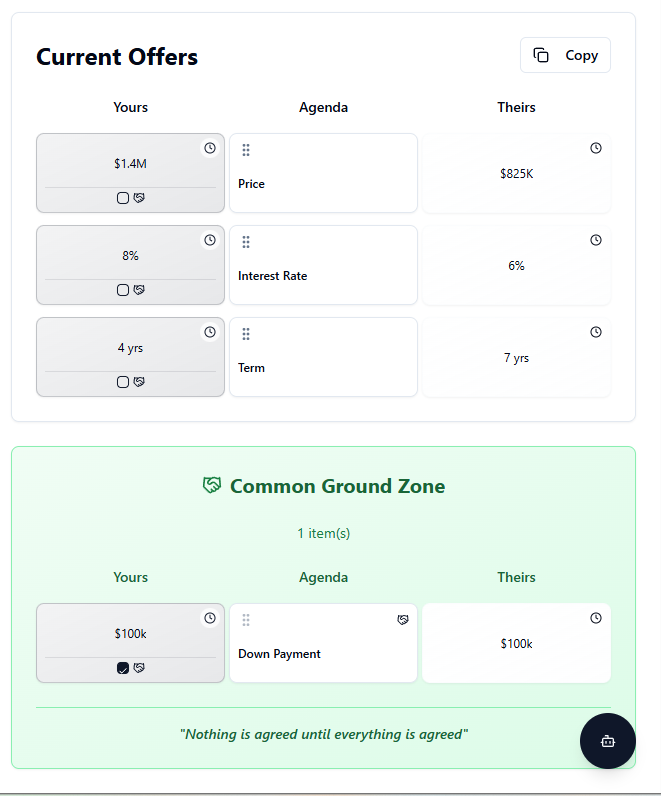
The Tracking page visually compares offers, highlights common ground, and reveals remaining gaps to support structured negotiation planning.
Deal Maker Video Series
- Creating a New Negotiation
- Create Agenda
- Prioritizing Agenda Items
- Creating Your Questions
- Their Responses
- Their Priorities
- Trade Map
- Planning Your Moves
- Creating Proposals
- Tracking the Offers
- Settings & Gamification
- Accessing the Library
8. Measuring Planning Effectiveness
To gauge the quality of your planning, evaluate three dimensions:
1. Outcome Metrics
Achievement of targets, value creation beyond price, and risk balance.
2. Process Metrics
Quality of research, role clarity, and move control.
3. Relationship Metrics
Fairness perception, satisfaction, and future collaboration potential.
9. The Ultimate Negotiator Mindset
Planning is both science and art. It demands logic, structure, and emotional intelligence. Discipline provides structure. Curiosity fuels creativity. Reflection reinforces growth. Master negotiators plan not because they expect the world to cooperate—but because preparation ensures they can adapt when it doesn’t.
10. Conclusion: Planning as a Competitive Advantage
The Negotiation Planning Process is more than a framework—it’s a competitive edge. It transforms uncertainty into control, complexity into structure, and pressure into composure. In sales, it protects margin. In procurement, it maximizes value. In leadership, it builds trust and alignment.
Ultimately, planning is how professionals lead the deal before it begins. Because at the highest level, negotiation isn’t performance—it’s preparation in motion.