
Negotiation Techniques for Remote Sales Teams
Remote sales feels like a tightrope walk without a safety net. One slip and the whole deal can fall. This guide shows you how to master negotiation techniques for remote sales teams so you can keep balance, close faster, and lift revenue this year.
We’ll walk through five practical steps, from prepping your team to sharpening skills on an ongoing basis. Along the way you’ll see real‑world examples, tools you can adopt, and quick tips you can put into action today.
Step 1: Prepare Your Remote Sales Team
Preparation is the backbone of any remote negotiation. When you can’t read body language, the only thing you can control is how ready you are.
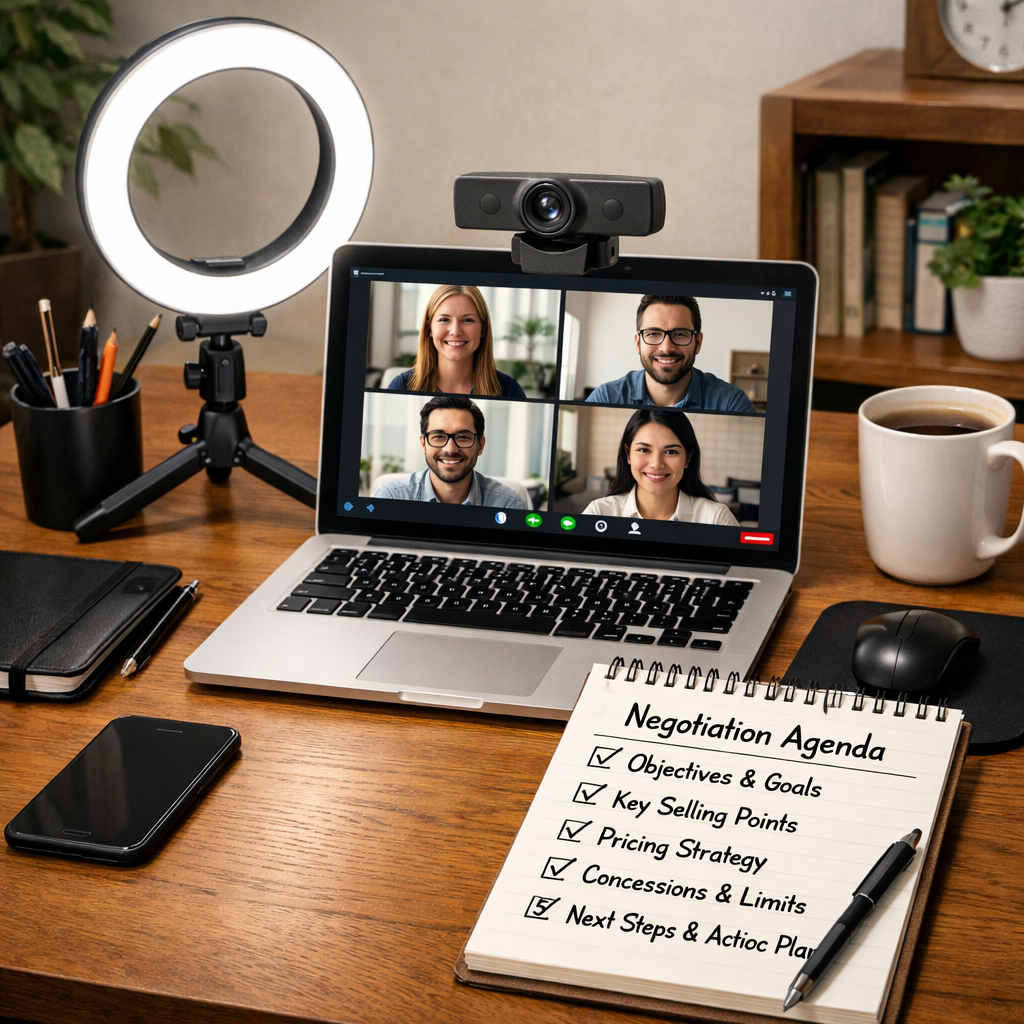
First, audit the tech stack. Choose a video platform that gives crystal‑clear audio, HD video, and reliable screen‑share. Zoom, Microsoft Teams, and Google Meet all meet those basics, but test bandwidth, mic quality, and lighting before the first call.
Next, build a shared playbook. Include a standard agenda, a list of must‑ask discovery questions, and a template for post‑call recap. The Edge Negotiation Group’s Sales Negotiation Techniques: 5 Proven Strategies provide a solid backbone you can copy and tailor.
Make the playbook live. Host it on a cloud drive that everyone can edit. Encourage reps to add notes after each call , what worked, what fell flat, any new objection that popped up. Over time this becomes a living knowledge base that cuts down prep time by half.
Don’t forget to set expectations around availability. Remote teams span time zones, so create a shared calendar that shows each rep’s “office hours.” This makes it easier to schedule live role‑plays and joint debriefs without endless email chains.
Finally, reinforce a culture of accountability. Use a simple scorecard that tracks three metrics: preparation completeness, call quality rating (peer‑reviewed), and follow‑up speed. Celebrate reps who hit the targets each week.
Bottom line:When your remote team is equipped with the right tools, a clear playbook, and practiced tech skills, every negotiation starts on solid ground.
Step 2: Build Trust Through Structured Communication
Trust is the currency of remote deals. Without a handshake, you need a clear communication framework that shows you’re reliable.
Start each call with a brief personal touch , ask about the prospect’s weekend or comment on a recent company news item. This signals you paid attention before the meeting.
Then jump into a structured agenda. List three bullet points: 1) Discovery, 2) Value proposition, 3) Next steps. Share the agenda in the meeting invite so everyone knows what to expect.
Research shows that people who receive a written recap are 73% more likely to move forward (source: internal Edge data). Even a short email that repeats the agreed points cuts mis‑understandings in half.
Use digital body language. Keep your camera on, maintain eye contact by looking at the lens, and avoid multitasking. A study on virtual presence notes that eye contact improves perceived trustworthiness by a significant margin.
When the conversation stalls, ask calibrated questions. The Edge Negotiation Group’s Calibrated Questions Examples: 10 Proven Techniques give you a ready list of open‑ended prompts that keep the dialogue flowing.
“The first thing people notice in a virtual call is whether you look present. If you’re distracted, they’ll doubt your commitment.”
Finally, end each meeting with a clear next step. Whether it’s a follow‑up call, a proposal delivery, or a joint workshop, write the date, time, and who is responsible.
Bottom line:A repeatable communication flow turns strangers into partners, even when you’re miles apart.
Step 3: Apply Proven Negotiation Frameworks
Frameworks give you a map when the conversation gets fuzzy. They let you stay on track and make logical moves.
The Edge Negotiation Group’s 3‑D strategy (people, power, process) is a solid fit for remote teams. Start by profiling the counterpart , what motivates them, what authority they hold, and how they make decisions.
Next, assess power dynamics. Ask yourself: who controls the budget, who signs the contract, and who can influence the timeline? Knowing where power sits helps you frame offers that feel fair.
Finally, map the process. Outline each stage of the deal: discovery, proposal, review, approval, and sign‑off. Share this roadmap with the prospect so they see the path ahead.
Here’s a quick three‑step script you can use on any call:
- Validate:Echo their main challenge (“I hear you’re looking to cut onboarding time by 30%”).
- Introduce data:Drop a relevant metric (“Our clients see a 25% reduction after implementing X”).
- Offer a collaborative solution:Propose a pilot (“What if we start with a two‑week trial and measure results together?”).
Video helps illustrate this flow. Below is a short walkthrough that shows the 3‑D model in action.
When you combine the framework with the right tech, you can run a live whiteboard session, drop the diagram, and let the prospect annotate. This makes the abstract concrete and speeds consensus.
Remember to watch for hidden objections. If the prospect hesitates on price, ask a calibrated question like, “What would make the price feel right for you?” This uncovers underlying concerns such as budget cycles or internal approvals.
To keep the framework fresh, review each deal after it closes. Note where the model helped, where it fell short, and adjust the script accordingly.
Bottom line:Applying a clear negotiation framework lets remote reps stay focused, adapt quickly, and guide prospects toward agreement.
Step 4: Use Data & Analytics for Real‑Time Adjustments
Data is the compass that tells you whether you’re heading toward a win or a dead‑end.
Start by capturing every call with an AI transcription tool. The transcript lets you spot patterns , which objections pop up most, which value points resonate, and how long the decision lag is.Next, build a simple dashboard. Plot three metrics: 1) objection frequency, 2) prospect engagement score (talk‑to‑listen ratio), and 3) time‑to‑close. If any metric spikes, you know where to intervene.
According to Wikipedia’s definition of negotiation, successful deals balance interests, not just price. By tracking interest‑based data (e.g., “need for faster onboarding”), you can re‑frame offers on the fly.
Use cost‑breakdown analysis to strengthen your position. Pull the supplier’s quote, split it into material, labor, logistics, overhead, and profit. Show the prospect where savings can be made without hurting quality.
A recent U.S. Department of Labor report notes that remote workers who receive data‑driven feedback improve their closing rates by 20% (source: BLS occupational earnings data). Apply that insight by sharing real‑time win‑loss ratios with your team.
When a deal stalls, dive into the dashboard. If objection frequency on “budget” is high, bring a cost‑breakdown sheet that shows ROI over 12 months. If engagement drops, ask a calibrated question to re‑ignite interest.
Make the data visible to the whole team. A shared Google Sheet or a sales enablement platform lets reps see what worked yesterday and replicate it today.
Bottom line:When you feed live data into every call, you can pivot instantly and steer the conversation toward a win.
Step 5: Continuous Skill Development & Coaching
Negotiation is a muscle , you have to work it every day.
Set up a weekly “deal clinic.” Pick one recent call, play a short clip, and have the team spot three things that went well and three that need work. This peer‑review model builds a learning habit without a heavy admin load.
Pair peer reviews with AI‑driven coaching. Platforms that analyze tone, pace, and filler words can give each rep a scorecard after every call. The Edge Negotiation Group’s AI coaching module highlights missed calibrated questions and suggests real‑time prompts.
Invest in a structured curriculum. The RAIN Group’s online negotiation course offers nine modules covering BATNA, emotional cues, and power dynamics. Even a single module per month keeps reps sharp without overwhelming them.
Use the Game Theory in Negotiation: A Practical Step‑by‑Step Guide as a supplemental reading. It shows how to anticipate the counterpart’s moves and plan counter‑offers ahead of time.
Track progress with a simple scorecard:
- Preparation completeness (0‑10)
- Use of calibrated questions (0‑10)
- Data‑driven adjustments made (0‑10)
- Follow‑up speed (hours)
Reward reps who consistently hit a total score of 35 or above. Rewards can be public shout‑outs, a small bonus, or extra learning credits.
Onboarding new hires needs extra focus. Give them a “first‑call checklist” that covers tech setup, agenda sharing, and post‑call recap. Pair them with a mentor who can listen to their first five calls and provide live feedback.
Bottom line:Continuous training, peer feedback, and AI insights keep remote sales teams improving long after the initial launch.

FAQ
How can I keep remote reps engaged during long video calls?
Break the call into short segments, use visual aids like slides or live whiteboards, and ask a calibrated question every few minutes to pull the prospect back in. Keep your camera on, maintain eye contact with the lens, and avoid multitasking. Follow up with a concise recap email that includes next steps and any agreed‑upon metrics.
What tech tools are essential for remote negotiation?
Pick a reliable video platform (Zoom, Teams, or Google Meet), a screen‑share capable presentation tool, and an AI transcription service that can flag objection patterns. Pair these with a shared cloud drive for playbooks and a CRM that logs call metrics in real time. Test all tools before each meeting to avoid disruptions.
How do I handle time‑zone challenges?
Rotate meeting times so no single region always bears the inconvenience. Use a shared world‑clock tool to find overlapping windows. When live meetings aren’t possible, record a short video overview and send an asynchronous questionnaire to gather input before the next live session.
What’s the best way to use data during a negotiation?
Start with a cost‑breakdown that shows where savings can be made. Pull engagement metrics from your AI transcript to highlight value points the prospect reacted positively to. If the prospect raises a new objection, quickly pull the relevant data point from your dashboard and address it on the spot.
How often should I run skill‑development workshops?
Monthly workshops work well for most teams. Pick a focused topic , such as handling price objections or using calibrated questions , and run a 45‑minute session with role‑plays and live feedback. Supplement the workshop with a short online module that reps can complete on their own schedule.
Can AI coaching replace a human manager?
AI coaching adds scale and consistency, but a human manager still adds strategic insight. Use AI to flag moments that need attention, then have the manager step in for a deeper debrief. This hybrid approach lets you coach every call while reserving manager time for high‑impact strategy discussions.
What metrics should I track to gauge negotiation success?
Track win‑rate, average deal size, sales cycle length, objection frequency, and follow‑up response time. Combine quantitative data with qualitative notes on tone, rapport, and value alignment. Review these metrics weekly to spot trends and adjust tactics.
How do I ensure consistency across a distributed team?
Standardize the playbook, use shared templates for agendas and recaps, and enforce a uniform scoring system for call quality. Conduct regular calibration sessions where reps compare notes on the same prospect scenario to align language and approach.
Conclusion
Negotiation techniques for remote sales teams aren’t a one‑off skill set; they’re a continuous loop of preparation, trust‑building, framework use, data‑driven pivots, and relentless coaching. By preparing your tech, structuring communication, applying the 3‑D framework, using real‑time analytics, and investing in ongoing skill development, you turn remote challenges into competitive advantages.
Edge Negotiation Group leads the way with training that blends behavioral science and modern negotiation tactics, giving experienced professionals the edge they need. Start implementing these steps today, track your progress, and watch your remote win rate climb higher than ever in 2026.