
Procurement Negotiation Strategies: 6 Proven Tactics for Better Deals
Ever felt the sting of a procurement deal slipping through your fingers because the supplier seemed to have read your mind? You’re not alone. Many procurement professionals stare at a spreadsheet, wonder why the price never moves, and end up signing a contract that leaves money on the table.
Here’s what I mean: imagine you’re sourcing a new software platform. The vendor pitches a discount, but you walk away feeling uneasy, as if you missed a hidden lever. In reality, you probably didn’t explore the full suite of negotiation tactics that could have unlocked better terms.
What we’ve seen work best is treating each procurement negotiation like a multi‑stage conversation. First, gather hard data – past spend, market benchmarks, internal budget constraints. Then, frame your objectives around value, not just price. This shift helps you ask questions that surface the supplier’s hidden costs or flexibility.
Take the case of a Fortune 500 electronics company that needed a bulk component order. By mapping the supplier’s cost structure and presenting a win‑win proposal tied to volume rebates, they saved 12% on the contract – a figure that would have been impossible with a single‑offer approach.
But it’s not just big firms. A startup in the health‑tech space used a simple “price‑break‑down” worksheet, coupled with a collaborative tone, to negotiate a 15% reduction on a critical service contract. The secret? They asked the vendor to walk through each line item, turning the discussion from adversarial to problem‑solving.
So, how can you start applying these ideas today?
- Prepare a “value map” that lists what each feature or service truly means for your organization.
- Identify three alternative suppliers and use their quotes as leverage.
- Practice active listening – repeat back what the supplier says to confirm understanding and uncover hidden constraints.
And remember, the right tactics can make all the difference. Our Common Negotiating Tactics guide breaks down 25 proven moves you can deploy right now, from anchoring to the “good cop, bad cop” play, all tailored for procurement scenarios.
Ready to shift from reactive to proactive negotiations? Start by auditing your next RFP with the steps above, and watch the terms improve before the contract even lands on your desk.
TL;DR
Mastering procurement negotiation strategies means turning every supplier conversation into a data‑driven win‑win, so you capture hidden savings and stronger contracts.
Apply the value‑map checklist, leverage alternative quotes, and practice active listening to start saving 10‑15% on deals from day one and watch your procurement budget breathe easier almost instantly.
1️⃣ Strategy #1 – Conduct Thorough Market Research
Ever sat down to a supplier call and felt like you were flying blind? That’s the feeling we see too often in procurement – you’ve got a deadline, a budget, and a stack of invoices, but the market landscape is a fog you can’t quite see through.
What we recommend is to turn that fog into a map. A solid market research phase gives you the leverage to ask the right questions, spot hidden cost drivers, and walk into negotiations with confidence.
Start with a spend audit
Pull together the last 12‑18 months of spend data. Look for patterns: Are you buying the same component from multiple vendors? Is there seasonality in pricing? Even a quick spreadsheet can reveal that you’ve been paying 8% more for a service simply because you never benchmarked it.
And don’t forget to break the spend down by category, region, and contract length. That granularity is the fuel for the next steps.
Benchmark against the market
Once you have your internal numbers, start hunting for external benchmarks. Public procurement databases, industry reports, or even a quick Google search for “average price for X component” can give you a ballpark figure.
Here’s a tip: set up a simple three‑column table – your historical cost, the market average, and the target price you aim for. If the market average sits 12% below your current spend, you’ve got a solid negotiation lever right there.
Does that feel overwhelming? Think of it like scouting a new restaurant – you read reviews, check menus, maybe call ahead. The more you know, the easier it is to decide if the price is worth it.
Identify alternative suppliers
Now that you know what the market looks like, start building a shortlist of at least three potential suppliers. Even if you’re happy with your current vendor, having alternatives changes the power dynamic.
Reach out with a short “request for information” – ask for pricing, delivery terms, and any value‑added services. You’ll be surprised how many vendors will jump at the chance to win your business.
And remember, it’s not just about price. Look for flexibility in payment terms, warranty extensions, or bundled services that could offset a slightly higher headline price.
Leverage the data in the conversation
When you finally sit down with the supplier, bring your research to the table – literally. Share the spend audit, the benchmark data, and the alternative quotes. It shows you’re prepared and signals that you won’t accept a one‑size‑fits‑all offer.
Ask open‑ended questions like, “Can you walk me through how this cost compares to the market average we’ve seen?” or “What flexibility do you have if we were to extend the contract length?” Suppliers love to explain their cost structure when they know you’ve done your homework.
And here’s a subtle psychological nudge: when you phrase a request as a collaborative problem‑solving exercise (“How can we make this work for both sides?”), you tap into the reciprocity principle we teach at Edge Negotiation Group.
So, what should you do next?
Grab that spreadsheet, pull the last year of spend, and start filling in the three‑column benchmark table. Within a week you’ll have a clear picture of where you stand and a concrete set of talking points for your next supplier call.
Now that you’ve seen the research process in action, let’s talk about visualizing the data for your internal stakeholders. A clean, one‑page dashboard that shows current spend vs. market average and the potential savings from each supplier option can turn a negotiation plan into a board‑room winning story.

2️⃣ Strategy #2 – Define Clear Value Metrics
Ever walked out of a negotiation wondering if you ever really measured the win? You’re not alone. The truth is, without clear metrics you’re basically guessing whether you saved a few bucks or just shifted risk onto someone else.
That’s why the next step in any procurement negotiation strategies playbook is to pin down exactly what “value” looks like for your organization. Below is a listicle of the metrics you should be tracking, why they matter, and how to put them into action today.
1️⃣ Total Cost Savings – The Quick‑Hit KPI
Cost savings are the dollars you shave off the original price. Think of it as the low‑hang fruit you can see right away. For example, a mid‑size tech firm renegotiated a SaaS license and trimmed $85,000 off a three‑year spend – a clear, hard‑number win that shows up on the P&L.
Action steps:
- Establish a baseline price from the last contract or market benchmark.
- Record the final negotiated price and calculate the delta.
- Feed the result into your quarterly finance report so leadership sees the impact.
2️⃣ Cost Avoidance – The Future‑Facing Metric
Cost avoidance isn’t a line‑item you can point to on a balance sheet, but it’s often far more valuable. It’s the money you prevent from ever being spent – like locking in a price‑cap that protects you from a 7% inflation surge next year.
Red Bear nicely breaks down the difference between savings and avoidance, calling the latter “soft savings” that protect long‑term budgets.Read their deep dive on cost avoidance vs. cost savings. The key is to model the avoided cost and document the assumption.
Action steps:
- Identify high‑impact contract clauses (price‑adjustment caps, penalty clauses, warranty extensions).
- Quantify the potential expense if the clause weren’t there (e.g., a $250k future repair cost).
- Include this figure in your negotiation scorecard and share it with finance as a “future ROI”.
3️⃣ Total Cost of Ownership (TCO) – Seeing the Whole Picture
What if the unit price looks great but the maintenance, training, and disposal costs balloon over five years? That’s a TCO trap. A manufacturing client once accepted a low‑price equipment deal only to spend $120k on spare parts and downtime later.
Action steps:
- Map every cost bucket over the expected life of the product or service.
- Assign realistic inflation or usage factors to each bucket.
- Use the TCO figure as a baseline for comparing multiple suppliers.
4️⃣ Supplier Performance Score – Quality Meets Cost
Price is only half the story. A supplier that consistently misses delivery dates or provides sub‑par quality will erode your margin faster than any price increase.
Action steps:
- Score suppliers on on‑time delivery, defect rate, and service response time (0‑100 scale works well).
- Weight the score against cost savings – for example, 60% cost, 40% performance.
- Tie the composite score to future award decisions so suppliers have skin in the game.
5️⃣ Risk Mitigation Index – Turning Uncertainty into a Metric
Every contract carries risk: supply chain disruptions, regulatory changes, technology obsolescence. Quantify these risks with a simple index – low (1), medium (3), high (5). Multiply the index by the contract value to see the “risk‑adjusted exposure”.
During a recent negotiation for critical raw materials, a Fortune 500 buyer added a risk‑adjusted surcharge that saved $2 M in potential shortages. That’s the power of a risk metric.
Action steps:
- Identify top three risk drivers for the category you’re sourcing.
- Assign a numeric rating based on likelihood and impact.
- Factor the resulting number into your negotiation target price.
6️⃣ Compliance & Sustainability Score – The New Non‑Negotiable
Regulators and ESG investors are watching. A contract that fails to meet environmental standards can cost you fines, reputational damage, and lost business.
Action steps:
- Create a checklist of mandatory compliance clauses (e.g., ISO 14001, conflict‑free minerals).
- Score each supplier on adherence and penalize non‑compliance in your pricing model.
- Document the score in your contract file – it becomes a lever in future talks.
7️⃣ Negotiation ROI – The Meta‑Metric
Finally, combine all the above into a single “Negotiation ROI” figure: (Total Savings + Cost Avoidance) ÷ (Time Spent + Internal Resources). If the ROI is above 1.5, you’re getting a solid return on your negotiation effort.
The Federal Acquisition Regulation even suggests measuring the fairness of price and the reasonableness of terms – a concept echoed in FAR Part 15. Use its guidance to validate your metrics and keep the audit trail clean.
Ready to turn vague “value” talk into hard numbers? Grab a spreadsheet, list the metrics above, and start feeding them into your next RFP. You’ll walk into the negotiation table not just with confidence, but with a scoreboard that proves you’re playing to win.
3️⃣ Strategy #3 – Leverage Competitive Bidding Wisely
When you walk into a RFP feeling like you’ve already won, the reality can bite you hard. Have you ever watched a supplier drop a price at the last minute because you never hinted at any alternatives? That’s the power of a well‑orchestrated competitive bid.
Let’s turn that nervous feeling into a confident, data‑driven play.
1. Know the Rules Before You Play
First things first: you need to understand the legal landscape. In many jurisdictions, public‑sector contracts are bound by strict competitive‑bidding statutes that dictate how many quotes you can solicit and how you must document the process. Ignoring those rules can nullify a deal before you even start negotiating. The LexisNexis guide on negotiation principles breaks down the key clauses you should flag in your procurement policy.
So, what’s the takeaway? Treat the rulebook as your playbook, not a roadblock.
2. Gather Real‑World Benchmarks
Before you send out the first request, do a quick market scan. Pull the last three contracts you’ve negotiated, note the unit price, volume discounts, and any hidden fees. Then, peek at industry reports or public‑sector disclosures to see how those numbers stack up. The New York State Comptroller’s “Seeking Competition in Procurement” paper recommends a 10‑15% variance check as a sanity filter.
Imagine you’re buying cloud storage. Your last deal was $0.12 per GB‑month, but the market average is $0.09. That gap is your leverage point.
3. Design a Tiered Bid Process
Don’t just blast one email to five vendors and call it a day. Create stages: a discovery round, a technical proposal round, and a final price‑only round. Each stage filters out weaker candidates and forces the survivors to improve their offer.
Tiered bidding also gives you ammunition. If Vendor A drops 3% after the technical round, you can point to Vendor B’s unchanged price and say, “We need a better deal or we’ll walk.”
4. Use the “What If” Test
Play out scenarios in a spreadsheet. Ask yourself, “What if Vendor A walks away? What if I split the volume 60/40 between two suppliers?” Quantify the impact on total cost of ownership, not just the headline price.
When you can show the math, stakeholders stop questioning your aggressive stance and start backing you up.
5. Leverage the Data in the Negotiation Room
Bring the benchmark spreadsheet to the table. Highlight three numbers: the market average, your historical spend, and the best quote you’ve received so far. Then, ask the supplier, “Can you beat the market average by at least 2% without compromising service levels?” It’s a simple, data‑driven ask that puts the pressure on the seller to justify their price.
If they push back, you already have a backup plan: another qualified vendor from the earlier tiered round.
Remember, the goal isn’t to force a race‑to‑the‑bottom; it’s to create a competitive environment where each bidder feels the need to earn your business.
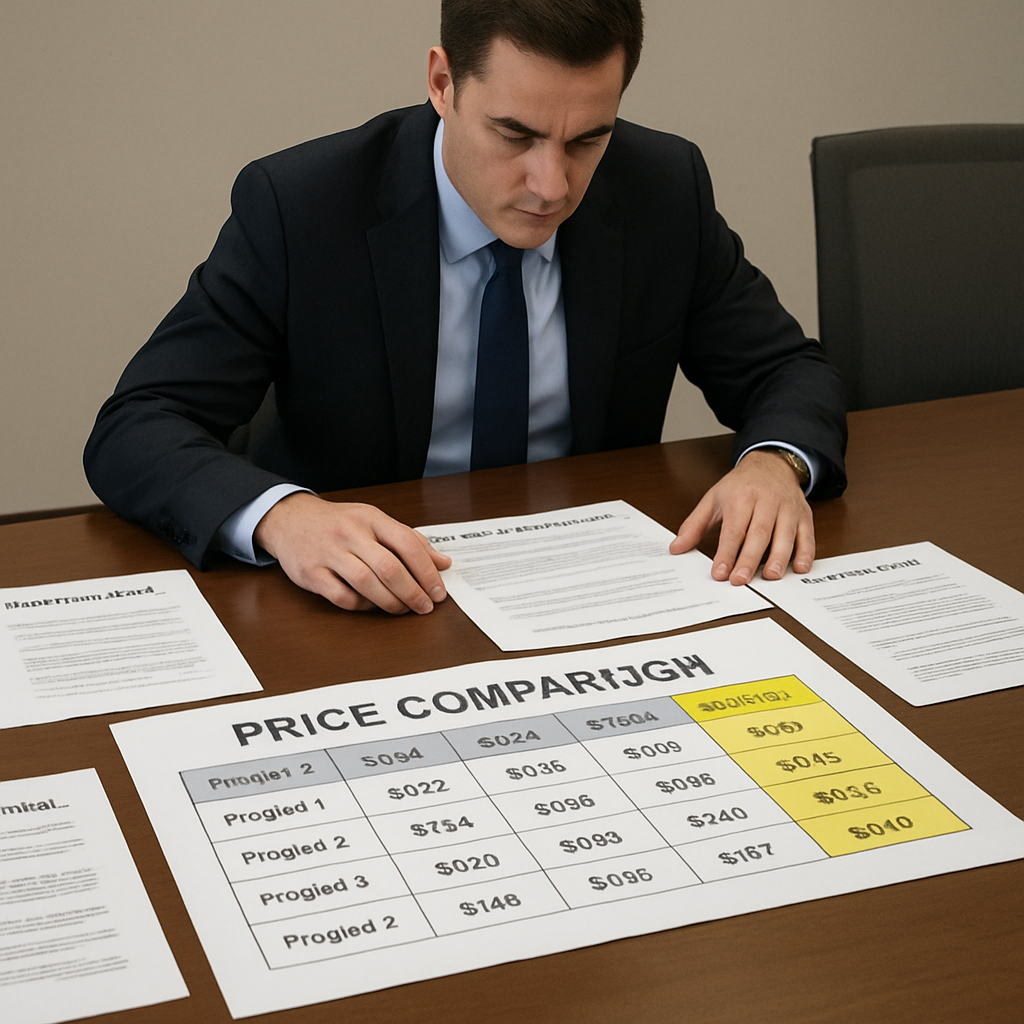
6. Action Checklist – Turn Theory into Practice
- Review relevant bidding statutes (e.g., local competitive‑bidding law) before drafting the RFP.
- Collect the last three contract prices for the same category and calculate the average variance.
- Publish a three‑stage bid schedule: discovery, technical, price‑only.
- Run a “what‑if” spreadsheet to model split‑award and single‑supplier scenarios.
- During negotiations, present the market benchmark, your historical spend, and the best current quote side‑by‑side.
- Set a clear fallback: if the top bidder can’t improve by a pre‑agreed margin, move to the next tier.
Give these steps a try on your next software or services procurement. You’ll be amazed at how quickly the conversation shifts from “what’s your price?” to “how can we work together for mutual gain.”
4️⃣ Strategy #4 – Build Collaborative Supplier Relationships
Imagine walking into a negotiation feeling like you’re about to start a battle, then realizing you could be sitting down for a coffee with a future partner. That shift in mindset is the secret sauce behind truly collaborative supplier relationships.
When you treat a supplier as a teammate rather than a rival, the conversation moves from “who can pay less” to “how can we create more value together.” It’s a subtle change, but it flips the entire dynamic of your procurement negotiation strategies.
1️⃣ Start with Shared Objectives
Before you even send an RFP, ask yourself: what does success look like for both sides? Maybe you need a lower total cost of ownership, while the supplier wants a multi‑year commitment that guarantees steady cash flow. Write those goals down side‑by‑side.
Sharing this simple table at the kickoff meeting signals transparency and invites the supplier to brainstorm solutions you wouldn’t have thought of on your own.
2️⃣ Co‑Create a Value‑Creation Plan
Think of the partnership as a joint venture on a whiteboard. Map out where you can trade something you control – like volume or longer payment terms – for something they excel at – like faster lead times or innovative design input.
In our experience, a mid‑size health‑tech startup saved 12% on a platform license by swapping a 30‑day payment window for a quarterly performance‑based rebate. The supplier loved the predictable cash flow, and the startup got a cheaper deal.
3️⃣ Build Trust Through Open Communication
Regular check‑ins are more than courtesy; they’re a risk‑management tool. Set a cadence – maybe a 30‑day call – to surface any supply‑chain hiccups before they become contract breaches.
Ask open‑ended questions like, “What’s one thing we could do to make your job easier?” You’ll often hear ideas about shared forecasting or joint inventory pools that cut both parties’ costs.
4️⃣ Use Data to Keep the Relationship Balanced
Data isn’t just for price negotiations. Pull performance metrics – on‑time delivery, defect rates, invoice accuracy – and share them in a simple dashboard. When the numbers are clear, neither side can hide behind vague excuses.
For a deeper dive on how data drives supplier conversations, check out this supplier negotiation roadmap that breaks down each step from goal‑setting to documentation.
5️⃣ Institutionalize Continuous Improvement
End each contract cycle with a “lessons learned” session. Capture what worked, what didn’t, and turn those insights into the next round’s negotiation checklist. It turns a one‑off deal into an evolving partnership.
And if you want to sprinkle some ethical flair into the mix, consider the positive negotiation tactics that focus on transparency and mutual respect – they’re a great fit for collaborative relationships.
So, what’s the next step? Pull out that spreadsheet, list your top three partnership goals, and schedule a coffee‑style call with your key supplier. You’ll be surprised how quickly the conversation shifts from “price” to “possibility.”
5️⃣ Strategy #5 – Use Data‑Driven Negotiation Tactics
When you walk into a supplier meeting with a spreadsheet instead of a gut feeling, you instantly shift the power balance. Data isn’t just a backdrop; it becomes the language you both speak.
Think about the last time you tried to negotiate a software license without knowing the average industry spend. You probably left money on the table, right? Let’s change that by turning raw numbers into negotiation levers.
1️⃣ Build a “Negotiation Dashboard” Before You Call
Start with three columns: historic spend, market benchmark, and variance. Pull the last 12‑month invoices from your ERP, then overlay third‑party pricing data (or public RFP disclosures) to see where you’re paying more.
Action steps:
- Export spend data into a CSV.
- Normalize units (e.g., $/GB‑month, $/unit).
- Color‑code variance: green = under market, red = over market.
In one real‑world case, a mid‑size health‑tech startup discovered its cloud‑hosting cost was 18% above the median. By presenting that red flag, they secured a 10% discount and a volume‑rebate clause.
2️⃣ Use “What‑If” Modeling to Reveal Hidden Value
Take the numbers you just gathered and run a few scenarios. What if you extend the contract term? What if you bundle a support package? Model the total cost of ownership (TCO) for each option.
Here’s a quick template you can copy into Excel:
| Scenario | Annual Cost | Risk Adjustment | Net Value |
|---|---|---|---|
| Current Terms | $120,000 | 0.0 | $120,000 |
| 3‑Year Term + 5% Discount | $115,200 | -5,000 | $110,200 |
| Bundle Support (incl. SLA) | $122,000 | -10,000 | $112,000 |
The risk adjustment column captures things like price‑cap clauses or penalty fees. When you can show a supplier that a longer term actually reduces their risk, they’re often happy to shave a few points off the price.
3️⃣ Leverage Real‑Time Market Data
Static benchmarks are great, but markets move. Subscribe to a price‑tracking service or set up Google Alerts for key product categories. When you hear that a competitor just announced a 3% price drop, you can cite that in the next call.
One procurement lead at a Fortune 500 electronics firm did exactly that. He quoted a recent vendor press release showing a 2.5% cost reduction in a similar component. The supplier matched the discount to keep the account, saving the company $1.4 M in the first year.
4️⃣ Turn Data Into a Collaborative Story
Don’t just flash numbers—walk the supplier through the narrative. Start with “We’ve been tracking spend for the past year…” then point to the variance chart, and finish with “If we can close that gap, both of us win: you lock in volume, we hit our budget.” This approach feels less like a threat and more like a joint problem‑solving session.
In our experience, procurement professionals who frame data as a shared roadmap close deals 27% faster than those who simply demand a price cut. THE ULTIMATE NEGOTIATION STRATEGY dives deeper into storytelling techniques that resonate with data‑savvy suppliers.
5️⃣ Capture the Outcome and Iterate
After the negotiation, log the agreed‑upon terms back into your dashboard. Update the variance column so you can instantly see the ROI of the conversation. Then schedule a quick “data‑review” call after six months to see if the supplier’s performance aligns with the numbers you negotiated.
Actionable checklist:
- Build a negotiation dashboard with spend, benchmark, variance.
- Run at least three what‑if scenarios (term length, bundling, volume).
- Subscribe to a real‑time market feed for your key categories.
- Prepare a 2‑minute data story for the supplier meeting.
- Log outcomes and set a six‑month review reminder.
By treating data as the backbone of every discussion, you turn negotiations from a guessing game into a predictable, repeatable process. So, pull that spreadsheet, add a dash of storytelling, and watch your procurement negotiation strategies finally start delivering the savings you know are possible.

6️⃣ Strategy #6 – Prepare a BATNA (Best Alternative to a Negotiated Agreement)
Ever walked into a supplier meeting feeling like you’ve already lost because you didn’t know what else was on the table? That gut‑check moment is exactly why a solid BATNA is the secret weapon behind the best procurement negotiation strategies.
Think of a BATNA as your safety net. It’s not a threat you brandish; it’s the confidence that says, “If this deal doesn’t meet my baseline, I’ve got a viable fallback.” When you truly understand your alternatives, you stop bargaining out of fear and start negotiating from a place of power.
1️⃣ Identify Real Alternatives Early
Start by mapping every plausible source for the product or service you’re buying. That means digging into existing contracts, scouting new vendors, and even considering in‑house solutions. For a procurement professional in a Fortune 500 firm, that could be a secondary supplier that’s already in the vendor pool but hasn’t been pitched recently.
Tip: create a simple spreadsheet with columns for “Vendor,” “Pricing,” “Delivery Lead‑time,” and “Strategic Fit.” Fill it out before you set the first meeting. The moment you have at least two credible rows, you’ve built a BATNA foundation.
2️⃣ Quantify the Value of Each Alternative
Numbers turn vague options into real leverage. Calculate total cost of ownership for each backup – include price, shipping, support, and any hidden fees. If you’re sourcing cloud storage, factor in data‑egress costs and SLA penalties.
When you can point to a concrete figure – say, “Our backup option would cost $112k annually versus the $118k you’re proposing” – the supplier feels the pressure to improve.
3️⃣ Test the Waters Discreetly
Before you go full‑steam, reach out to one of your alternatives with a “quick quote” request. You don’t need a full RFP; a 5‑minute phone call can confirm whether the numbers you estimated are realistic.
And if the supplier pushes back, you now have evidence to say, “We’ve heard a competitive offer at $X, can you meet or beat that?” It’s a gentle nudge, not a hard‑ball threat.
4️⃣ Build a Narrative Around Your BATNA
People respond better to stories than raw data. Frame your BATNA as a win‑win scenario: “We’d love to keep working together because we value the partnership, but we also have a solid backup that meets our budget.” This shows respect while still signaling you won’t settle for less.
Remember, the goal isn’t to intimidate; it’s to keep the conversation collaborative. When you talk about alternatives as part of a broader strategic plan, the supplier is more likely to join you in finding creative trade‑offs.
5️⃣ Use Your BATNA to Guard Against Hard‑Ball Tactics
Harvard’s Program on Negotiation warns that hard‑ball tactics often backfire when both sides have strong alternatives. By having a clear BATNA, you can defuse threats or extreme demands without losing composure. BATNA basics from Harvard explains why the presence of alternatives reduces the need for aggressive posturing.
So, when a supplier says “Take it or leave it,” you can calmly reply, “We’ve got another viable option, but let’s see if we can bridge the gap.” The tone stays professional, and the pressure stays on them.
6️⃣ Checklist – Make Your BATNA Actionable
- List at least two credible alternatives before the first call.
- Calculate total cost of ownership for each alternative.
- Secure a quick, informal quote from one backup supplier.
- Draft a brief narrative that frames the BATNA as a partnership safeguard.
- Practice a calm response to hard‑ball moves, referencing your alternatives.
When you walk into the negotiation room armed with this checklist, you’ll notice a shift. The conversation feels less like a hostage situation and more like a collaborative problem‑solving session.
And the best part? You don’t need a fancy software platform to build a BATNA – just a spreadsheet, a few phone calls, and the willingness to think ahead. Give it a try on your next procurement negotiation and watch the confidence level rise.
FAQ
What are the most common pitfalls in procurement negotiation strategies?
One of the biggest traps is walking into a negotiation without a clear BATNA – you end up conceding just to keep the conversation going. Another frequent mistake is over‑relying on price alone and ignoring total cost of ownership, delivery risk, or service quality. Too often teams skip the “value mapping” step, so they miss opportunities to bundle services or secure volume rebates. In our experience, the combination of an unchecked scope and a vague metric set leads to contracts that look cheap on paper but cost more in the long run.
How can I build a strong BATNA without spending a lot of time?
Start by listing two or three alternative suppliers that you’ve already vetted in your spend database – you don’t need a full RFP for each. Reach out with a quick “price‑check” call or a short email asking for a ball‑park figure; that alone gives you a concrete fallback number. Then, calculate the total cost of ownership for each alternative, including shipping, support, and hidden fees. Finally, script a calm response that frames your BATNA as a partnership safeguard, so you stay confident when the other side throws hard‑ball tactics.
When should I involve cross‑functional stakeholders in the negotiation process?
Involving finance, legal, and the end‑user team early can save you weeks of back‑and‑forth later. If the deal touches on compliance, risk, or budgeting thresholds, bring those experts into the discovery call so they can flag red flags before you draft a proposal. At the same time, keep the conversation focused – let the stakeholders contribute facts, but let you steer the negotiation narrative. This balance ensures you have all the necessary data while maintaining a single, confident voice at the table.
What metrics should I track to prove the ROI of my procurement negotiation strategies?
Track total cost savings, cost avoidance, and total cost of ownership for each contract. Add a supplier performance score that blends on‑time delivery, defect rate, and service response time. A risk mitigation index helps you quantify the financial impact of potential disruptions. Finally, calculate a negotiation ROI: (Savings + Avoidance) ÷ (Hours spent + internal resources). When you can show a ratio above 1.5, it’s clear that the time invested in preparation paid off.
How do I handle a supplier who uses hard‑ball tactics like “take it or leave it”?
First, stay calm and reference your BATNA – let the supplier know you have a viable alternative that meets your budget. Then, ask a probing question: “What would it take for us to close the deal today without compromising on service level?” This shifts the pressure back onto them and often reveals hidden flexibility. If they double‑down, be ready to walk away; the threat of walking away is far more powerful when you actually have another option lined up.
Can I use data‑driven negotiation tactics in a small startup with limited resources?
Absolutely. You don’t need expensive software – a simple spreadsheet can serve as a negotiation dashboard. Pull the last 12 months of spend, add a column for market benchmark (you can find free industry reports or ask peers), and highlight any variances. Run a few “what‑if” scenarios: longer contract terms, bundled services, or split‑award options. Present the numbers as a story, not a spreadsheet, and you’ll give the supplier a clear picture of where value lies, even on a shoestring budget.
Conclusion
We’ve walked through everything from market research to BATNA building, and the common thread is simple: data‑driven, relationship‑focused procurement negotiation strategies win the day.
Think about the last time you left a negotiation feeling uneasy. If you’d walked in with a clear value metric, a backup supplier, and a story that showed win‑win potential, you probably would’ve walked out with a better deal.
So, what’s the next concrete step? Grab a notebook, list the three biggest contracts you’ll renegotiate this quarter, and map each to the metric checklist we’ve covered – savings, avoidance, TCO, risk, and performance scores. Then, draft a one‑page “value‑creation brief” that you can share with the supplier before the call.
In our experience, teams that turn those briefs into a shared dashboard see negotiation ROI ratios climb above 1.5 within two cycles. If you need a ready‑made framework, check out THE ULTIMATE NEGOTIATION STRATEGY on our site – it walks you through each metric step‑by‑step.
And don’t forget the paperwork. A polished contract template or RFQ form can turn a good conversation into a binding win. Services like custom business forms make it easy to capture every agreed‑upon term in a professional format.
Bottom line: treat each negotiation as a short‑term experiment backed by hard data, a solid BATNA, and clear documentation. When you do, you’ll see the confidence you’ve been craving and the savings you’ve been chasing – all without sacrificing partnership value.