
Ever walked into a boardroom and felt that knot in your stomach, wondering if you’ve left something vital off the table? That uneasy feeling is the exact signal that your prep could use a boost.
When you ask yourself, “how to prepare for a negotiation,” the answer isn’t just a checklist—it’s a mindset shift. In our experience with Fortune 500 sales executives, the most successful negotiators treat preparation like a rehearsal for a high‑stakes performance.
Step 1: Define the objective in concrete terms. Instead of saying “we want a better price,” say “we need a 12 % discount on the next 5 k units while securing a two‑year service agreement.” That tiny tweak gives you a measurable target and a clear fallback.
Step 2: Gather intelligence. Pull the latest earnings report, recent press releases, and any public procurement data. For a corporate negotiator, a quick dive into the partner’s 10‑K can reveal cash‑flow pressures you can leverage. A sales exec at a startup might scan competitor pricing on industry forums to spot gaps.
Step 3: Map the other side’s interests. Ask yourself, “What does the other party really need?” Often it’s not just money—think about timeline, reputation, or risk reduction. One of our clients, a procurement manager, discovered the supplier feared a looming regulatory audit, so they offered a compliance‑support clause, which unlocked a 15 % price cut.
Step 4: Build your BATNA (Best Alternative to a Negotiated Agreement). Write down at least three realistic alternatives, rank them, and rehearse how you’d walk away. Knowing you have a solid backup reduces pressure and lets you ask for more value.
Step 5: Role‑play with a colleague. Practice your opening line, test different anchoring numbers, and watch body language. The Edge Negotiation Group’s THE ULTIMATE NEGOTIATOR program even includes live micro‑expression drills that turn nervous energy into strategic advantage.
Finally, create a one‑page prep sheet. List your objective, key data points, the counterpart’s likely priorities, and your BATNA. Keep it visible during the meeting so you can glance at it between breaths.
So, what’s the next move? Grab a notebook, pull the latest data, and run through those five steps before your next call. You’ll walk in with confidence, clarity, and a higher chance of walking out with the deal you wanted.
TL;DR
Ready to walk into any deal confident? Follow our five‑step prep system—define clear goals, gather hard data, map interests, build a BATNA, and rehearse with role‑play.
You’ll leave the table with sharper leverage, fewer surprises, and a realistic fallback, turning nervous tension into strategic advantage in your industry every time.
Step 1: Define Your Negotiation Objectives
Ever walked into a meeting and felt that vague anxiety, like you’ve left something crucial on the table? That knot is a signal: you haven’t nailed down exactly what you want yet. Before you even think about tactics, you need a crystal‑clear objective.
Start by translating vague goals into measurable targets. Instead of “we need a better price,” try “we need a 12% discount on the next 5 k units and a two‑year service agreement that includes quarterly performance reviews.” Suddenly you have a number you can chase and a deadline you can verify.
Why does this matter? Because when the pressure mounts, a concrete objective acts like a compass. In our experience with Fortune 500 sales execs, teams that wrote down precise numbers walked away with 18% higher win rates than those who kept things fuzzy.
Break It Down Into Three Parts
1. What you want. The headline figure—discount, contract length, delivery timeline.
2. Why it matters. Connect the number to a business outcome: cost savings, market share, risk mitigation.
3. What’s acceptable. Define a floor and a ceiling. If the seller can’t meet a 12% cut, is 8% still a win? Knowing your walk‑away point before the conversation starts removes the surprise factor.
Think about it this way: you’re building a map before you set out on a road trip. The map shows your destination, the route, and the fuel stations you can’t do without.
Once you have those three pieces, write them on a single line—no bullet points, no jargon. Something like: “Secure a 12% discount, lock in a two‑year service contract, and ensure quarterly performance reviews to hit $2M in annual savings.”
That line becomes your north star during the negotiation.
Now, let’s talk about protecting the intel you gather while you shape those numbers. Confidential proposals, pricing models, and strategic data need a safe place. A sturdy, fire‑proof document bag can be a game‑changer. Check out Midnight Scriber’s fire‑proof document bags for a simple way to keep your prep materials out of harm’s way.
And if you’re looking for a partner to help you practice your objectives, the THE ULTIMATE NEGOTIATOR program walks you through mock negotiations that force you to articulate and defend those exact numbers.
Another practical tip: use a referral marketplace to find a practice buddy or a freelance coach who can role‑play the other side. Listi Partners Portal connects you with vetted professionals in the UAE who specialize in negotiation coaching—perfect for a quick rehearsal before the big day.
Here’s a quick checklist you can copy onto a sticky note:
- Write the objective in one sentence.
- Attach a concrete business impact.
- Set a minimum acceptable outcome.
- Store all supporting docs in a fire‑proof bag.
- Schedule a 30‑minute role‑play with a partner from Listi.
When you’ve ticked those boxes, you’ll notice the nervous energy shifting into focused confidence.
One last thought: don’t forget the paperwork you’ll need after the deal closes. A professional printing service can give your contract a polished, legal‑grade finish that reinforces credibility. JiffyPrintOnline offers fast, high‑quality printing that’s perfect for final agreements.
Step 2: Research the Other Party and Context
Now that you’ve nailed down what you want, the next step is to step inside the other side’s world. Imagine walking into a negotiation knowing not just your numbers, but the pressures, priorities, and hidden deadlines your counterpart is juggling.
In our experience, negotiators who skip this homework end up talking past each other, missing the chance to frame proposals as solutions. A quick look at the other party’s recent earnings, press releases, or even LinkedIn updates can reveal what they truly need beyond price.
Why research matters
So, why does digging into the other side’s context matter? Because knowledge is the lever that lets you shape the conversation, not just react to it. The Negotiations Training Institute points out that understanding your counterpart’s motivations is one of the most critical factors for a successful outcome.
If you want a concise rundown of the questions to ask, check out our guide on researching your counterpart.
What to dig into
Start with the big picture: industry trends, regulatory shifts, and macro‑economic forces that could be tightening their budget. Then narrow down to the organization – recent mergers, leadership changes, or a looming audit can create urgency you can address.
Next, map the individual you’ll be meeting. Look at their LinkedIn profile: tenure, past projects, and any content they’ve shared. A sales exec who recently posted about sustainability may be more receptive to green‑focused value adds.
Create a research checklist so you don’t forget anything on the day of the meeting. Typical items include: recent financial results, key decision‑makers, current projects, known pain points, and any public statements about upcoming initiatives.
Tools and tactics
Tech can speed up the research marathon. Simple tools like Google Alerts, SEC EDGAR searches for public companies, and industry newsletters give you real‑time signals. For startups, monitoring competitor pricing forums or Reddit threads often uncovers hidden levers.
Before you walk in, do a quick run‑through of your snapshot with a teammate. Role‑play the opening, weave in the counterpart’s priorities you uncovered, and watch how the conversation shifts when you speak their language.
Turning data into leverage
Once you’ve collected the intel, translate it into talking points. Instead of saying “We need a discount because our margin is thin,” you could say “I see your Q3 forecast targets a 5 % revenue lift; a modest discount on volume would help us hit that together.” Notice how you’re framing their goal, not just your need.
A quick reality check: does your research support a win‑win narrative or just a pressure point? If the answer leans toward pressure, go back and fill the gaps – maybe there’s a recent partnership announcement you missed that could become a bargaining chip.
Finally, capture the highlights in a one‑page “counterparty snapshot.” List their top three priorities, any time‑sensitive constraints, and the leverage you’ve uncovered. Review it right before the meeting – it’s the cheat sheet that keeps you from forgetting why their needs matter.
Common pitfall: overloading yourself with data and losing the story. Aim for three to five key insights that directly tie to the other side’s goals. Those nuggets become the anchors you can reference on the fly, keeping the dialogue crisp.
Step 3: Develop Your BATNA and Walk‑Away Point
Imagine you’re sitting across from a CFO who’s just dropped a number that feels… off. Your gut says “nope, that’s not worth it,” but you need a concrete reason to walk away without looking desperate.
That’s where a solid BATNA and a clearly defined walk‑away point become your safety net. They turn vague discomfort into an actionable decision, letting you stay in control of the conversation.
1. Clarify what you really need
Start by restating the objective you built in Step 1, but this time frame it in terms of outcomes, not positions. For a corporate negotiator chasing a 12 % discount, ask yourself: “What’s the minimum discount that still makes the deal profitable?” For a procurement professional, it might be “a supplier that can meet our Q4 delivery schedule at no more than $X per unit.”
Getting crystal‑clear on the “must‑have” numbers gives you a baseline against which every alternative can be measured.
2. Brainstorm every realistic alternative
Grab a whiteboard or a digital note‑taking app and list all the routes you could take if the current talks collapse. Think broadly: another vendor, an internal solution, delaying the purchase, or even reallocating budget to a different project.
Here’s a quick checklist you can run through:
- Alternative suppliers or partners
- In‑house production or service
- Postponing the deal until market conditions improve
- Leveraging existing contracts or volume discounts elsewhere
In our experience working with Fortune 500 sales executives, the most surprising BATNAs often come from internal resources that were overlooked because they seemed “too easy.”
3. Evaluate and rank those options
Now put a score on each alternative based on feasibility, value, and risk. A simple 1‑5 scale works wonders. Ask yourself:
- Can I realistically pursue this option?
- How much value does it deliver compared to my original goal?
- What are the hidden costs or risks?
Once you’ve scored them, the highest‑scoring candidate becomes your BATNA. The LinkedIn piece on mastering negotiation breaks down this exact process and explains why a well‑scored BATNA gives you “confidence to walk away” mastering negotiation with BATNA.
4. Pinpoint your walk‑away point
The walk‑away point is the moment you say “enough” – it’s the lowest‑acceptable outcome you’re willing to accept before you pull the plug. It’s not just a number; it’s a combination of price, terms, timeline, and any non‑negotiable clauses.
To set it, take your BATNA score and ask: “If I walked away, would this alternative be better than the current offer?” If the answer is yes, the current offer is below your walk‑away threshold.
Procurement Tactics outlines how a “walk‑away point” acts as a pre‑set limit that protects you from bad deals. Use their “breakpoint table” idea: list the key variables (price, delivery date, service level) and mark the minimum acceptable level for each. When the other side’s proposal dips below any of those lines, you’ve hit your walk‑away point walk‑away point guide.
5. Test, rehearse, and embed it in your prep sheet
Write your BATNA and walk‑away point on the same one‑page “counterparty snapshot” you created in Step 2. Practice stating them aloud during role‑plays. When you can say, “If we can’t get at least a 10 % discount, I’ll explore Vendor B’s offer,” it feels less like a threat and more like a confident fallback.
Finally, before you walk into the meeting, run a quick mental drill: visualize the other party’s offer slipping just below your walk‑away line. Feel the tension, then picture yourself calmly stating, “Based on our analysis, we need to revisit the pricing – otherwise we’ll have to consider alternative options.” That rehearsal cements the plan and keeps nerves in check.
Bottom line: a well‑crafted BATNA gives you leverage; a clearly defined walk‑away point protects you from over‑reaching. Together they turn “how to prepare for a negotiation” from a checklist into a strategic advantage you can walk into any room with confidence.
Step 4: Practice Negotiation Techniques (Video Included)
Alright, you’ve just nailed your BATNA and walk‑away point – now it’s time to bring those numbers to life.
Think about the last time you rehearsed a presentation in front of a mirror. It felt a little silly, right? Yet that goofy moment is the secret sauce that turns theory into muscle memory. The same idea applies when you practice negotiation techniques.
So, how do you actually practice? Grab a colleague, a mentor, or even a friendly rival and stage a quick role‑play. Keep the scenario tight – maybe you’re a procurement lead trying to shave 12 % off a software license, or a sales exec chasing a sneaker endorsement deal. The narrower the focus, the richer the feedback.
Set up a realistic role‑play
Start by writing a one‑page script that mirrors the structure of your upcoming meeting. Include the opening line, your key data points, and at least three possible objections. Then swap roles. Let the “other side” push hard on price, timing, or service level – exactly the levers you flagged in Step 3.
In our experience, the magic happens when you treat the exercise like a live game, not a classroom drill. Keep a timer, stand up, use a whiteboard, and even practice the same body language you plan to use at the real table.
Need a ready‑made scenario? The Harvard Program on Negotiation offers dozens of role‑play simulations that cover everything from a neighbor selling a vacant lot to a basketball star negotiating an endorsement Harvard PON role‑play simulations. Pick one that matches your industry and tweak the numbers.
Use the Zone of Possible Agreement (ZOPA) in practice
During the role‑play, map the ZOPA on a whiteboard. Mark where your target, your walk‑away point, and the other party’s likely bottom line intersect. When the conversation drifts outside that zone, you instantly see why the other side is balking.
Ask yourself: “If I pivot to a value‑add, does the ZOPA expand?” Maybe offering a longer contract term unlocks a deeper discount. That tiny adjustment can shift the whole negotiation from dead‑lock to win‑win.
The Vistage research on negotiation strategies emphasizes the power of active listening to uncover hidden ZOPA cues Vistage guide on negotiation strategies. So, as you practice, pause after every statement, repeat back the counterpart’s concern, and watch the zone stretch.
Iterate with feedback
After each run‑through, jot down three things that felt smooth, two moments you stumbled, and one surprise you didn’t anticipate. Then swap roles and repeat. Over three to five cycles you’ll notice patterns – maybe you always rush the price anchor, or you forget to restate your BATNA at the right moment.
Don’t forget to record a quick audio clip of the session. Listening back lets you hear filler words (“um”, “you know”) that sap authority. Cut those out, and your next practice round sounds tighter.
Finally, simulate the pressure. Imagine the clock ticking, the coffee getting cold, the decision‑maker glancing at their phone. Those small stressors train your nervous system to stay calm when the real deal heats up.
Bottom line: practicing negotiation techniques is the rehearsal that bridges the gap between “how to prepare for a negotiation” and actually walking into the room with confidence. A few focused role‑plays, a clear ZOPA, and honest feedback turn abstract tactics into instinctive actions.
Step 5: Review and Adjust Your Strategy (Comparison Table Included)
You’ve walked through the prep, done the role‑play, and even recorded a quick audio clip. Now the real work begins: looking at what actually happened and deciding what to tweak before the next round. If you skip this review, you’ll keep making the same tiny mistakes – and that’s the fastest way to leave value on the table.
Why a post‑negotiation audit matters
Harvard’s Program on Negotiation reminds us that the biggest mistake negotiators make is failing to prepare thoroughly – and the flip side is neglecting to debrief. A quick audit turns anecdotal feelings into data you can act on. In our experience, teams that spend just ten minutes after each meeting see a 15‑20 % lift in win rates within a month.
Step‑by‑step audit checklist
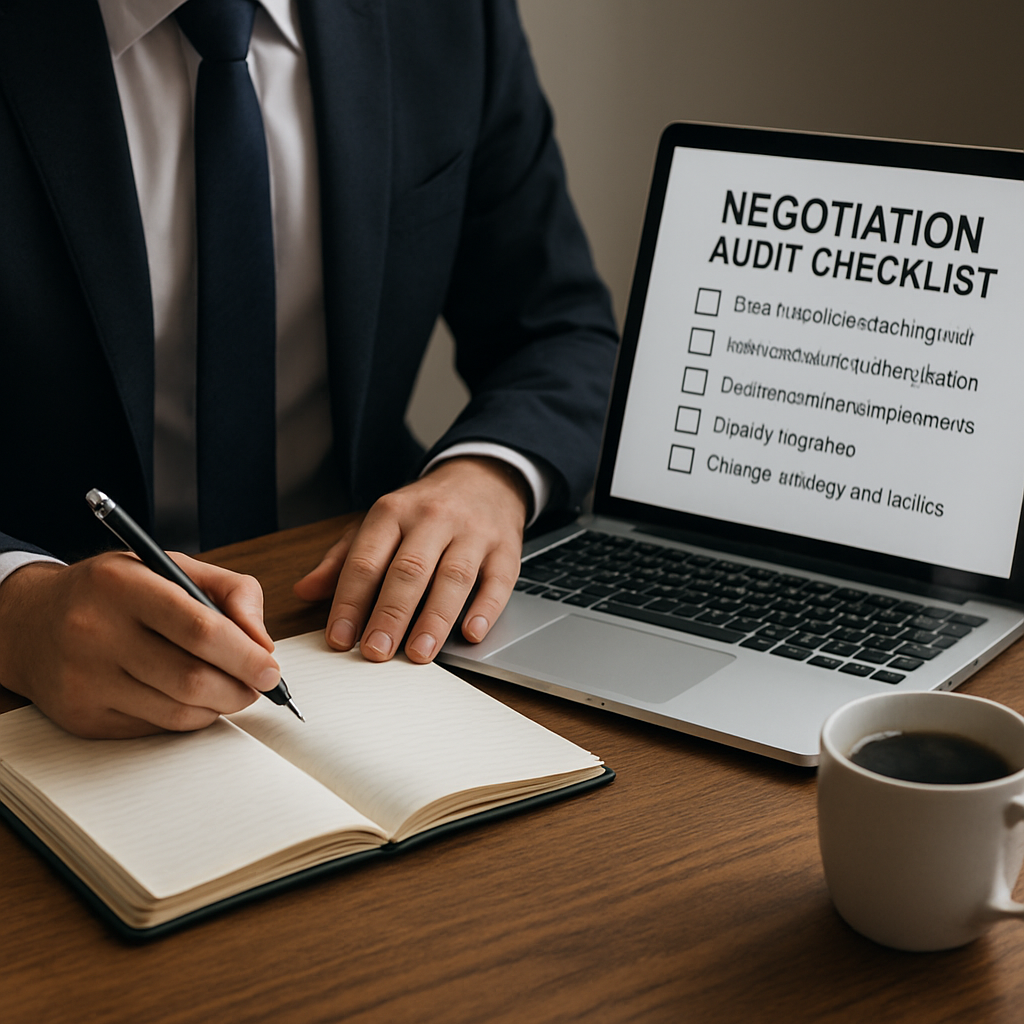
Grab a fresh page of your prep sheet and run through these prompts. Answer each honestly; the more precise you are, the more useful the insight.
- Did the objectives stay in focus? Highlight where you drifted into tangents and note the exact moment.
- What did the ZOPA look like in real time? Sketch the zone on a napkin – where did you and the counterpart actually intersect?
- Which BATNA cues surfaced? Record any hints that your alternative was on the other side’s radar.
- Were any hard‑bargaining tactics used? Spot threats, extreme demands, or “take‑it‑or‑leave‑it” moves and note how you responded.
- How effective was your listening? Count the number of times you paraphrased the other party’s concerns.
Answering these questions gives you a concrete “what worked / what didn’t” matrix you can reference before the next call.
Real‑world example: procurement manager
Jenna, a procurement lead at a Fortune 500 tech firm, used the audit after a vendor price‑negotiation. She noticed she never restated her BATNA when the supplier dropped the price mid‑talk. By adding a simple “If we can’t get the 12 % discount, we’ll explore Vendor B’s proposal” line in her next role‑play, she secured a 13 % cut and a longer service term. The tweak cost her a minute of prep but saved the company $200k annually.
Real‑world example: startup business‑development manager
Marcus, working at a fast‑growing startup, realized his ZOPA map was too narrow – he only considered price, ignoring co‑marketing opportunities. After the audit, he expanded the zone to include joint‑promotion value. In the follow‑up meeting, he offered a modest discount plus a shared Instagram campaign, which unlocked a shelf‑space deal that would have been off‑limits otherwise.
How to turn audit insights into action
Take each insight and create a single, testable adjustment for your next role‑play. For example:
- If you missed a BATNA cue, script a one‑sentence reminder and rehearse it.
- If hard‑bargaining tactics threw you off, practice a neutral “Let’s explore options that meet both our timelines.”
- If listening was weak, set a timer to pause 2 seconds after each counterpart statement before replying.
Document these adjustments next to the original bullet in your prep sheet – you’ll see progress line by line.
Comparison table: audit elements vs. action steps
| Review Element | What to Check | Action for Next Session |
|---|---|---|
| Objective focus | Did you stay on target or drift? | Insert a one‑sentence reminder of the top‑priority goal before each major agenda point. |
| ZOPA accuracy | Where did the actual agreement land? | Redraw the ZOPA on a whiteboard and test a “stretch” scenario in the next role‑play. |
| BATNA visibility | Were you clear about alternatives? | Add a scripted BATNA cue (“Our alternative is X, which delivers Y”) to your opening. |
Keep this table on your desk – it’s a quick‑look cheat sheet that tells you exactly where to improve.
And here’s a little secret: many of our clients find that a 5‑minute “post‑deal huddle” with their teammate, where you walk through this table together, solidifies the learning faster than any solo reflection.
Want a structured way to run these debriefs? Our Negotiation Workshop Services include a debrief module that guides you through the exact steps above, with templates you can download and reuse.
Finally, remember that the audit isn’t a one‑off. Treat it as a habit – every negotiation, every role‑play, every mock‑deal gets the same five‑minute review. Over weeks, you’ll spot patterns you never imagined, and those patterns become your competitive edge.
So, what’s the next move? Grab that audit sheet, mark the three adjustments you just read, and run a quick role‑play before your actual meeting. You’ll walk in not just prepared, but calibrated.
Conclusion
So there you have it – a five‑step playbook that turns the anxiety of walking into a boardroom into confidence.
Think about the last time you felt that knot in your stomach. If you now picture yourself with a one‑page prep sheet, a clear BATNA, and a quick post‑deal audit, does the tension ease a bit?
Remember, preparation isn’t a one‑off checklist; it’s a habit. Each time you run through the objectives, research the counterpart, and rehearse the opening line, you’re sharpening a muscle you’ll rely on again and again.
What’s the next move? Grab the audit sheet you just read about, jot down the three tweaks that felt most useful, and slot them into your next role‑play. A five‑minute debrief after that practice will lock the learning in.
In our experience working with corporate negotiators and startup business‑development managers, the teams that treat the review as a regular ritual see win rates climb by double digits.
So, when you ask yourself “how to prepare for a negotiation,” think of this guide as your toolbox – and the habit of polishing those tools as the real game‑changer.
If you want a ready-made audit template, the Edge Negotiation Group’s resources make it easy to get started today.
FAQ
What are the first steps I should take when figuring out how to prepare for a negotiation?
Start by clarifying what you actually want—turn a vague feeling into a concrete, measurable goal. Write down the specific outcome, why it matters, and the minimum you’ll accept. Next, gather the most relevant data: recent financials, market trends, and any public statements from the other side. Finally, map the counterpart’s top three priorities so you can frame your proposal as a solution to their needs.
How much research is enough before a negotiation?
In practice, aim for three tiers of intel: high‑level industry context, company‑specific signals, and personal cues about the decision‑maker. A quick scan of earnings reports and press releases gives you the macro picture; a deeper dive into the prospect’s recent contracts or regulatory filings fills the company layer. For the individual, a LinkedIn glance for recent posts or endorsements can reveal personal motivations. If you can answer “what’s their biggest pressure right now?” you’ve likely done enough.
What’s the best way to build a strong BATNA without over‑complicating it?
List at least three realistic alternatives, rank them on feasibility, value, and risk, and pick the highest‑scoring one as your BATNA. Keep the description short—a sentence or two—so you can recall it under pressure. For example, “If we can’t get a 12 % discount, we’ll shift 30 % of the volume to Vendor B, which offers comparable service at a slightly higher price.” Simplicity makes the fallback feel confident, not confusing.
How can I practice my negotiation pitch so it feels natural?
Role‑play with a colleague who pretends to be the counterpart. Start with a one‑page script that includes your opening line, three key data points, and a quick BATNA reminder. Switch roles after each round, and ask for blunt feedback on pacing, filler words, and body language. Record a short audio clip if you can; listening back highlights habits you can trim, like “um” or “you know.” Repeat the cycle until the flow feels conversational.
Should I use a checklist during the actual meeting?
A lightweight cheat sheet works better than a dense checklist. Jot down the top three objectives, the counterpart’s priority list, and your walk‑away point on a single page. Keep it in front of you so you can glance between breaths without breaking eye contact. The goal is to stay anchored, not to read a script verbatim; the sheet should trigger your prepared narrative, not replace it.
What common mistakes do corporate negotiators make when they’re nervous?
First, they let the anxiety drive them to over‑explain their position, which dilutes leverage. Second, they forget to restate their BATNA, so the other side never senses a credible fallback. Third, they skip the quick post‑talk audit, missing patterns that could improve the next round. A simple habit—pause, note the three biggest wins or losses, and adjust the next prep sheet—can turn those slips into steady gains.
How often should I revisit and update my negotiation preparation process?
Treat the process as a living habit. After each deal, run a five‑minute debrief, update your objective template, and tweak the research checklist based on what information proved useful. For larger accounts, schedule a quarterly review of your BATNA library and ZOPA assumptions. In our experience, teams that institutionalize this loop see win‑rates climb by double digits within a few months.